
Solenoid valve components work together to deliver precise fluid control by converting electrical energy directly into mechanical force. Understanding this synchronized internal mechanism is critical for engineers optimizing automated system efficiency and system reliability. This guide analyzes how each specialized component functions collectively within industrial systems to ensure reliable fluid regulation.
Section 1: The Core Mechanisms of Solenoid Valve Components
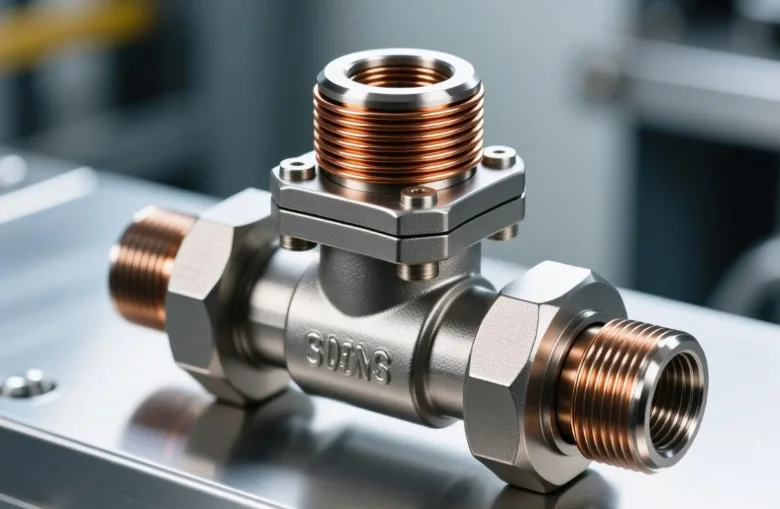
Electromechanical automation relies entirely on the precise interactions of individual solenoid valve components work together during dynamic operational cycles. When an electrical current flows through the copper windings, the solenoid coil generates a concentrated electromagnetic field. According to Faraday’s Law of Induction, this magnetic force pulls the ferromagnetic plunger upward against the resistance of the return spring. In a standard direct-acting configuration, this physical movement immediately lifts the seal off the valve orifice to permit fluid flow.
| 구성요소 이름 | Primary Mechanical Function | System Impact of Component Failure |
|---|---|---|
| 1. Solenoid Coil | Converts electricity to magnetism | Valve fails to actuate or open |
| 2. Armature Core | Moves physically via magnetism | Fluid flow remains restricted |
| 3. Return Spring | Restores original plunger position | Valve leaks or fails to close |
| 4. Valve Body | Contains fluid and houses seats | External leakage or pressure drop |
Section 2: Material Selection and Internal Synergies
The overall reliability of how solenoid valve components work together depends heavily on selecting compatible engineering materials. The valve body must withstand mechanical stress and chemical erosion, which is why manufacturers utilize stainless steel, brass, or engineered polymers. 예를 들어, 2/2 ways brass solenoid valve
Internal sealing elements dictate the maximum operational temperature limits and chemical compatibility of the entire fluid control loop. Elastomers like Nitrile rubber (NBR) provide excellent resilience for general pneumatic applications under standard conditions. Fluoropolymer seals, including FKM and PTFE, are specified for high-temperature chemical processing plants due to superior molecular stability. The table below outlines how specific material pairings optimize how solenoid valve components work together across distinct environments.
| Material Grouping | 하우징 재질 | Elastomer Seal Type | Optimal Fluid Media |
|---|---|---|---|
| Standard Industrial | Forged Brass | NBR(니트릴) | 중성 유체, 물, 공기 |
| Chemical Process | 316 스테인레스 스틸 | FKM (바이톤) | 약산, 합성유 |
| Extreme Corrosive | CPVC Plastic | PTFE(테프론) | Aggressive Chemicals, Steam |
Section 3: Integration Within Broader Pneumatic Infrastructure
Section 4: Diagnostics and Troubleshooting Synchronized Assembly Failures
When internal solenoid valve components work together incorrectly, systematic diagnostic testing must be conducted to isolate the mechanical root cause. Electrical failures usually manifest as a burnt-out coil caused by voltage fluctuations or excessive ambient moisture. Technicians can verify coil integrity by measuring electrical resistance with a standard digital multimeter. If the coil shows infinite resistance, the copper windings have broken, necessitating immediate component replacement.
Mechanical failure modes often involve internal contamination or spring fatigue, which prevents the armature from moving smoothly. If a valve fails to close properly, fine particulate matter may be trapped between the seal and the orifice seat. Regular maintenance schedules must include inspecting the internal plunger assembly for scoring or physical deformation. Implementing comprehensive filtration protocols prevents premature wear, ensuring all internal solenoid valve components work together seamlessly over millions of cycles.
Section 5: Engineering Procurement and Selection Checklist
이상적인 장비를 선택하려면 특정 유체 매개변수를 올바른 기계 구성요소 기능과 일치시켜야 합니다. Engineers must calculate the Flow Coefficient (Cv) to ensure the internal orifice meets system volume requirements without creating excessive pressure drops. Additionally, power consumption ratings must align with available electrical control circuits, prioritizing low-wattage models for continuous-duty applications. 아래의 구조화된 목록에는 시스템 조달 단계에서 필요한 주요 매개변수가 간략하게 설명되어 있습니다.
엔지니어링 사양 기준
- :
- :
- 유체 온도 스펙트럼: 지속적인 열 노출로 인해 내부 밀봉재가 저하되거나 변형되지 않는지 확인하십시오.
- 응답 시간 제약:
- 위험한 환경 등급: 휘발성 가스나 가연성 먼지 근처에서 작동하는 경우 방폭 코일 인클로저를 지정하십시오.
자주 묻는 질문
1. How do solenoid valve components work together to control fluid flow?
솔레노이드 밸브 구성 요소는 전자기 코일을 통해 전기 에너지를 물리적 동작으로 변환하여 함께 작동합니다. 전원이 공급되면 코일은 스프링에 대항하여 내부 플런저를 위쪽으로 당기는 자기장을 생성합니다. 이 동작은 밸브 시트에서 씰을 들어 올려 유체가 즉시 메인 오리피스를 통과할 수 있도록 합니다.
2. What causes a solenoid valve coil to overheat and burn out?
Solenoid valve coils overheat when electrical current flows continuously without sufficient heat dissipation or when the input voltage is incorrect. According to the National Electrical Manufacturers Association (NEMA), 10%를 초과하는 전압 변동은 코일을 자기적으로 포화시킬 수 있습니다. 또한, 기계 플런저가 막히면 적절한 열 발산이 방해되어 단열재가 급속히 열분해됩니다.
3. Can a direct-acting solenoid valve function properly at zero operating pressure?
Yes, direct-acting solenoid valves function perfectly at zero pressure because the magnetic coil lifts the plunger directly without needing fluid assistance. Unlike pilot-operated valves, which require a minimum pressure differential to move an internal diaphragm, direct-acting configurations rely entirely on electrical force to actuate the seal.
4. 솔레노이드 밸브 부품 고장을 방지하기 위해 유체 여과가 중요한 이유는 무엇입니까?
Fluid filtration is critical because microscopic particulate matter can lodge between the moving plunger and the internal guide tube, causing mechanical binding. 국제표준화기구(International Organization for Standardization)에 따르면ISO 4406), 유체 청결도는 동적 씰의 수명에 직접적인 영향을 미칩니다. 오염으로 인해 씰이 완전히 장착되지 않아 내부 누출 및 시스템 압력 손실이 발생합니다.
5. How do I determine if a valve requires an NBR or FKM seal?
물, 압축 공기 또는 최대 80°C의 중성 오일과 관련된 일반 저온 산업 응용 분야에는 NBR 씰을 선택하십시오. 공격적인 화학 유체, 합성 윤활유 또는 최대 180°C에 달하는 고온 시스템을 취급할 때는 FKM 씰을 선택하십시오. 올바른 엘라스토머를 선택하면 조기 팽창, 경화 및 그에 따른 밀봉 실패를 방지할 수 있습니다.