
2/2 vs 3/2 Solenoid Valve Overview
When comparing 2/2 vs 3/2 solenoid valves, the main difference lies in the number of ports and switching functions. These valves are widely used in pneumatic and fluid control systems, and understanding their structure helps improve system design and troubleshooting efficiency.
Key structural differences include:
2/2 solenoid valve (two-way two-position valve)
Has 2 ports and 2 switching states (open/close)
Used for simple on/off fluid control
Common in water, air, and oil flow isolation systems
3/2 solenoid valve (three-way two-position valve)
Has 3 ports and 2 switching states
Can switch flow between supply, output, and exhaust
Common in pneumatic actuators and cylinder control
Core functional distinction:
2/2 = simple isolation valve
3/2 = directional control valve
These differences are essential when selecting a solenoid valve type for automation systems.
Working Principle Differences Between 2/2 and 3/2 Valves
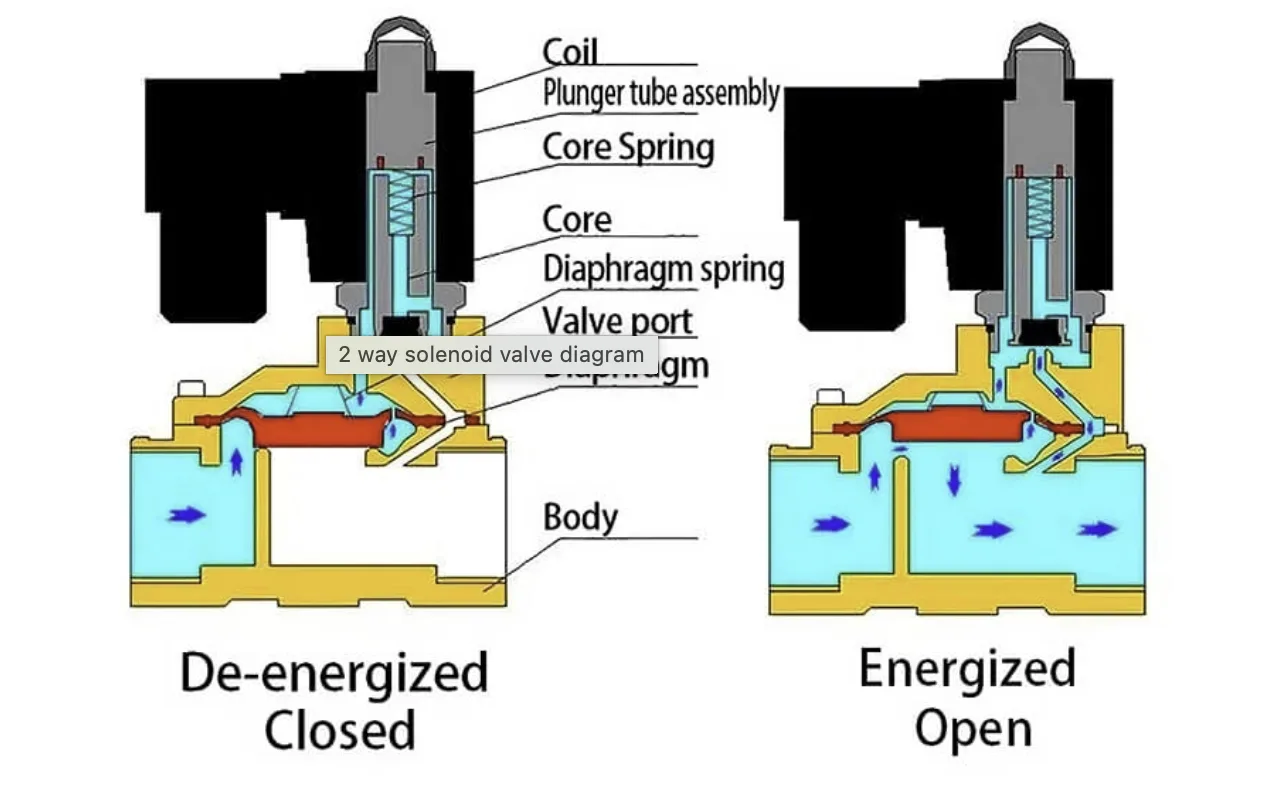
The operating principle of a 2/2 way solenoid valve vs 3/2 way solenoid valve is based on how the internal spool or diaphragm redirects fluid flow.
2/2 solenoid valve operation:
Energized: valve opens flow path
De-energized: flow is fully blocked
Used for straightforward ON/OFF control
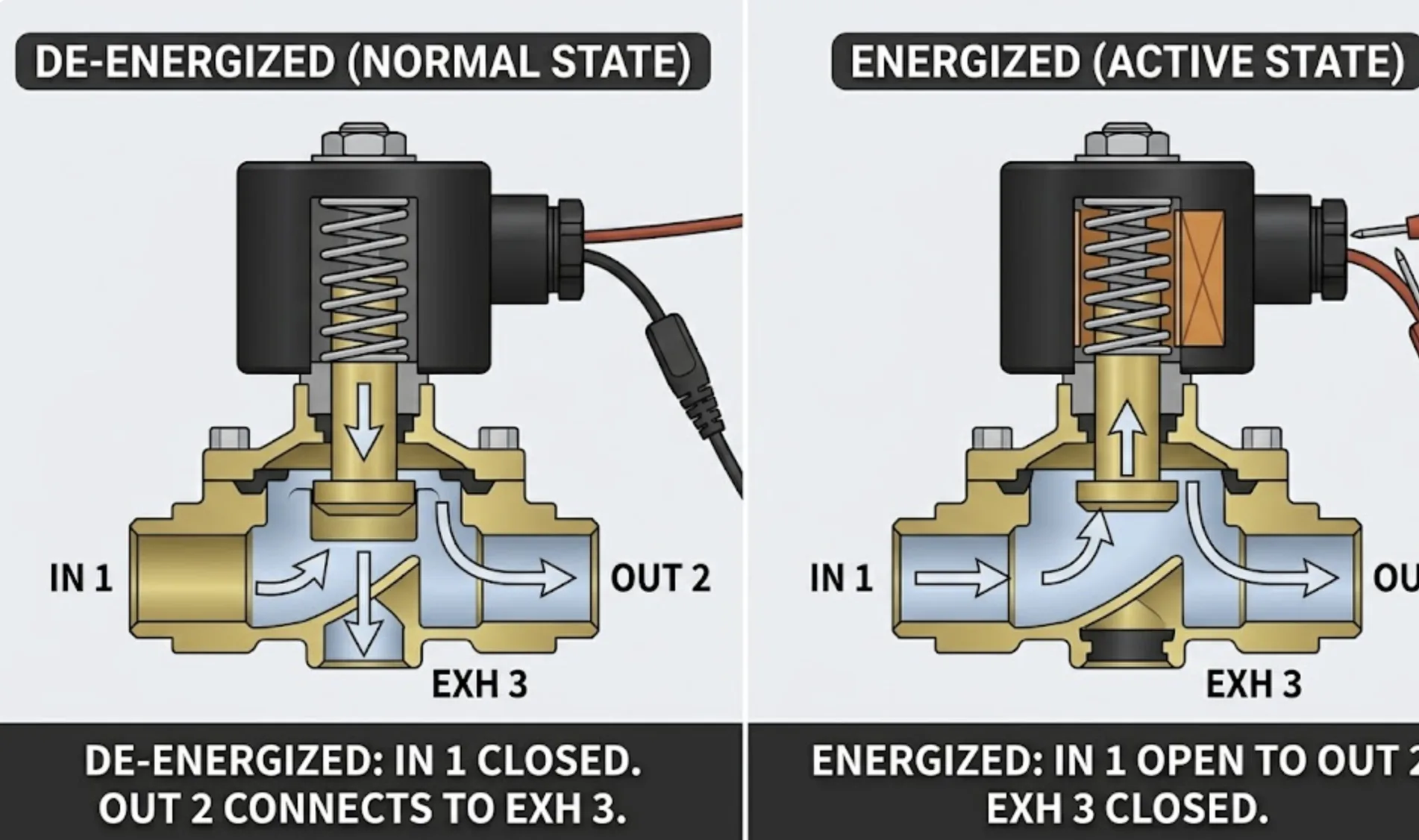
3/2 solenoid valve operation:
Energized: connects pressure port to output
De-energized: output is vented or blocked
Enables directional switching and exhaust control
Key functional advantage of 3/2 type:
Allows control of single-acting cylinders
Supports venting without additional components
More flexible in pneumatic circuit design
Understanding these working modes helps in choosing the right pneumatic solenoid valve configuration.
Applications: When to Use 2/2 vs 3/2 Solenoid Valves
Different industrial systems require different valve types depending on control complexity.
Typical applications include:
2/2 solenoid valve applications:
Water treatment systems
Oil and gas flow isolation
Cooling and heating fluid control
Simple shut-off automation systems
3/2 solenoid valve applications:
Pneumatic cylinder control systems
Packaging machinery
Industrial automation actuators
Air-driven mechanical switching systems
Selection guideline:
Use 2/2 valve for basic flow ON/OFF control
Use 3/2 valve for directional air control and venting functions
Choosing correctly improves efficiency and reduces system complexity.
Advantages and Limitations of Each Solenoid Valve Type
Both 2/2 and 3/2 solenoid valves offer unique benefits depending on application needs.
Advantages of 2/2 solenoid valves:
Simple structure and easy maintenance
Reliable shut-off performance
Lower cost and energy consumption
Limitations of 2/2 valves:
Cannot control flow direction
Limited to basic on/off operations
Advantages of 3/2 solenoid valves:
Supports directional switching
Enables exhaust and pressure release
Suitable for pneumatic automation
Limitations of 3/2 valves:
More complex structure
Higher cost compared to 2/2 types
Understanding these trade-offs helps in selecting the right industrial solenoid valve solution.
How to Choose Between 2/2 and 3/2 Solenoid Valves
Selecting the correct valve depends on system requirements and control logic.
Key selection factors include:
- Type of fluid (air, water, oil, gas)
- Required control function (on/off vs directional control)
- System pressure and flow rate
- Automation complexity
- Space and cost constraints
Practical rule:
- Choose 2/2 solenoid valve for simple isolation and shut-off
- Choose 3/2 solenoid valve for pneumatic directional control systems
Proper selection improves system stability and reduces long-term maintenance costs.
FAQ
What is the main difference between 2/2 and 3/2 solenoid valves?
2/2 valves control simple on/off flow, while 3/2 valves also control direction and exhaust.
Can a 2/2 valve replace a 3/2 valve?
No, because 2/2 valves cannot provide directional switching or venting functions.
Where are 3/2 solenoid valves commonly used?
They are mainly used in pneumatic systems and single-acting cylinder control.
Which valve is simpler in design?
The 2/2 solenoid valve is simpler and more compact in structure.
Which is more versatile, 2/2 or 3/2 valve?
The 3/2 solenoid valve is more versatile due to its directional control capability.
About Senya Pneumatic Manufacturer
Senya Pneumatic focuses on providing professional industry insights, technical knowledge, and product-related solutions across automation, fluid control, and industrial components.
Our platform covers a wide range of topics including solenoid valve systems, pneumatic control technologies, and industrial automation solutions. We aim to help engineers, buyers, and technicians understand complex components such as 2/2 and 3/2 solenoid valves through clear and practical explanations.If you learn more about pneumatic components blog information,just visit our website directly!
With a strong emphasis on technical accuracy and industry relevance, we support users in selecting, applying, and maintaining high-performance industrial components for various automation systems.