
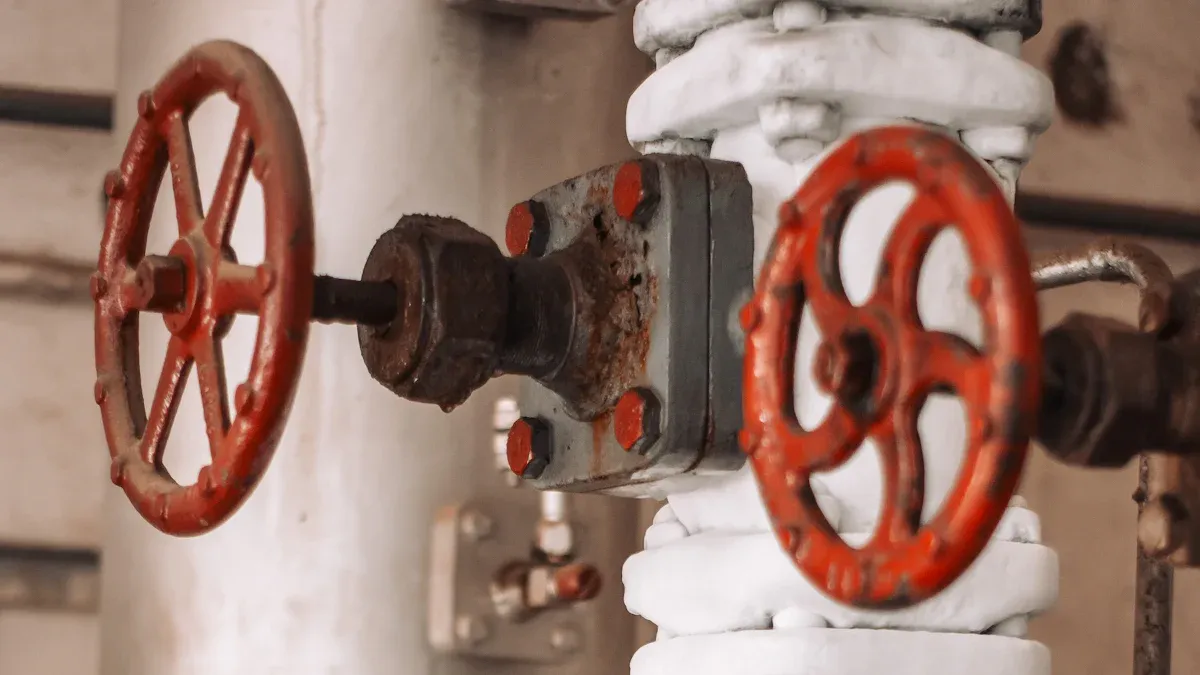
Selecting the optimal 2/2 ways brass solenoid valve for industrial automation demands careful consideration. This guide helps engineers navigate essential selection criteria for informed purchasing decisions. It identifies the top 10 models anticipated for 2026, optimizing system performance. Understanding various solenoid valves, including NC solenoid valves and the robust brass solenoid valve, is crucial. Other components, such as a 5/2 ways pneumatic directional valve with compact manifold, also play vital roles in automation systems.
Key Takeaways
- Choose the right 2/2 way brass solenoid valve. Consider pressure, temperature, and what fluid it will control. This helps your system work well.
- Brass valves are good for many industrial uses. They resist corrosion and conduct heat well. They also cost less.
- Understand if a valve is normally open or normally closed. This helps you design your system correctly. It ensures safety and proper flow.
- Check certifications like NEMA and IP ratings. These show how well a valve protects against dust and water. This is important for safety and long-term use.
- Install valves correctly and do regular checks. Look for leaks or damage. This makes valves last longer and work better.
Understanding 2/2 Way Brass Solenoid Valves for Industrial Automation

What are 2/2 Way Solenoid Valves and Their Industrial Role?
Two-way solenoid valves are fundamental components in industrial automation systems. They feature two ports and two positions, providing simple on/off control for various media. These valves play a crucial role in managing fluid and gas flow within complex machinery. For example, they shut off the air supply to specific machine parts, ensuring safe operation. They also interlock various system components, isolating different sections as needed, or connecting them to facilitate processes. In practical applications, these valves control the flow of coolants, lubricants, or compressed air in automated assembly lines. They manage refrigerant flow in commercial HVAC systems and ensure reliable operation in medical equipment like dialysis machines. The automotive industry also utilizes them in fuel systems and emission controls.
Why Brass is Preferred for Specific Industrial Applications
Brass is a popular material choice for solenoid valve bodies due to its advantageous properties. It offers good thermal conductivity and excellent corrosion resistance, making it suitable for many industrial environments. Brass also provides cost-effectiveness, which makes it a preferred option for numerous applications. This material performs effectively with water, air, and various industrial fluids. It offers adequate strength for moderate-pressure applications and resists dezincification in potable water systems. Furthermore, brass maintains dimensional stability across typical operating temperature ranges. Manufacturers offer brass solenoid valves in specialty types, including high-pressure, corrosion-resistant, cryogenic, and explosion-proof designs, tailoring them for specific industrial applications.
Key Operating Principles and Configurations (Normally Open vs. Normally Closed)
Solenoid valves operate through an electromagnetic coil. When an electrical current energizes the coil, it creates a magnetic field. This field pulls a plunger, which then opens or closes the valve orifice. The valve’s configuration determines its default state. A Normally Closed (NC) valve remains closed when de-energized, blocking flow. Applying power to the coil opens the valve, allowing media to pass. Conversely, a Normally Open (NO) valve stays open when de-energized, permitting flow. Energizing the coil closes the valve, stopping the flow. Understanding these configurations is vital for designing an effective 2/2 ways brass solenoid valve for industrial automation system.
Critical Selection Criteria for Industrial 2/2 Way Brass Solenoid Valves
Pressure and Temperature Ratings
Selecting the correct 2/2 way brass solenoid valve for industrial automation requires careful consideration of pressure and temperature ratings. The valve’s operational limits must align with the system’s demands. Industrial 2/2 way brass solenoid valves often handle a wide range of pressures. For instance, 2-inch brass normally closed solenoid valves are available with a versatile pressure range up to 145 PSI for water and air. Some specialized valves, like the Jefferson Valves 1342 Series 2-way brass explosion-proof solenoid valves, have a minimum pressure of 7.5 PSI. Valcor’s general purpose solenoid valves, which include brass construction, offer pressure ranges from vacuum to over 1000 PSI. Specific series, such as the SV11/12, boast high-pressure ratings up to 1000 psi. The SV330/430 series operates from 0 psi to 1050 psi, while the SV321/421 series handles up to 250 psi. The SV340/440 series manages pressures up to 300 psi.
Temperature ratings are equally crucial. Industrial 2/2 way brass solenoid valves can tolerate a wide temperature range, typically from 15°F to 250°F (-10°C to 120°C). Some models specify a maximum fluid temperature of +90°C and a minimum fluid temperature of -10°C. Other valves operate within a narrower range, such as -9°C to 50°C. Engineers must ensure the valve’s temperature limits accommodate both the media temperature and the ambient operating temperature of the industrial environment.
Flow Rate and Orifice Size
The required flow rate significantly influences the selection of a 2/2 way brass solenoid valve. The valve’s orifice size directly impacts its flow capacity. A larger orifice allows more fluid to pass through, resulting in a higher flow rate. For example, the 2W Series 2/2 Way Brass Solenoid Valve, when available in larger sizes, generally exhibits a higher flow capacity. Orifice sizes for 2/2 Electric Normally Open Brass Solenoid Valves vary widely. Common sizes include 2.5mm, 4mm, 16mm, 20mm, 25mm, 32mm, 40mm, and 50mm. System designers must calculate the necessary flow rate for their application and then select a valve with an appropriate orifice size to meet that demand efficiently. An undersized orifice restricts flow, leading to pressure drops and reduced system performance, while an oversized orifice can result in sluggish operation or unnecessary cost.
Media Compatibility
Media compatibility is a non-negotiable criterion when selecting a 2/2 way brass solenoid valve. The valve materials must withstand the chemical properties of the fluid or gas it controls. Brass is a suitable material for many industrial applications. It performs well with various industrial fluids, water, and non-acidic fluids. Brass also handles mildly corrosive fluid media in pipelines. Specifically, brass solenoid valves are often chosen for water, air, and non-corrosive liquid applications. However, engineers must avoid using brass valves with highly corrosive chemicals, strong acids, or certain gases that can degrade the brass or the valve’s internal seals. Always consult chemical compatibility charts to ensure the valve’s body material and seal materials (e.g., NBR, EPDM, Viton) are appropriate for the specific media in the system.
Response Time and Cycle Life
Response time refers to the speed at which a solenoid valve opens or closes after receiving an electrical signal. This characteristic is crucial in industrial processes requiring precise timing and rapid action. For example, in emergency shut-off systems or high-speed manufacturing lines, a fast response time ensures safety and efficiency. A slow response can lead to delays, product defects, or even hazardous conditions.
Cycle life indicates the total number of open-close cycles a valve can perform reliably before requiring maintenance or replacement. A high cycle life translates to greater durability and reduced downtime for industrial operations. Manufacturers design industrial solenoid valves for demanding applications, expecting them to endure millions of cycles. For instance, the COVNA Normally Open 220V AC 2 Way Pilot Operated Solenoid Valve, made of brass, boasts a life span of 1 million cycles. Similarly, the COVNA HK5231015 High Pressure Solenoid Valve, also a brass model, offers a stated life span of 1 million cycles. Parker G Series solenoid valves are engineered for a long life expectancy in industrial settings. While stainless steel operators in this series achieve millions of life cycles, the specific cycle life for brass 2/2 way valves within this series is not explicitly detailed. Engineers must consider both response time and cycle life to ensure the selected valve meets the operational demands and longevity expectations of the application.
Power Consumption and Voltage Requirements
Matching the solenoid valve’s power consumption and voltage requirements to the available electrical supply is essential for proper operation and system integration. Solenoid valves operate on either AC (alternating current) or DC (direct current) power. Each type has specific advantages. DC valves often provide quieter operation and are suitable for battery-powered systems. AC valves typically offer higher holding forces and are common in industrial settings with readily available AC power.
Industrial 2/2 way brass solenoid valves come with various standard voltage options. Common DC voltages include 12V DC and 24V DC. For AC applications, typical voltages are 24V AC, 110V AC, 120V AC, and 220V AC. Some manufacturers offer a wide range of choices to accommodate diverse industrial electrical systems. For example, many valves are available in 12V, 24V, 110V, and 220V configurations. Selecting the correct voltage prevents damage to the valve coil and ensures reliable performance.
Certifications and Standards (e.g., NEMA, IP Ratings, ATEX)
Certifications and adherence to industry standards guarantee a solenoid valve’s quality, safety, and performance in specific environments. These ratings provide crucial information about a valve’s suitability for various industrial conditions.
NEMA (National Electrical Manufacturers Association) ratings define standards for electrical enclosures, including those for solenoid valve coils. These ratings indicate the level of protection against environmental hazards such as dust, water, and corrosion. Common NEMA ratings for industrial solenoid valves include NEMA 1, 2, 3, 3S, 4, and 4X. Each rating specifies different levels of protection, from indoor use to outdoor, corrosion-resistant applications.
IP (Ingress Protection) ratings, defined by the International Electrotechnical Commission, classify the degree of protection provided by electrical enclosures against solids and liquids. An IP rating consists of two digits. The first digit indicates protection against solid objects (e.g., dust), and the second digit indicates protection against liquids (e.g., water). For example, an IP66 rating signifies complete protection against dust ingress and protection against powerful water jets.
ATEX certification is mandatory for equipment intended for use in potentially explosive atmospheres within the European Union. This certification ensures the valve’s design and construction prevent ignition of flammable gases, vapors, mists, or dusts. Industries dealing with hazardous materials, such as oil and gas, chemical processing, and mining, require ATEX-certified solenoid valves to ensure worker safety and compliance with regulations. Selecting valves with appropriate NEMA, IP, or ATEX ratings is critical for safe and reliable operation in challenging industrial environments.
Connection Types and Sizes
Selecting the correct connection type and size for a 2/2 way brass solenoid valve is crucial for seamless integration into any industrial system. The connection method ensures proper sealing and efficient fluid transfer. Various connection types exist, each suitable for different installation requirements and pipe configurations. Engineers must match the valve’s connections to the existing piping infrastructure.
Common connection types for industrial 2/2 way brass solenoid valves include threaded connections, which offer a secure and widely used method. For instance, many valves feature inner thread connections. These are available in standard sizes such as G1/4, G1/2, and G3/8. These sizes refer to the nominal diameter of the pipe thread, ensuring compatibility with standard plumbing components.
Other prevalent connection types include DIN connectors and flying leads. These often relate to the electrical connection of the solenoid coil rather than the fluid port. However, the fluid port sizes associated with these valve types also vary. For general-purpose valves, joint sizes typically range from G3/8″ to G2″. Normally open types, which allow flow when de-energized, often come with smaller joint sizes, ranging from 1/8″ to 3/8″.
The following table summarizes typical connection types and their corresponding joint size ranges:
| Connection Type | Joint Size Range |
|---|---|
| DIN connector type | G3/8″ to G2″ |
| Flying leads type | G3/8″ to G2″ |
| Inner thread | G1/4, G1/2, G3/8 |
| (For normally open types) | 1/8″ to 3/8″ |
Choosing the right size prevents leaks and maintains optimal flow rates. An undersized connection can restrict flow and cause pressure drops, while an oversized connection might lead to compatibility issues or require additional adapters, increasing installation complexity and potential leak points. Therefore, careful consideration of both the connection type and its dimensions is essential for the reliable operation of any 2/2 way brass solenoid valve for industrial automation.
Top 10 2/2 Way Brass Solenoid Valves for Industrial Automation in 2026
Valve 1: ASCO 2-Way Solenoid Valve (General Purpose) – Key Features and Ideal Applications
The ASCO 2-Way Solenoid Valve stands out as a reliable choice for general industrial purposes. This valve is available in both brass and stainless steel constructions. It accommodates pipe sizes ranging from 3/8″ to 2 1/2″ NPT. The valve provides extensive control for air, gas, water, and oil. It holds important approvals, including UL Listed, CSA Certified, and CE Approved.
The ASCO Series 210, also known as 8210, offers an economical and high-flow general service solenoid valve. Engineers designed it for liquid, corrosive, and air/inert gas service. It features a wide range of pressure ratings, sizes, and resilient materials. This design ensures a long service life and low internal leakage. The valve boasts durable construction with a stainless steel body for lasting performance. It also incorporates FKM seals, ensuring consistent and leak-free operation. This valve is suitable for use with air, water, and oil. It withstands media temperatures up to 175°F. A NEMA-rated enclosure provides protection against dust, moisture, and corrosion.
This ASCO valve finds ideal applications in various industrial settings. These include car wash equipment, air compressors, and pumps. It also serves laundry equipment and industrial water control systems. Furthermore, it is suitable for commercial and industrial gas burners, grain dryers, incinerators, and space heaters. Other applications include data center cooling systems, electric vehicle charging stations, and facility maintenance. It also supports loading dock equipment, material handling, and safety systems.
Valve 2: Parker Hannifin 2-Way Brass Solenoid Valve (High Flow) – Key Features and Ideal Applications
The Parker Hannifin 2-Way Brass Solenoid Valve, particularly the 7321B series, excels in high-flow applications. This valve is known for its robust construction and efficient fluid handling capabilities. It provides reliable operation in demanding industrial environments where high flow rates are essential. Its design ensures minimal pressure drop, making it suitable for systems requiring rapid and substantial media transfer.
This Parker Hannifin valve is ideally suited for controlling media such as water, steam, and light oils. Its industrial applications are diverse. These include plumbing systems and industrial washing machines. It also serves car wash installations and the cooling of machine tools. Hydrocleaners, autoclaves, and irrigation systems also benefit from its high-flow performance.
Valve 3: DwyerOmega Compact Brass 2-Way Solenoid Valve (Versatile) – Key Features and Ideal Applications
The DwyerOmega Compact Brass 2-Way Solenoid Valve offers exceptional versatility for industrial use. Its compact design allows for installation in tight spaces. Users can orient the valve in any position without affecting performance. It features field-replaceable coils, simplifying maintenance. The valve operates as a normally closed design, blocking flow when de-energized.
The solenoid enclosure provides robust protection against dust and seepage of oil or non-corrosive coolants, meeting IP54 and NEMA Type 13 standards. This valve is available in brass with an NBR seal. It handles a maximum process temperature of 176°F (80°C). It comes in a wide range of valve sizes and flow ranges, with 1/8" to 2" NPT connections and 3 mm to 50 mm orifices. It is suitable for air, gas, water, and other liquid applications. The electrical connection uses DIN 43650 A. It operates within a temperature range of 32°F to 149°F and withstands pressure limits up to 246.6 psi.
Valve 4: Festo VZWF Series 2/2-Way Solenoid Valve (High Performance) – Key Features and Ideal Applications
The Festo VZWF Series 2/2-Way Solenoid Valve offers high performance for demanding industrial applications. This valve functions as a 2/2-way normally closed poppet valve, featuring a return spring. It utilizes solenoid/pilot actuation, specifically a force pilot-operated design. This allows small solenoids to control high pressures effectively. The valve operates from 0 bar, with a maximum operating pressure of 10 bar, depending on the coils and nominal diameter.
Engineers designed the VZWF Series for use with water, air, and neutral media. It features a robust brass housing and an NBR seal, ensuring durability and media compatibility. The valve is suitable for inline mounting and comes in five valve sizes, ranging from G to G1. Special features include forced lifting of the valve diaphragm and automatic closure upon pressure loss, enhancing safety and reliability. It operates within a temperature range of -10°C to +35°C. This high-performance valve finds ideal applications in water treatment systems, pneumatic control circuits, and general fluid handling where precise and reliable operation under varying pressures is essential.
Valve 5: ValveMan Process Solenoid Valve (Challenging Media) – Key Features and Ideal Applications
The ValveMan Process Solenoid Valve provides accurate control in difficult fluid and gas handling systems. Engineers specifically engineered this valve to handle aggressive media, high temperatures, and corrosive environments. It comes in direct acting, pilot operated, and specialty solenoid valve types. ValveMan offers these valves in a range of sizes, materials, and voltage options.
This valve features durable body construction, ensuring reliability under challenging conditions. It also offers custom designs with flexible configurations to meet specific requirements. These include normally closed valves and manifold assemblies built for extreme environments. The ValveMan Process Solenoid Valve delivers superior precision, performance, and reliability under the harshest conditions. It excels in high pressure, steam, gas, air, liquid, and oil control applications. Applications involving aggressive media typically utilize stainless steel components due to their inherent resistance to corrosion and chemical damage. Therefore, this valve is ideal for chemical processing, oil and gas exploration, and any industrial setting where media properties demand exceptional material resistance and robust valve design.
Valve 6: Tameson Direct-Acting Brass Solenoid Valve (Quick Response) – Key Features and Ideal Applications
The Tameson Direct-Acting Brass Solenoid Valve is an excellent choice for applications requiring quick response times. This valve operates on a direct-acting principle, meaning the solenoid directly lifts the seal to open or close the orifice. This design eliminates the need for a pilot pressure differential, resulting in very fast actuation. It ensures immediate on/off control, which is critical in many automated processes.
Constructed from brass, this valve offers good compatibility with common industrial media such as air, water, and inert gases. Its compact design often allows for easy integration into existing systems. The Tameson direct-acting valve is typically available in normally closed configurations, providing a secure shut-off when de-energized. Ideal applications include small-scale automation, dosing systems, medical equipment, and any scenario where rapid and precise fluid or gas cutoff is paramount. Its quick response makes it suitable for emergency shut-off functions or processes requiring frequent, rapid cycling.
Valve 7: Emerson ASCO 8210 Series (Water/Air/Gas Control) – Key Features and Ideal Applications
The Emerson ASCO 8210 Series stands as a cornerstone for industrial water, air, and gas control. This series offers versatile construction, making it suitable for a broad array of applications. It comes in both normally closed and normally open configurations, providing flexibility for various system designs. Users can choose between AC or DC operation, further enhancing its adaptability. The series also offers brass or stainless steel bodies, allowing selection based on media compatibility and environmental conditions.
The 8210 Series boasts a wide range of specifications. It includes a broad selection of pressure ratings and sizes, accommodating diaphragm and piston constructions from 3/8" to 2 1/2". It also features various resilient materials, ensuring durability and efficiency. Engineers designed this series for a long service life and minimal internal leakage, contributing to reliable system performance. It provides high flow for diverse media, including liquids, corrosive substances, and air/inert gases. Many consider the 8210 Series the most economical high-flow valve available in its class.
This ASCO valve finds ideal applications in numerous industrial settings. It effectively controls flow in car wash systems, air compressors, and pumps. It also serves laundry equipment and industrial water control systems.
Valve 8: SENYA Pneumatic 2/2 Way Brass Solenoid Valve (Reliable Industrial Use) – Key Features and Ideal Applications
The SENYA Pneumatic 2/2 Way Brass Solenoid Valve offers reliable performance for demanding industrial use. This valve features an ultra-compact and lightweight design, making it ideal for narrow installation spaces. Its dual-hole bottom mounting design requires no external bracket, simplifying assembly. The valve boasts a fast response time of 30 ms switching, supporting 20 bar continuous and 30 bar instantaneous high-pressure systems. It has a durable and reliable structure with optional corrosion-resistant materials for extended service life. Its robust design also requires simple maintenance.
This SENYA valve provides innovative 360° omnidirectional mounting capability. This allows horizontal, vertical, or inverted installation without compromising performance. Its modular construction facilitates easy maintenance, enabling independent servicing of the pilot assembly and diaphragm. This reduces downtime and labor costs. The valve’s robust construction features a pressure rating of 16 bar, making it suitable for demanding industrial conditions. An energy-optimized pilot mechanism ensures superior performance with minimal power consumption, reducing operational costs and heat generation. SENYA utilizes premium corrosion-resistant materials and precision manufacturing for long-term durability in challenging industrial environments. Its versatile design accommodates various media, including compressed air, water, light oils, and neutral gases. This makes it a highly adaptable 2/2 ways brass solenoid valve for industrial automation.
Valve 9: Amazon Basics 2W-15K Brass Solenoid Valve (Cost-Effective Automation) – Key Features and Ideal Applications
The Amazon Basics 2W-15K Brass Solenoid Valve presents a cost-effective solution for basic industrial automation needs. This valve typically offers a straightforward design focused on functionality and affordability. It provides reliable on/off control for common media such as water, air, and non-corrosive liquids. Its brass construction ensures compatibility with a wide range of general-purpose applications.
Key features often include standard voltage options, such as 12V DC or 120V AC, making it easy to integrate into existing electrical systems. The valve usually comes in a normally closed configuration, providing a secure shut-off when de-energized. While it may not offer the advanced features or extreme durability of specialized industrial valves, its simplicity and lower price point make it attractive for budget-conscious projects. Ideal applications include irrigation systems, small-scale fluid control in workshops, hobby projects, and non-critical industrial processes where cost efficiency is a primary concern.
Valve 10: Electric Solenoid Valves General Purpose Brass Valve (Essential Stock) – Key Features and Ideal Applications
The Electric Solenoid Valves General Purpose Brass Valve serves as an essential stock item for many industrial operations. Manufacturers design this valve for non-specialized, broad applications. It performs effectively where extreme operating conditions, such as super high pressure, corrosive fluids, or sterile environments, are absent. This valve offers a flexible and cost-effective solution for basic fluid control needs.
This general-purpose valve typically features a 2/2-way direct acting or pilot operated control mechanism. It provides basic open/close control for various media. Its typical operating conditions include a pressure range from 0 to 10 bar. Power ratings usually fall between 6W and 20W. For small port sizes, it can achieve a flow rate of up to 25 L/min. These valves most commonly use brass or stainless steel for their valve bodies. They are available in standard voltages, including 12V DC, 24V DC, or 240V AC, ensuring compatibility with common electrical systems.
Seal materials vary to suit different media. Viton seals are suitable for chemicals. EPDM seals work well with potable water. NBR seals are ideal for oil-based fluids. This adaptability makes the general-purpose brass valve a versatile component.
This valve finds ideal applications in numerous industrial settings. It is suitable for general water control, air systems, and light oil applications. Industries use it in irrigation systems, simple process control loops, and utility services. It also serves in heating and cooling systems where precise, but not extreme, control is necessary. This valve is a reliable choice for any system requiring a dependable 2/2 ways brass solenoid valve for industrial automation without specialized demands.
Installation and Maintenance Best Practices for 2/2 Way Brass Solenoid Valves
Proper Installation Techniques for Longevity
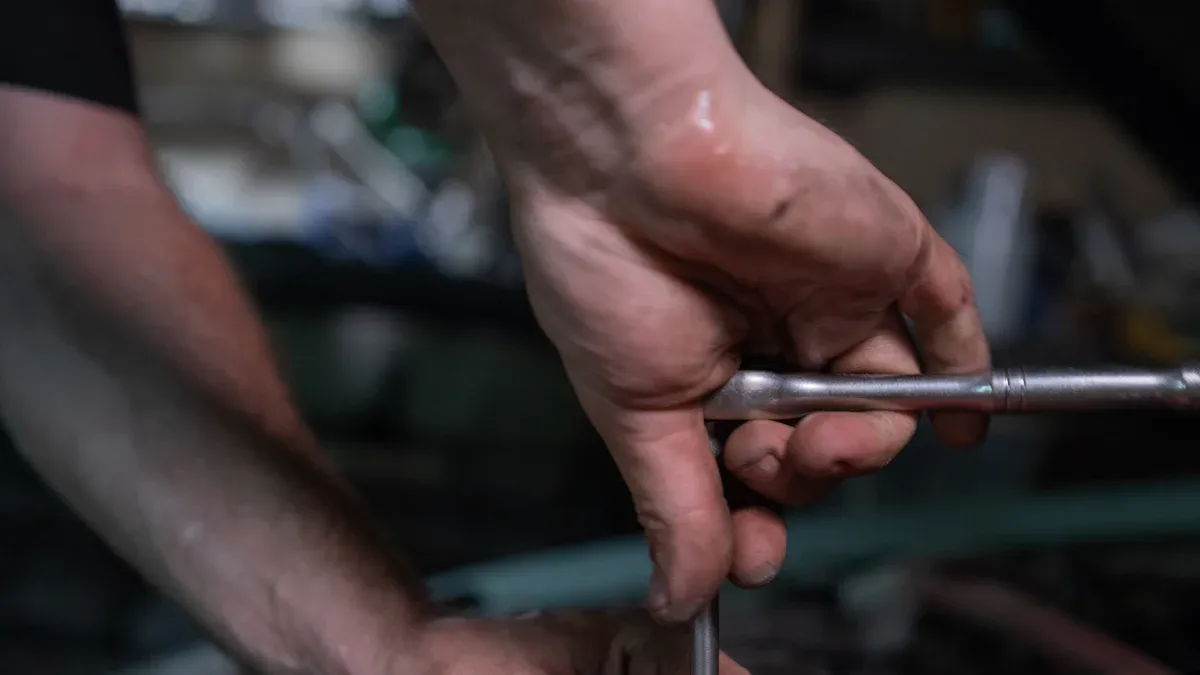
Correct installation significantly extends the lifespan and ensures the reliable operation of 2/2 way brass solenoid valves. Installers must ensure the piping system is clean and free of debris before valve placement. Foreign particles can cause blockages or damage internal components. Mount the valve in the correct orientation, typically indicated by an arrow on the valve body, to match the flow direction. Securely fasten the valve to prevent vibration, which can loosen connections over time. Apply appropriate torque when tightening pipe connections to avoid leaks without over-stressing the valve body. Ensure the electrical connections are secure and match the valve’s voltage requirements. Proper grounding also prevents electrical issues. Finally, protect the valve from extreme temperatures, excessive moisture, and corrosive environments to prevent premature wear.
Routine Maintenance and Troubleshooting Tips
Regular maintenance helps prevent unexpected failures and maintains optimal performance. Technicians should conduct periodic visual inspections for signs of wear, such as leaks, corrosion, or damaged wiring. They should also check the coil for overheating. A hot coil can indicate an electrical overload. Contamination often causes sluggish or erratic operation. Poor filtration is a primary cause of this issue. Seal failure can lead to internal leakage, often due to age or high temperatures. Connection issues, such as those caused by vibration or corrosion, result in intermittent operation.
Here is a breakdown of common failure modes:

Troubleshooting often involves a systematic approach. First, perform an initial visual inspection for obvious damage. Next, test the electrical system. Use a multimeter to check coil resistance; a normal range is 10-200 ohms. Infinite resistance indicates an open coil, while zero resistance suggests a short circuit. Verify the power supply to the coil. Voltage variations beyond ±10% can cause problems. Manually operate the valve to check for smooth mechanical movement. Finally, test air flow through the valve in both positions to confirm mechanical function.
| Probable Cause | Solution |
|---|---|
| Incorrect voltage/frequency | Check coil specifications, wiring diagram, and voltage variations; replace coil if necessary. |
| Coil short circuit (possibly fluid) | Inspect installation for short circuits, check coil connections, and replace the coil. Ensure no moisture can enter the connection. |
| Plunger moves with high friction (due to dirt, damage, or bending) | Replace damaged parts and clean away dirt. |
| Medium temperature is too high | Verify valve specifications and replace with a suitable variant if needed. |
| Ambient temperature is too high | Relocate the valve to a cooler area if possible, check specifications, and improve ventilation around the coil and valve. |
| No power to the coil | Check if the valve is normally open or closed, measure voltage across the coil, and ensure it matches specifications. Inspect relay contacts, wires, and fuses. |
| Differential pressure is too high | Measure differential pressure across the valve and compare with specifications. Reduce input pressure if possible to lower the differential. |
When to Replace Your Solenoid Valve
Deciding when to replace a solenoid valve involves assessing its performance and the cost-effectiveness of repair. Consider replacement when the valve consistently fails to operate correctly, even after troubleshooting and minor repairs. Signs include persistent leaks, erratic operation, or a significant drop in flow rate. A valve reaching the end of its specified cycle life also warrants consideration for replacement, especially in critical applications. Electrical issues, such as frequent coil burnouts, often indicate a need for replacement. Contamination that cannot be effectively cleaned or mechanical wear and tear on internal components also suggest replacement. Replacing a failing valve proactively prevents costly downtime and potential damage to other system components.
Selecting the right 2/2 ways brass solenoid valve for industrial automation is paramount for efficient operations. We emphasized the critical importance of considering detailed selection criteria. These include pressure, temperature, and media compatibility. Readers should explore the highlighted top models for 2026. This empowers them to make informed decisions. They can optimize system performance and reliability.
FAQ
What is the difference between Normally Open (NO) and Normally Closed (NC) 2/2 way solenoid valves?
A Normally Closed (NC) valve blocks flow when de-energized. It allows flow when energized. A Normally Open (NO) valve permits flow when de-energized. It blocks flow when energized. Engineers select the configuration based on system safety and operational requirements.
Why do industries often prefer brass for 2/2 way solenoid valves?
Industries prefer brass for its excellent corrosion resistance, good thermal conductivity, and cost-effectiveness. It performs well with water, air, and various non-corrosive industrial fluids. Brass offers adequate strength for moderate-pressure applications.
How do engineers determine the correct flow rate and orifice size for an application?
Engineers first determine the required flow rate for their system. Then, they select a valve with an orifice size that meets this demand. A larger orifice allows higher flow. An undersized orifice restricts flow, causing pressure drops.
What do NEMA and IP ratings signify for solenoid valves?
NEMA ratings indicate protection levels for electrical enclosures against environmental hazards like dust and water. IP ratings classify protection against solid objects and liquids. These certifications ensure the valve’s suitability for specific industrial environments.
What are key maintenance tips for 2/2 way brass solenoid valves?
Perform routine visual inspections for leaks or damage. Check the coil for overheating. Contamination often causes erratic operation. Clean the valve regularly. Replace the valve if it consistently fails or reaches its cycle life.
💡 Tip: Always consult the manufacturer’s manual for specific maintenance schedules and troubleshooting guides for your particular valve model.