
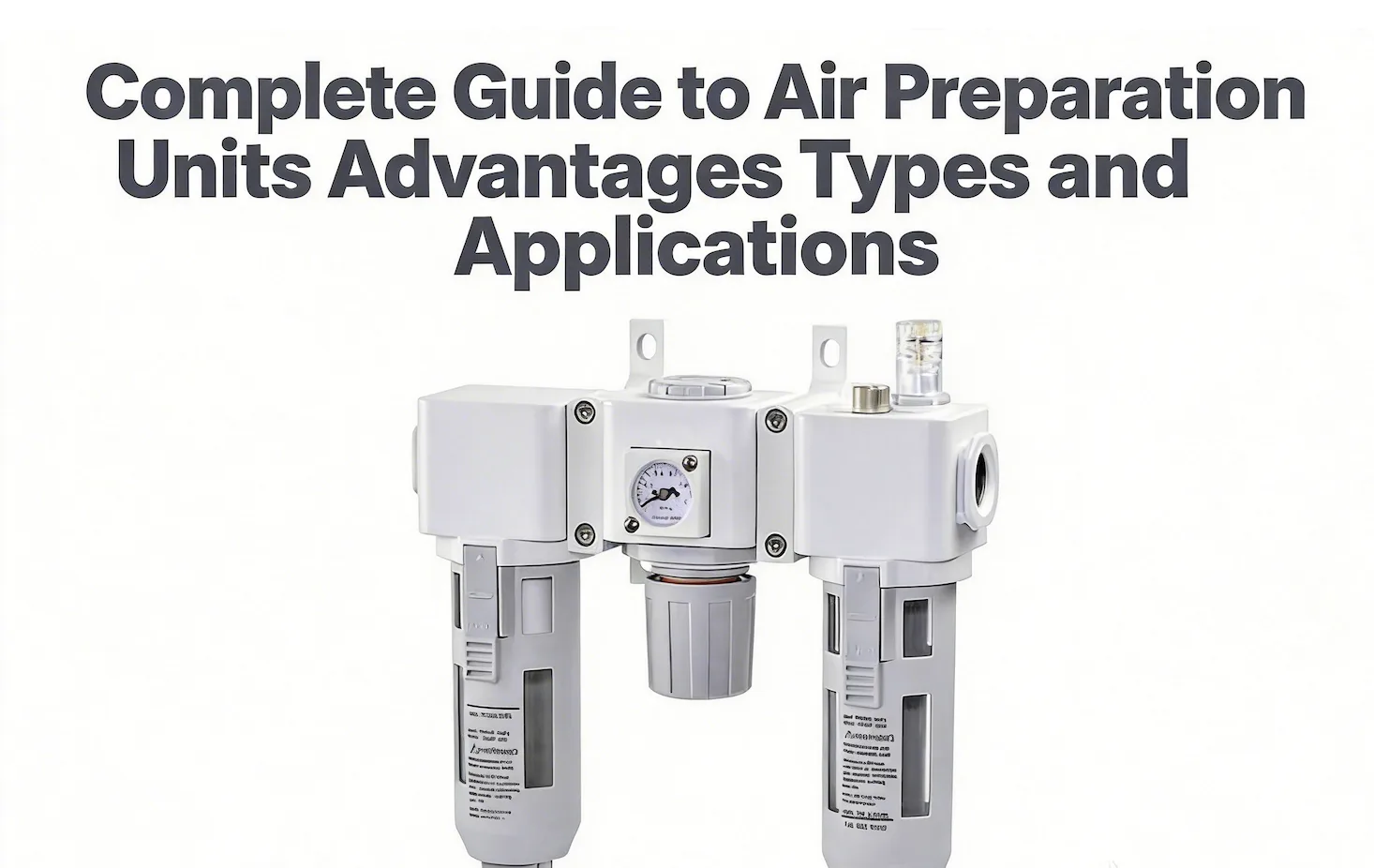
What is an Air Preparation Unit (FRL)?
In pneumatic systems, the air preparation unit is a core component ensuring stable system operation. Its main function is to process the air from the compressor, making it clean, dry, and at stable pressure, providing an ideal working environment for downstream pneumatic components. Untreated air may contain dust, moisture, oil, and other impurities, which directly affect the lifespan of pneumatic components and system performance, leading to equipment wear, leaks, and even malfunctions. This article will focus on the advantages, common types, and practical applications of air preparation units to help you better understand and select the right unit, thereby improving the reliability and efficiency of your pneumatic system.
Key Advantages of Air Preparation Units
Air preparation units are not only air purification devices but also guarantees of the efficiency and reliability of pneumatic systems.
Providing Continuous and Stable Compressed Air
First, it provides a continuous and stable pressure and clean air, ensuring the precise and efficient operation of cylinders, valves, and other pneumatic components.
Extending Equipment Lifespan
Second, by effectively removing moisture and impurities, it extends equipment lifespan and reduces maintenance frequency and costs.
Reduced Energy Consumption
At the same time, air handling units can optimize energy utilization and reduce compressed air consumption, thereby saving energy.
Increased Operational Safety
Furthermore, a stable and clean air supply helps improve production safety, prevents equipment malfunctions due to air quality issues, and also contributes positively to environmental sustainability.
An air preparation has two functions:
1. Bringing and keeping the quality of the compressed air at the desired level
2. The (central) pressure control of the machine
This means that an FRL can literally be seen as the heart of a well-functioning pneumatic system.
Common Types of Air Handling Units
Air handling units typically consist of multiple modules, each treating different air requirements. The most common is a triplet (FRL: Filter, Regulator, Lubricator). The filter removes dust, moisture, and oil; the regulator stabilizes air pressure; and the lubricator provides oil mist lubrication to downstream equipment as needed.
Besides triplet units, there are membrane dryers for applications requiring further reduction of moisture in the air and higher pressure dew point requirements; precision filters can filter smaller particles and are suitable for demanding industrial environments; high-flow filters are suitable for high-volume air demands, preventing clogging and pressure drop; and activated carbon filters can adsorb oil mist and odors, further improving air purity.
Each unit has its specific application scenarios and advantages, and can be combined according to actual needs.
Application Scenarios of Air Handling Units
Air handling units are widely used in modern industry and are crucial for the normal operation of automated and precision equipment.
In manufacturing automation and robotic systems: They provide stable, clean air, ensuring high-precision movement of actuators and pneumatic arms;
In machine tools and machining centers: They prevent moisture and impurities in the air from corroding or clogging precision components;
In assembly lines and large-scale industrial production systems: Air Regulators ensure stable air pressure at every stage, improving production efficiency and product quality.
Whether in high-speed production or complex assembly lines, high-quality air is fundamental to ensuring the efficient and reliable operation of pneumatic systems.
Summary and Selection Recommendations
In conclusion, air handling units are an indispensable component of pneumatic systems. By providing clean, dry, and stable-pressure air, they improve system reliability, extend equipment life, and optimize energy consumption and production safety. When selecting an air handling unit, factors such as airflow rate, pressure range, whether downstream equipment requires lubrication, and environmental conditions (e.g., humidity and corrosiveness) must be considered. In practical applications, different types of air handling modules can be combined according to equipment requirements to meet system performance needs. Through proper configuration and maintenance, air handling units can not only improve the efficiency of pneumatic systems but also bring long-term value to production management and environmental protection.
Welcome to SENYA Pneumatic Blog Website, your ultimate resource for everything related to pneumatic components.From air preparation units and valves to cylinders, sensors, and filters, we cover the full spectrum of pneumatic devices that power modern automation, manufacturing, and production systems.
Through our blogs, guides, and technical articles, you can explore the advantages, types, applications, and maintenance tips for every major pneumatic component. Whether you are designing a new system, optimizing existing operations, or troubleshooting performance issues, our content helps you make informed decisions to increase efficiency, reliability, and safety.
We also provide solutions and industry advice to help you select the right components for your specific needs, ensuring your pneumatic systems operate at peak performance. Stay updated with the latest innovations, best practices, and technical insights in the world of pneumatics.