
When designing a high-efficiency pneumatic circuit, the “one size fits all” approach is a recipe for system failure. The sizing and material composition of a directional control valve (DCV) directly impact flow efficiency, environmental resistance, and the overall lifespan of the machinery. Understanding these technical specifications is the first step toward a high-performance industrial automation installation.
Standard Thread Sizes and Cv Value Calculation
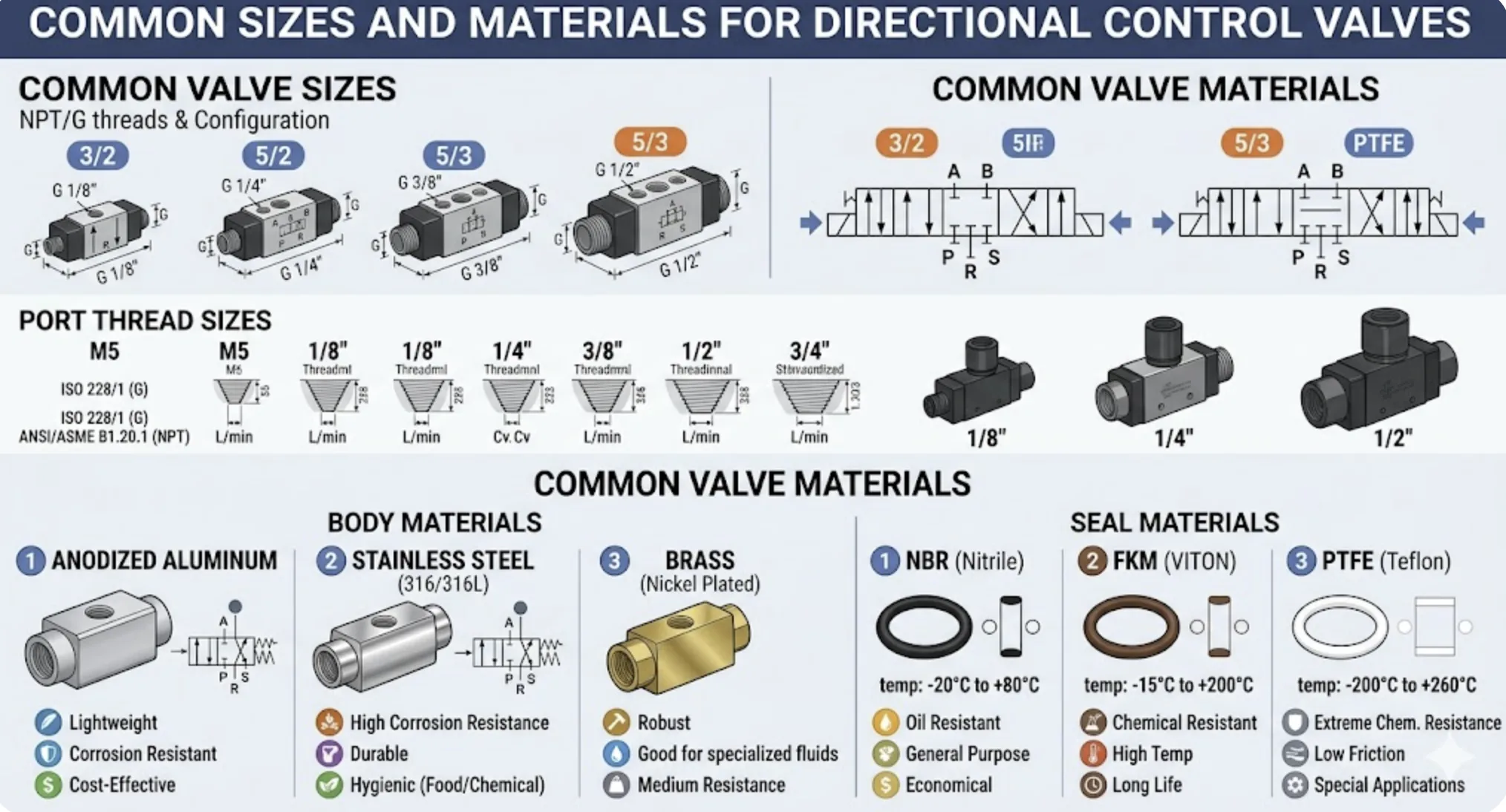
In the industrial pneumatic sector, valve sizes are typically categorized by their port threads. These range from the miniature M5 ports for compact robotics to large 1/2″ or 3/4″ G/NPT threads for heavy-duty cylinders.
However, the thread size is only half the story; engineers must evaluate the Cv value (Flow Coefficient). Selecting a valve with an undersized internal orifice creates a “choke point,” causing sluggish actuator response and energy waste due to excessive pressure drops. To ensure optimal pneumatic cylinder performance, always match the valve’s flow rate to the actuator’s consumption requirements.
Material Selection: Anodized Aluminum vs. Stainless Steel
The choice of pneumatic valve body material is dictated by the operating environment.
Anodized Aluminum Alloy: This is the industry standard for most factory floor applications. It offers an excellent strength-to-weight ratio and sufficient corrosion resistance for general automation.
316 Stainless Steel: In the food and beverage or chemical industries, stainless steel is mandatory. It is designed to withstand aggressive washdown procedures and corrosive cleaning agents, ensuring the solenoid valve does not pit or degrade over time.
The Science of Sealing: NBR vs. Viton (FKM) Seals
The internal seals are the most critical “soft” components in any directional valve mechanism
NBR (Nitrile) Seals: Perfect for standard operating temperatures and lubricated air systems.
Viton (FKM) Seals: In high-temperature pneumatic applications or systems involving synthetic oils, Viton is the superior choice. Viton offers exceptional chemical stability and prevents the “seal hardening” that leads to internal leakage when temperatures exceed standard rubber limits.
FAQ
Q1: How do I choose between G threads and NPT threads for my pneumatic valve?
It depends on your geographic region and existing plumbing standards. G (Parallel) threads (also known as BSPP) are the standard in Europe and Asia, while NPT (Tapered) threads are predominant in North America. To prevent air leaks and thread damage, always match your pneumatic push-in fittings to the specific valve thread type.
Q2: When should I upgrade to Viton (FKM) seals in my system?
You should upgrade to Viton (FKM) seals if your system operates in high-heat environments exceeding 80°C (176°F). Additionally, if your compressed air line contains aggressive synthetic lubricants or chemicals that can degrade standard NBR rubber, Viton is necessary to maintain a long-lasting seal.
Q3: Does a larger port size always mean better performance for air cylinders?
Not necessarily. While larger ports allow for higher flow, an oversized pneumatic valve can lead to air waste and increased latency. The extra volume inside the valve takes longer to fill, which can actually slow down the response time of your air cylinder. Precision sizing based on Cv value is always better than simply picking the largest port.
Q4: Why is air quality important for directional valve longevity?
Directional valves are precision instruments. Contaminants like water, dust, or pipe scale can score the valve spool or damage the seals. Integrating a high-quality FRL unit (Filter, Regulator, Lubricator) is essential to protect your investment and ensure millions of trouble-free cycles.