
What Is a Pneumatic Push-in Fitting?
A Pneumatic push-in fitting also known as quick connect fitting in pneumatic system,which is a widely used compressed air component in fluid and pneumatic systems that allows fast, tool-free tube connections. Its structural design is built around simplicity, sealing reliability, and quick installation.
- Tool-free insertion and release mechanism
- Internal locking system secures the tube automatically
- Integrated sealing ensures airtight or watertight performance
- Designed for repeated assembly and disassembly
This structure makes it highly suitable for automation systems, pneumatic control lines, and industrial machinery.
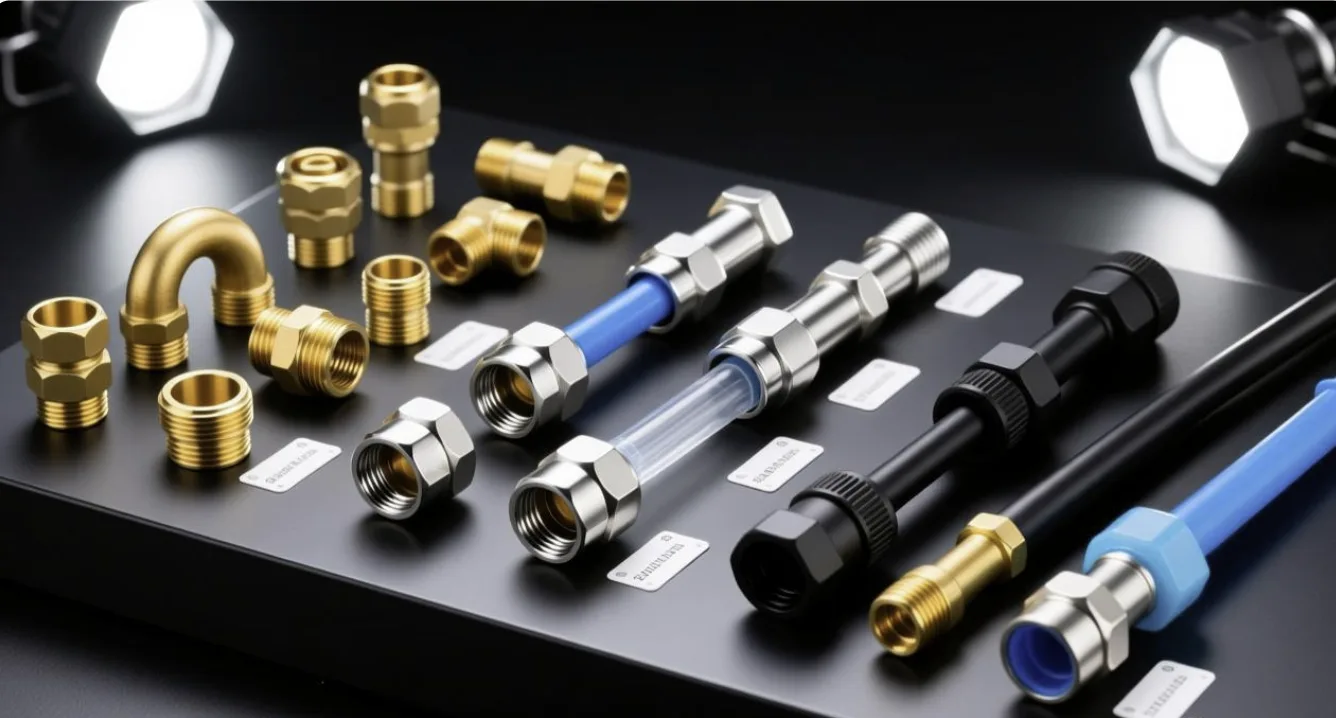
Key Components Inside a Push-to-Connect Fitting
The performance of a push-in fitting depends on the precision of its internal structure. Each component plays a critical role in ensuring stability and sealing efficiency.
- Body (Housing): Made of brass, stainless steel, or engineered plastic for durability
- Collet (Grip Ring): Locks the tubing securely in place
- Release Ring: Allows quick and easy tube removal
- O-Ring Seal: Provides airtight or liquid-tight sealing
- Guide Sleeve: Ensures smooth and aligned tube insertion
These parts work together to create a reliable pneumatic connector system used in demanding environments.
Design Principle and Material Selection of Push-in Fittings
The design of pneumatic push-to-connect fittings focuses on speed, safety, and long-term durability.
- Self-locking mechanism: Tubing is automatically gripped once inserted
- Dual sealing system: Mechanical grip + elastomer O-ring for leak prevention
- High-pressure resistance: Suitable for most industrial air systems
- Material options:
- Brass: corrosion resistance and general industrial use
- Stainless steel: high durability for harsh environments
- Plastic: lightweight and cost-effective applications
This engineered structure ensures stable performance even under continuous operation.
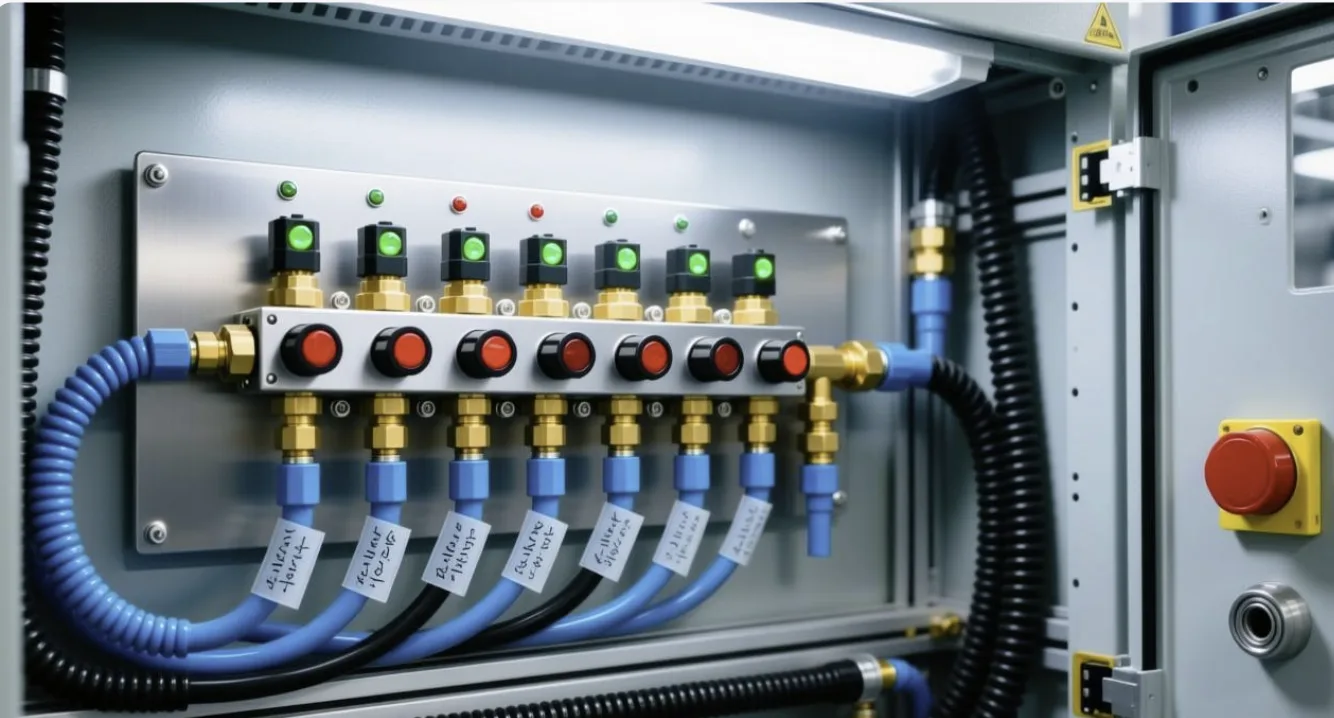
Applications and Advantages of Push-in Fittings
Push-in fittings are widely adopted across industries due to their efficiency and versatility.
- Industrial automation and robotic systems
- Pneumatic control circuits in manufacturing
- Packaging and food processing equipment
- Medical devices and laboratory systems
- HVAC and compressed air networks
Key advantages include:
- Fast installation without tools
- Reduced maintenance time and cost
- Compact design for space-saving installations
- Reliable sealing performance in long-term use
SENYA Fluid Connection Solutions
SENYA is a professional manufacturer specializing in pneumatic fittings, push-in fittings, quick connectors, and fluid system components.
Our core strengths include:
- High-precision manufacturing ensuring consistent quality
- Wide material selection for different industrial environments
- Strict quality control processes for reliable performance
- Customized design capabilities for specific application needs
- Continuous engineering improvement in sealing and connection technology
SENYA is committed to delivering efficient, safe, and durable fluid connection solutions for global industrial applications.
FAQ
What is a Pneumatic push-in fitting used for?
A push-in fitting is used to quickly connect tubing in pneumatic and fluid systems without tools.
How does a push-to-connect fitting work?
It works by inserting the tube into the fitting, where internal collet teeth automatically grip and seal it.
What materials are push-in fittings made of?
Common materials include brass, stainless steel, and engineering plastic depending on application needs.
Can push-in fittings be reused?
Yes, they are designed for multiple insertions and removals, though seals should be checked for wear.
What is the difference between push-in fittings and threaded fittings?
Push-in fittings offer faster installation and easier maintenance, while threaded fittings are typically used in higher-pressure or permanent setups.