
Material selection is the primary determinant of a solenoid valve’s lifecycle, chemical compatibility, and pressure rating. Brass solenoid valves serve as the standard for non-corrosive media like air, water, and light oils due to their cost-effectiveness and machinability. Conversely, stainless steel solenoid valves are essential for handling aggressive chemicals, high-temperature steam, and food-grade applications where hygiene and oxidation resistance are mandatory. Identifying the optimal material involves analyzing the pH value of the media, the ambient environmental conditions, and the specific regulatory requirements of the industry.
Critical Factors in Solenoid Valve Material Selection
Corrosion resistance remains the most significant technical divide between copper-based alloys and ferrous alloys. Brass is an alloy of copper and zinc, which provides moderate protection against rust but is susceptible to “dezincification” in certain water conditions. According to the Copper Development Association (CDA), brass maintains structural integrity up to specific temperature thresholds, yet it reacts poorly with saline environments or acids. Stainless steel, particularly Grade 316, contains molybdenum, which enhances resistance to chlorides and pitting, making it the preferred choice for marine and medical equipment.
Comparative Analysis of Brass and Stainless Steel Properties
The following table summarizes the mechanical and chemical properties of standard valve body materials based on ASTM (American Society for Testing and Materials) standards for 2026 industrial manufacturing.
| Property | Brass (C36000/C37700) | Stainless Steel (SS304/SS316) |
| Corrosion Resistance | Moderate (Non-acidic) | High (Acidic/Alkaline) |
| Max Pressure Rating | Up to 15-20 Bar | Up to 50-100+ Bar |
| Max Temperature | Approx. 90°C – 120°C | Up to 200°C+ (with Steam Seals) |
| Media Compatibility | Water, Air, Inert Gas, Oil | Chemicals, Food, Steam, Seawater |
| Cost Profile | Economical | Premium |
Benefits of Using Brass Solenoid Valve Systems
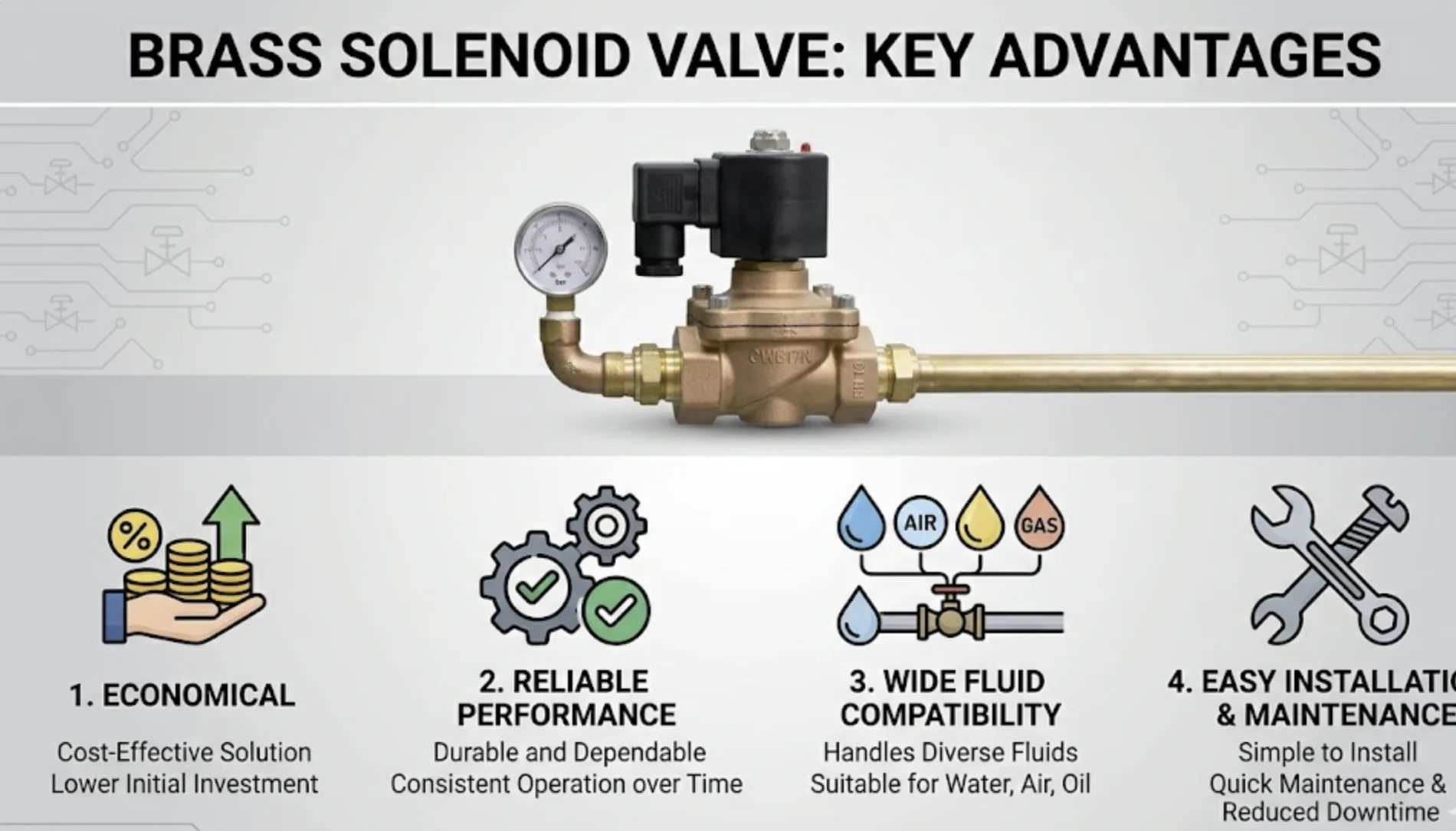
Brass solenoid valves are widely utilized in HVAC, irrigation, and pneumatic control systems because they offer reliable performance at a lower price point. The thermal conductivity of brass is higher than that of stainless steel, which can assist in heat dissipation for certain coil configurations. For standard plumbing applications, a 2W series brass valve provides a balanced solution for controlling water flow without the unnecessary expense of high-grade alloys.
The machinability of brass allows for tighter tolerances in complex internal valve structures, reducing the likelihood of mechanical sticking in clean media. In pneumatic automation, using a brass body solenoid valve ensures compatibility with copper and plastic piping. However, users must ensure the brass is lead-free if the application involves potable water, adhering to the Safe Drinking Water Act (SDWA) standards which limit lead content to a weighted average of 0.25% on wetted surfaces.
When to Specify Stainless Steel Solenoid Valves
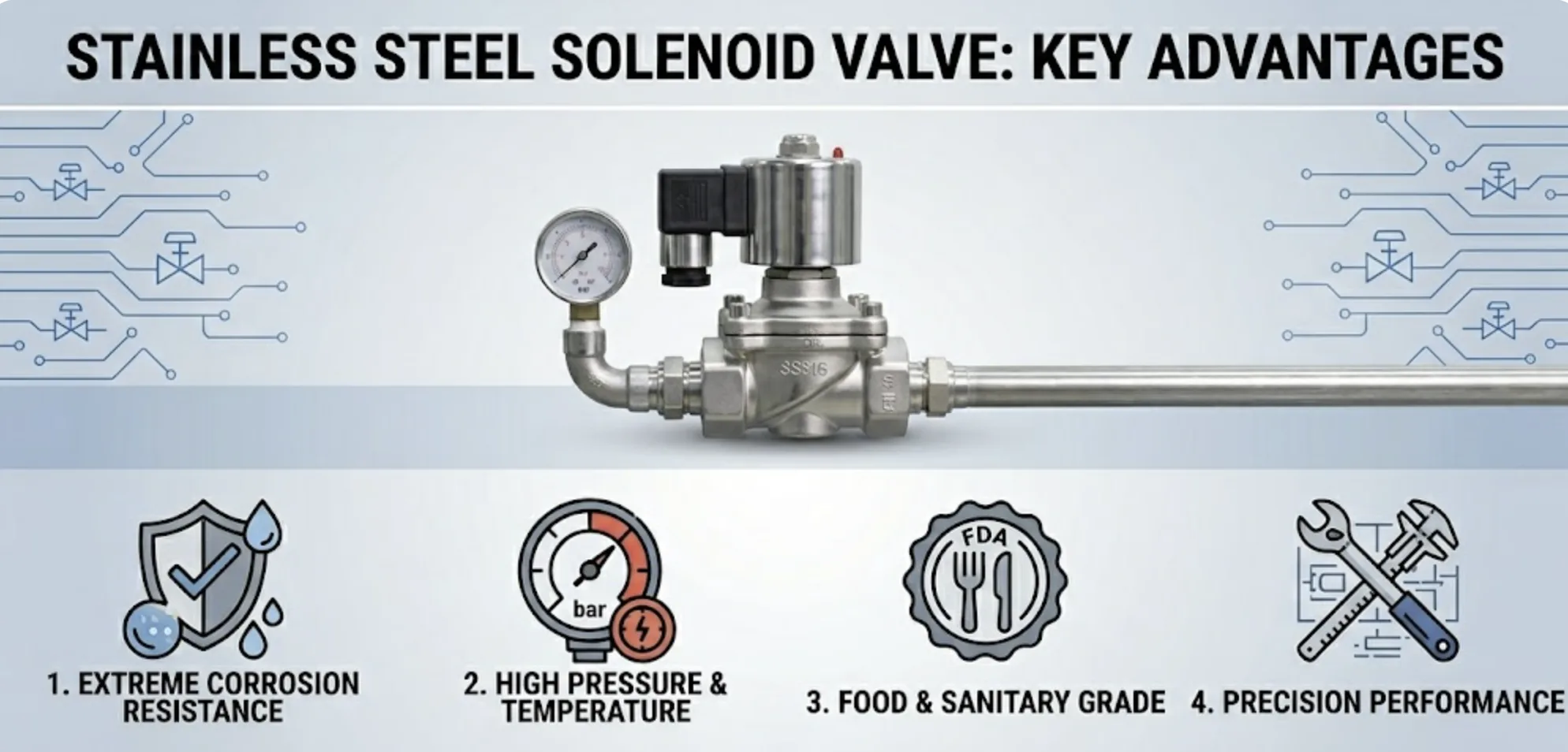
Stainless steel is mandatory when the media contains corrosive elements or requires strict sterilization. In the pharmaceutical and food industries, SS316 is the standard because it does not leach metallic ions into the product stream. For high-pressure gas or fluid control, a stainless steel high pressure valve offers the tensile strength required to prevent body deformation under surge conditions. Technical data from the NACE International (National Association of Corrosion Engineers) suggests that stainless steel is the only viable option for environments containing hydrogen sulfide (H2S).
Beyond chemical resistance, stainless steel exhibits superior performance in cryogenic and extreme high-temperature applications. While brass becomes brittle or loses structural strength at thermal extremes, stainless steel maintains its ductile properties. This makes it suitable for liquid nitrogen or high-pressure steam sterilization cycles. Utilizing a 316 stainless steel solenoid valve in a chemical processing plant reduces the risk of catastrophic failure and environmental contamination, providing a higher safety factor for hazardous operations.
Media Compatibility and Chemical Resistance Data
Selecting the wrong material can lead to premature valve failure and system downtime. The Environmental Protection Agency (EPA) provides guidelines on material degradation when exposed to industrial runoff and treated water. The choice of seal material, such as Viton (FKM) or EPDM, must also be coordinated with the body material to ensure total system integrity.
Potable Water: Brass (Lead-Free) is generally sufficient; Stainless Steel is used for ultra-pure water.
Deionized Water: Stainless Steel is required as deionized water can aggressively leach minerals from brass.
Fuel and Oils: Brass is compatible with most hydrocarbons; Stainless Steel is used for biofuels or sour crude.
Alkalis and Acids: Stainless Steel (SS316) is necessary for pH levels below 4 or above 10.
Environmental Impacts on Valve Longevity
External environmental factors, such as salt spray in coastal regions or chemical fumes in a factory, can corrode a valve from the outside in. Brass valves in these areas may develop a green patina (verdigris) which, while protective to some extent, can interfere with the movement of the manual override or external fittings. For outdoor installations, a waterproof solenoid valve with a stainless steel body and NEMA 4X rated coil housing is the recommended configuration to prevent atmospheric corrosion.
Cost-Benefit Analysis: Initial Investment vs. ROI
While brass valves have a lower initial purchase price, the Total Cost of Ownership (TCO) may be higher in aggressive environments due to frequent replacements. According to research by the World Corrosion Organization (WCO), the global cost of corrosion is estimated at $2.5 trillion USD annually, emphasizing the importance of correct material specification. In systems where the fluid is non-corrosive, a high-quality brass solenoid valve can last for millions of cycles, providing the best return on investment.
For critical infrastructure or continuous process industries, the higher cost of stainless steel is justified by the prevention of unscheduled shutdowns. The reliability of a direct acting stainless valve ensures that safety-critical systems remain functional over decades. Engineers often employ a risk-based approach, using brass for peripheral utilities and stainless steel for the core process loop to optimize the project budget without compromising safety.
Installation and Maintenance Best Practices
Proper installation prevents galvanic corrosion, which occurs when dissimilar metals are joined in the presence of an electrolyte. If a stainless steel valve is connected to copper piping, dielectric unions should be used. Regular maintenance involves checking the solenoid valve coil for signs of overheating and ensuring that the valve body is free from scale buildup. Stainless steel bodies are generally easier to clean using aggressive detergents, which is why they dominate the “clean-in-place” (CIP) systems found in modern breweries and dairies.
Final Summary of Material Suitability
The choice between stainless steel and brass is a technical trade-off between chemical inertness and economic efficiency. Brass remains the workhorse for general-purpose air and water applications where cost is a primary factor. Stainless steel is the essential choice for specialized industries requiring high purity, extreme pressure, or resistance to aggressive chemical environments. By matching the valve material to the specific chemical and physical properties of the media, operators can maximize system uptime and ensure regulatory compliance.
FAQ
Can I use a brass solenoid valve for seawater applications?
Brass is generally not recommended for seawater because the high chloride content leads to dezincification, which weakens the metal structure. For marine environments, SS316 stainless steel or specialized bronze alloys are required to prevent rapid corrosion. SS316 contains molybdenum, which specifically protects against the pitting caused by salt water.
Why is stainless steel preferred for deionized (DI) water?
Deionized water is “hungry” water that has had its ions removed, making it highly reactive. It will actively strip minerals and ions from brass, causing the valve body to degrade and contaminating the water. Stainless steel is chemically inert enough to resist this leaching process, maintaining water purity and valve integrity.
Is there a temperature limit difference between these materials?
Yes. Brass valves typically have a maximum operating temperature around 90°C to 120°C, depending on the internal seal material. Stainless steel can handle significantly higher temperatures, often exceeding 200°C when equipped with high-temperature seals and specialized coils, making it suitable for superheated steam applications.
Are all stainless steel solenoid valves food-grade?
Not necessarily. While the material SS304 or SS316 is generally safe, “food-grade” also requires specific internal finishes to prevent bacterial growth and the use of FDA-approved lubricants and seals. Always verify that the specific valve model carries the necessary certifications, such as NSF or FDA compliance, for food contact.
How do I identify if my valve is brass or stainless steel?
Stainless steel valves are usually silver or grey with a matte or polished finish and are non-magnetic or only slightly magnetic. Brass valves have a distinct yellow or gold-like metallic hue and are heavier than aluminum but lighter than steel. Most industrial valves also have the material grade (e.g., “316” or “Brass”) stamped directly onto the body.