
Introduction
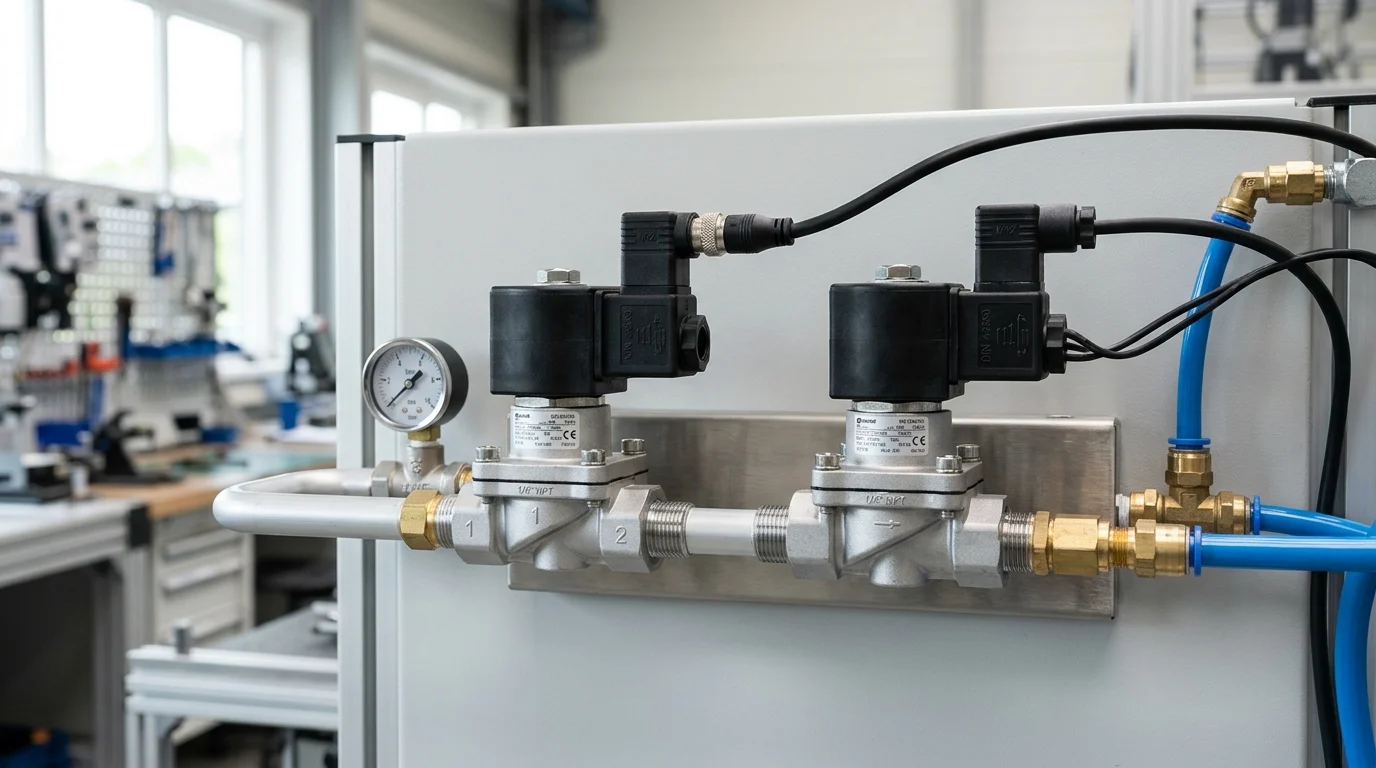
Choosing a solenoid valve for an industrial system involves more than matching pipe size and voltage. The right valve affects process stability, maintenance intervals, energy use, and overall equipment uptime, especially in applications handling compressed air, water, chemicals, or gas under demanding conditions. This article explains the key selection factors that matter in practice, including media compatibility, pressure range, flow requirements, actuation method, response characteristics, duty cycle, and environmental constraints. It also helps connect these specifications to real operating risks, so you can evaluate valve options with a clearer understanding of performance, reliability, and long-term cost before moving into the detailed criteria.
Why solenoid valve selection matters in industrial systems
Solenoid valves serve as the critical electromechanical interface between digital control systems and physical fluid architectures. Selecting the correct valve architecture dictates the baseline efficiency, safety, and reliability of automated fluid circuits across a facility.
Because these components act as the primary gatekeepers for air, water, chemicals, and gases, overlooking nuanced operational parameters can introduce severe systemic vulnerabilities. A rigorous selection methodology protects capital investments and ensures continuous, predictable output.
Impact on uptime and process stability
Mean Time Between Failures (MTBF) and cycle life are paramount metrics in industrial automation. Industrial-grade solenoid valves are engineered to withstand anywhere from 10 million to 50 million actuation cycles before requiring seal replacement or coil maintenance.
In continuous-process facilities, a premature valve failure can precipitate immediate production line shutdowns. Depending on the sector, unplanned downtime costs frequently exceed $10,000 to $50,000 per hour, making the initial investment in high-cycle, durable solenoid valves a strict financial necessity rather than an optional upgrade.
High-demand industrial applications
High-demand environments, such as petrochemical refining, power generation, and high-pressure pneumatic automation, subject solenoid valves to extreme operational stresses. Valves deployed in these sectors must frequently manage operating pressures scaling up to 150 bar while withstanding aggressive ambient conditions.
The specification process must account for both internal fluidic demands and external environmental harshness. Utilizing heavy-duty armatures and encapsulated coils prevents catastrophic blowouts or thermal coil burnouts when operating near maximum rated capacities.
Technical criteria for choosing solenoid valves
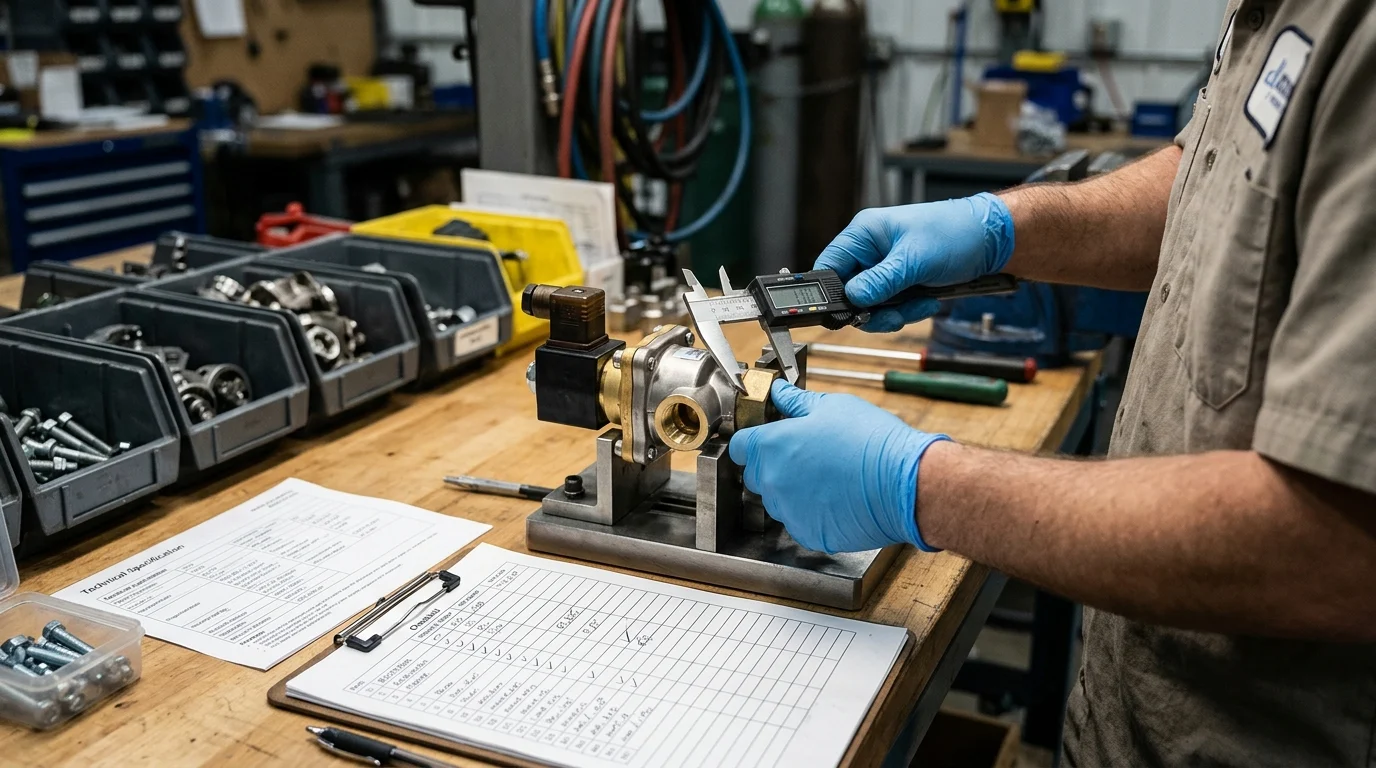
Evaluating solenoid valves requires a rigorous analysis of fluid dynamics combined with electromechanical specifications. Engineers must translate overarching system requirements into precise valve metrics, primarily focusing on the flow coefficient (Cv or Kv), response time, and allowable pressure differentials.
Matching valve type to media and pressure
The fundamental choice between direct-acting and pilot-operated (indirect) valves hinges on the system’s pressure profile. Direct-acting valves operate independently of line pressure, functioning reliably at a 0 bar differential, making them ideal for closed-loop or vacuum applications.
Conversely, pilot-operated valves utilize the media’s own pressure to assist in opening the main orifice. These require a minimum pressure differential—typically between 0.3 and 0.5 bar—to function. Media viscosity is another strict constraint; most standard solenoid valves are rated exclusively for fluids with a kinematic viscosity below 50 cSt to prevent the internal armature from sticking.
Key construction and material choices
Material compatibility determines the operational longevity of all wetted parts. Valve bodies are predominantly machined from brass for general-purpose water and air, whereas 304 or 316L stainless steel is mandated for corrosive chemicals, deionized water, and sanitary applications.
Elastomeric seal selection is equally critical to prevent fluid leaks. NBR (Nitrile) remains the standard for neutral fluids up to 80°C. FKM (Viton) is deployed for oils and elevated temperatures up to 150°C, while PTFE (Teflon) is reserved for highly aggressive solvents and steam applications reaching up to 180°C.
Using a comparison table for evaluation
To streamline the evaluation phase, procurement engineers frequently utilize cross-reference matrices. These tools align fluid characteristics with the optimal elastomeric and metallic compounds to prevent premature degradation and ensure compliance with operating temperature limits.
| Seal Material | Temperature Range | Primary Media Compatibility | Known Limitations |
|---|---|---|---|
| NBR (Nitrile) | -10°C to 80°C | Water, Air, Light Oils | Ozone, UV, Strong Acids |
| FKM (Viton) | -10°C to 150°C | Hot Water, Mineral Oils, Fuels | Steam, Skydrol, Ketones |
| EPDM | -30°C to 120°C | Steam, Hot Water, Brake Fluids | Petroleum-based Oils |
| PTFE (Teflon) | -10°C to 180°C | Aggressive Chemicals, Steam | Requires higher actuation force |
How to assess reliability and supplier quality
Beyond physical and material specifications, the long-term viability of a fluid control system depends heavily on the manufacturer’s quality assurance protocols. Vetting suppliers ensures that the components will perform consistently under the specified industrial conditions.
Certifications, testing, and documentation
Regulatory compliance and safety certifications act as non-negotiable filters during the selection process. Valves deployed in explosive atmospheres must carry ATEX, IECEx, or UL certifications, with specific zone classifications (e.g., Zone 1/21 for high-risk gas/dust, Zone 2/22 for lower risk).
Furthermore, environmental protection ratings, typically IP65 or IP67, dictate the electrical enclosure’s resistance to dust and high-pressure water ingress. For safety-instrumented systems (SIS), a Safety Integrity Level rating of SIL 2 or SIL 3 provides quantified, third-party evidence of the valve’s probability of failure on demand (PFD).
Manufacturer capability and traceability
Evaluating a supplier requires scrutinizing their manufacturing capabilities, testing protocols, and supply chain transparency. Top-tier manufacturers operate under strict ISO 9001 quality management systems and offer full lot traceability for all wetted components and coil assemblies.
Engineers should review the supplier’s historical defect rates, targeting a quality metric below 500 Parts Per Million (PPM). Additionally, lead times must align with project schedules; while commercial-off-the-shelf (COTS) valves may ship in 1 to 2 days, custom-machined manifolds or specialized alloys frequently require 4 to 6 weeks of lead time.
Step-by-step process for selecting solenoid valves
Standardizing the procurement process ensures that no critical parameter is overlooked. A structured approach bridges the gap between theoretical fluid dynamics and practical supply chain execution, ensuring optimal system integration.
Specification method for new and retrofit systems
For both new installations and retrofits, engineers must clearly define the electrical and mechanical boundaries in the Request for Quotation (RFQ). Coil voltage tolerances are a critical electrical parameter; industrial solenoid coils must typically accommodate voltage fluctuations of ±10% around nominal values such as 24VDC, 110VAC, or 230VAC.
In retrofit scenarios, physical envelope constraints and port thread standards (such as NPT versus BSPP) dictate the selection. Ensuring precise dimensional and threading matches allows the new valve to integrate seamlessly into existing pipework without requiring extensive, costly modifications.
Balancing performance, standardization, risk, and cost
Procurement teams must carefully balance capital expenditure against the Total Cost of Ownership (TCO). While standardizing on a single high-specification valve across a facility reduces inventory complexity, it can unnecessarily inflate upfront costs for less demanding applications.
Risk mitigation strategies involve analyzing the operational trade-offs between different valve architectures to ensure the most cost-effective and reliable solution is deployed for each specific loop.
| Valve Architecture | Upfront Cost | Power Consumption | Pressure Drop | Best Application Fit |
|---|---|---|---|---|
| Direct-Acting | Higher for large orifices | Higher (10W – 20W) | High | Zero-pressure systems, vacuums |
| Pilot-Operated | Lower for large orifices | Lower (2W – 8W) | Moderate | High-flow, high-pressure mains |
| Semi-Direct | Highest | Moderate | Low | Mixed-pressure closed loops |
Final validation for long-term performance

The culmination of the selection process involves rigorous final checks to ensure the chosen components will deliver sustained performance upon deployment. Validation prevents costly redesigns post-installation.
Procurement and installation checkpoints
Before issuing the final purchase order, procurement teams must verify commercial terms such as Minimum Order Quantities (MOQ), which frequently range from 100 to 500 units for OEM-specific batch runs or customized port configurations.
Installation constraints must also be reviewed against the physical facility layout. Many pilot-operated valves feature gravity-dependent armatures that mandate a vertical coil orientation. Installing these specific models horizontally can lead to premature wear or a complete failure to close, necessitating a final design review of the piping schematics.
Justifying the final shortlist
The final shortlist must be justified through a holistic review of energy efficiency, lifecycle costs, and operational risk. Modern industrial facilities increasingly prioritize overall energy consumption, heavily favoring low-power solenoid coils that draw under 2 Watts over traditional, legacy coils that require 10 to 15 Watts of continuous power.
By meticulously documenting the rationale behind the chosen specifications, flow rates, electrical demands, and material compatibilities, engineering teams secure a reliable, highly traceable foundation for the facility’s long-term fluid control architecture.
Key Takeaways
- The most important conclusions and rationale for solenoid valves
- Specs, compliance, and risk checks worth validating before you commit
- Practical next steps and caveats readers can apply immediately
Frequently Asked Questions
Should I choose a direct-acting or pilot-operated solenoid valve?
Use direct-acting valves for 0 bar differential, vacuum, or small-flow systems. Choose pilot-operated valves for higher flow when your line maintains the minimum pressure differential, typically around 0.3–0.5 bar.
Which body and seal materials are best for my media?
Brass with NBR suits general air and water. Stainless steel is better for corrosive media, DI water, or sanitary use. Use FKM for oils and higher temperatures, EPDM for hot water or steam, and PTFE for aggressive chemicals.
How do I size a solenoid valve for the required flow?
Match the valve Cv or Kv to your target flow, pressure, and allowable pressure drop. Undersized valves restrict performance; oversized valves add cost and may reduce control accuracy. Confirm actual operating conditions, not just nominal line size.
What should I check for harsh or high-pressure industrial environments?
Verify pressure rating, ambient temperature range, coil protection, and enclosure level. For washdown or outdoor duty, use waterproof designs. For demanding cycles or high pressure, select industrial-duty coils and robust internal components.
Why source solenoid valves from NBSENYA?
NBSENYA offers OEM-focused pneumatic expertise, stable supply, and multiple valve options in brass, stainless steel, and nylon. For industrial buyers, this helps shorten selection time, support customization, and improve readiness for sector-specific applications.