
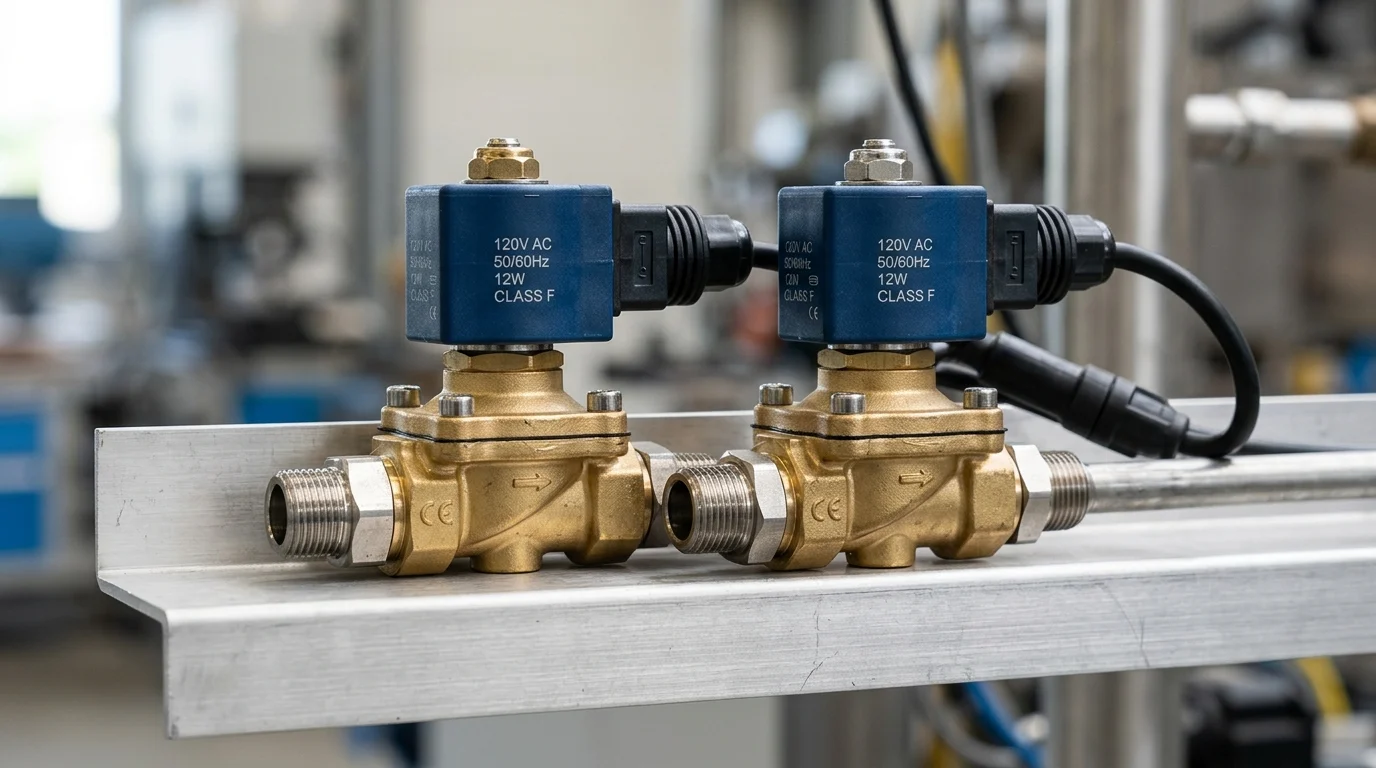
Introduction
Efficient irrigation depends on controlling water flow accurately across changing field conditions, and solenoid valves make that control practical at scale. These electromechanical devices let irrigation systems open and close automatically in response to timers, sensors, and central controllers, reducing manual intervention while improving consistency. This article explains how solenoid valves work in agricultural settings, why they matter for water management and labor efficiency, and where they are commonly applied—from drip lines and greenhouses to large multi-zone field systems. It also sets up the key benefits growers should consider, including better scheduling, faster response, and more precise distribution of water where and when crops need it.
Why Solenoid Valves Matter in Agricultural Irrigation
Solenoid valves serve as the critical electromechanical interface in modern agricultural irrigation, translating electrical signals from centralized controllers into precise hydraulic action. By utilizing an electromagnetic coil to manipulate a movable plunger, these components dictate the flow of water across vast agricultural tracts (often spanning 500 to 10,000 acres). The transition from manual gate valves to automated solenoid systems represents a fundamental shift in fluid management, enabling operators to execute complex, multi-zone watering schedules with sub-second response times (typically 20 to 50 milliseconds).
In large-scale farming operations, the integration of 24V AC (drawing ~0.2 to 0.4 amps) or 9V DC latching solenoid valves forms the backbone of precision agriculture. These actuators enable growers to synchronize irrigation events with real-time agronomic data, such as soil moisture levels and evapotranspiration rates. By eliminating the need for continuous human intervention, solenoid-operated networks directly address operational bottlenecks, scaling seamlessly from localized greenhouse micro-irrigation to expansive field layouts.
How do solenoid valves improve irrigation control and labor efficiency
The deployment of solenoid valves fundamentally alters the operational economics of agricultural water management. Centralized automation allows a single operator to remotely manage hundreds of irrigation zones, reducing manual valve operation labor by up to 90% (saving an estimated 20 to 30 labor hours per week) across a standard 500-acre installation. This labor efficiency is compounded by the precision of the control mechanism. Valves actuate in fractions of a second (under 100 milliseconds), ensuring watering intervals are strictly followed without the volumetric waste associated with manual opening and closing.
Furthermore, advanced control logic integrated with solenoid valves permits high-frequency, low-volume irrigation strategies. This capability mitigates surface runoff and deep percolation, ensuring water and suspended nutrients remain within the active root zone. The resulting 15% to 25% improvement in water application efficiency directly correlates with enhanced crop uniformity and optimized yields.
Which irrigation applications benefit most from automation
Automation via solenoid valves is particularly transformative for localized irrigation methods, such as drip and micro-sprinkler systems, which require rigorous pressure and flow regulation. In these applications, valves must manage precise flow rates—often ranging from 5 to 100 gallons per minute (GPM) at lower operating pressures of 15 to 30 PSI—to execute accurate fertigation cycles where liquid fertilizers are injected directly into the irrigation mainstream.
Center pivot and linear move systems also rely heavily on solenoid technology, specifically for end-gun control and corner-system variable rate irrigation (VRI). By utilizing individual solenoid valves at each drop nozzle (typically operating at 30 to 60 PSI), advanced VRI systems dynamically pulse water delivery, adapting to topographical variations and varying soil types across a single field. This level of granular control is impossible with traditional mechanical valves.
What Specifications Matter When Selecting Solenoid Valves

Procuring the correct solenoid valve requires a rigorous evaluation of hydraulic and electrical specifications to ensure long-term reliability. Misalignment between system parameters and valve capabilities frequently results in catastrophic failure modes, including cavitation, severe water hammer, or premature coil burnout. Engineers and agricultural planners must scrutinize dynamic operating conditions rather than relying solely on static baseline metrics.
How should buyers evaluate pressure range, flow capacity, and media compatibility
Operating pressure limits and flow capacity are the primary hydraulic constraints dictating valve selection. Agricultural irrigation valves typically operate within a pressure band of 10 to 150 PSI. Buyers must evaluate the valve’s flow coefficient (Cv), which quantifies the volume of water (in GPM) that will pass through the valve with a 1-PSI pressure drop.
| Valve Size (Inches) | Typical Flow Coefficient (Cv) | Recommended Flow Range (GPM) | Friction Loss at Max Flow (PSI) |
|---|---|---|---|
| 1″ | 10 – 15 | 5 – 25 | ~3.5 |
| 1.5″ | 30 – 40 | 20 – 60 | ~4.0 |
| 2″ | 50 – 70 | 50 – 120 | ~4.5 |
| 3″ | 110 – 140 | 100 – 250 | ~5.0 |
Selecting an undersized valve restricts flow and induces excessive friction loss, while an oversized valve may fail to close properly due to insufficient differential pressure across the diaphragm (typically requiring a minimum of 3 to 5 PSI differential to seal).
Media compatibility is equally critical, particularly in systems utilizing fertigation or drawing from brackish groundwater sources. The internal wetted components, including the diaphragm and structural seals, must resist chemical degradation. Harsh agricultural chemicals can accelerate the embrittlement of standard elastomers, necessitating chemically inert materials for prolonged exposure.
What are the trade-offs between normally closed and normally open designs
The fundamental operational state of a solenoid valve—Normally Closed (NC) versus Normally Open (NO)—dictates its fail-safe behavior. In a Normally Closed configuration, the valve remains sealed until the coil is energized. This is the undisputed standard for agricultural irrigation; in the event of a power failure or severed wire, the system defaults to a shut-off state, preventing catastrophic flooding and water waste.
Conversely, Normally Open valves allow continuous flow until electrical current is applied to close them. While rare in primary zone control, NO valves are occasionally deployed in bypass lines or specific frost-protection sprinkler circuits where continuous water application is the necessary fail-safe during a sudden grid outage. The trade-off involves continuous energy consumption (typically 2 to 5 watts per valve) to maintain the closed state during non-irrigation periods.
Which comparison points should be included in a valve evaluation
A comprehensive valve evaluation must benchmark structural materials, electrical draw, and hydraulic performance against the specific environmental demands of the installation. Diaphragm material is a particularly vital comparison point, as it dictates both thermal tolerance and chemical resilience.
| Diaphragm Material | Max Temperature Tolerance | Chemical Resistance Profile | Typical Agricultural Application |
|---|---|---|---|
| Buna-N (Nitrile) | 80°C (176°F) | Moderate (Water, weak acids) | Standard freshwater irrigation |
| EPDM | 120°C (248°F) | Excellent (Alkalines, ketones) | Fertigation systems, high-temp ambient |
| FKM (Viton) | 150°C (302°F) | Superior (Hydrocarbons, harsh chemicals) | Specialized chemical injection lines |
Engineers should also compare the inrush current (often 0.35 to 0.45 amps) and holding current (0.20 to 0.25 amps) of the solenoid coils. A valve that requires a high inrush current may exceed the capacity of long wire runs, leading to a failure to open. Evaluating these parameters holistically ensures the selected hardware aligns with both the hydraulic network and the electrical infrastructure.
How Solenoid Valves Perform in Field Conditions
Agricultural environments subject electromechanical equipment to extreme operational stress. Solenoid valves must function reliably despite constant exposure to ultraviolet radiation, abrasive particulate matter, and fluctuating power supplies. Understanding how these field variables interact with valve mechanics is essential for predicting system longevity and scheduling preventative maintenance.
What benefits and limitations do solenoid valves present in irrigation systems
The primary benefit of solenoid valves in the field is their capacity for seamless integration with automated telemetry and soil moisture sensors, enabling precision agriculture at scale. However, their reliance on internal pilot ports for operation introduces specific limitations. Pilot-operated diaphragm valves utilize the fluid’s own pressure to assist in opening and closing.
This design makes them highly susceptible to clogging from suspended solids. Sand, algae, or mineral flakes can easily obstruct the narrow pilot orifice (often less than 1mm in diameter), causing the valve to stick in the open position. Consequently, the successful deployment of solenoid valves strictly requires upstream filtration, typically demanding a minimum 120-mesh screen (approximately 125 microns) to protect the internal hydraulics.
How do water quality, temperature variation, and voltage stability affect performance
Water quality profoundly impacts the lifecycle of internal valve components. Hard water with high calcium carbonate concentrations (above 120 ppm) leads to scaling on the plunger armature, increasing friction and eventually causing the solenoid coil to overheat and burn out due to excessive electrical resistance. Temperature variations also stress the system. Ambient temperatures fluctuating from -10°C to 60°C can cause the thermal expansion and contraction of plastic valve bodies, potentially compromising threaded seals.
Voltage stability is a critical, often overlooked variable. In expansive agricultural layouts, long wire runs inherently suffer from voltage drop. For example, pushing a 24VAC signal through standard 18 AWG direct-burial wire over a distance exceeding 2,000 feet degrades the voltage by 20% to 30% at the terminal end. If the voltage drops below the coil’s minimum threshold (typically around 19VAC for a 24V system), the electromagnetic field will lack the strength to lift the plunger, rendering the zone inoperable.
What maintenance patterns, failure modes, and lifecycle costs should buyers expect
Buyers should anticipate distinct maintenance patterns based on water quality and usage frequency. Routine maintenance (averaging 10 to 15 minutes per valve) generally involves disassembling the valve bonnet to flush the pilot hole and inspect the diaphragm for micro-tears. The mean time between failures (MTBF) for high-quality agricultural solenoid valves typically ranges from 50,000 to 100,000 actuation cycles (translating to 5 to 7 years of typical seasonal use) under optimal conditions.
Common failure modes include ruptured diaphragms due to severe water hammer, solenoid coil burnout from voltage spikes, and weeping seals caused by debris trapped under the diaphragm seat. Lifecycle costs extend beyond the initial purchase; factoring in the labor for diagnostic troubleshooting and the cost of replacement diaphragms and solenoids is crucial. Valves designed with captive screws and top-entry access significantly reduce the lifecycle labor costs associated with field repairs.
How to Specify and Install Solenoid Valves
The successful integration of solenoid valves into an irrigation network relies heavily on meticulous specification and rigorous installation practices. Over 80% of operational failures (and subsequent warranty claims) in automated irrigation systems can be traced back to improper hydraulic sizing, poor wiring techniques, or inadequate environmental protection during the installation phase.
What practical steps help match solenoid valves to controllers and system requirements
Matching the valve to the irrigation controller is the foundational step in system design. Standard hardwired controllers output 24V AC, requiring compatible AC solenoids. However, remote or off-grid agricultural zones increasingly rely on battery-operated controllers. These necessitate 9V DC latching solenoids, which operate via a brief electrical pulse (typically 10 to 50 milliseconds) to reverse magnetic polarity, latching the plunger open or closed without continuous power draw.
System designers must also match the valve’s flow characteristics to the zone requirements. This involves calculating the total GPM of the downstream emitters and ensuring the valve operates within its optimal velocity range, usually between 2 and 5 feet per second (fps). Operating below this velocity can cause a sluggish diaphragm response, while exceeding 5 fps exacerbates friction loss and water hammer risks.
How should installation, wiring, surge protection, and preventive maintenance be handled
Installation orientation and wiring integrity are paramount. Valves must be installed horizontally with the bonnet facing upward; installing them at an angle or inverted can cause debris to settle in the pilot ports, guaranteeing premature failure. Installers must strictly observe the directional flow arrows molded into the valve body.
Electrical connections in the field are highly vulnerable to moisture ingress. All wire splices must be secured using silicone-filled, direct-burial waterproof wire nuts to prevent galvanic corrosion. Furthermore, agricultural fields are highly susceptible to lightning strikes. Implementing robust surge protection—utilizing Metal Oxide Varistors (MOVs) at the controller and grounding the field wiring—is essential. A standard MOV setup should be capable of clamping transient voltage spikes at approximately 45V (with an energy absorption rating of at least 50 Joules) to protect the delicate coil windings.
Which compliance, material, and procurement considerations matter most
Procurement considerations must account for regional compliance and material durability. Valves utilized in commercial agriculture should carry relevant certifications, such as ISO 9001 for manufacturing quality (ensuring defect rates below 0.5%) or specific CE marks for electrical safety in European markets. When selecting materials, buyers must choose between glass-filled nylon, PVC, and cast brass.
Glass-filled nylon is the industry standard for general
How to Choose the Best Solenoid Valve
Key Takeaways
- The most important conclusions and rationale for Solenoid Valves
- Specs, compliance, and risk checks worth validating before you commit
- Practical next steps and caveats readers can apply immediately
Frequently Asked Questions
Why are solenoid valves useful in agricultural irrigation?
They automate water on/off control for each zone, improving timing accuracy, reducing labor, and helping limit water waste in drip, sprinkler, and fertigation systems.
Which solenoid valve type is best for irrigation systems?
It depends on pressure, flow, power supply, and water quality. For OEM projects, NBSENYA can match 2/2-way, pilot-operated, waterproof, brass, stainless steel, or nylon options to your application.
What specifications should I check before choosing an irrigation solenoid valve?
Verify operating pressure, flow rate, valve size, Cv, voltage, media compatibility, and enclosure protection. This helps prevent poor closing, coil failure, and unnecessary pressure loss.
Can solenoid valves handle outdoor and harsh farm environments?
Yes, if you choose the right materials and sealing level. Waterproof and corrosion-resistant versions in brass, stainless steel, or nylon are better for wet, dusty, or chemical-exposed installations.
How can NBSENYA support irrigation valve buyers and OEMs?
NBSENYA provides stable supply, customization, multiple material choices, and industrial application support, making it easier for buyers to source reliable solenoid valves for agricultural equipment and control systems.