
Introduction
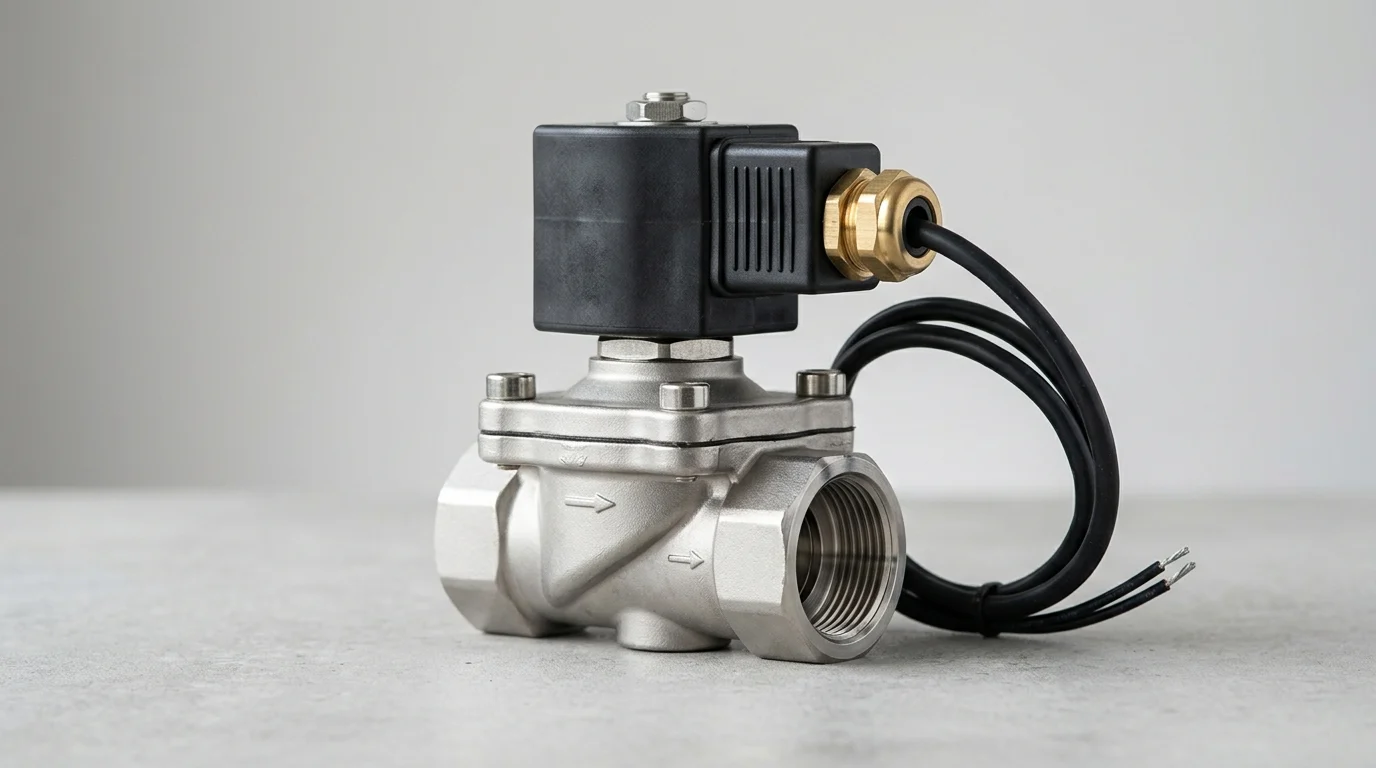
Selecting a stainless steel solenoid valve involves more than matching port size and voltage. Material grade, media compatibility, pressure range, temperature limits, and required certifications all affect service life, safety, and process stability—especially in corrosive, sanitary, or high-demand environments. This article explains the key factors that determine whether a valve will perform reliably, from choosing between common stainless steel grades to checking seal materials, operating conditions, and compliance needs. With these criteria in mind, you can compare options more confidently and avoid costly failures, contamination risks, or unnecessary over-specification.
Reliability and Compliance Impact
In industrial fluid control systems, specifying a solenoid valve dictates not only the immediate functionality of a process loop but also the long-term integrity of the entire facility. Stainless steel solenoid valves are typically deployed in environments where standard brass or aluminum components would rapidly degrade, such as petrochemical refining, pharmaceutical manufacturing, and offshore marine applications.
Upgrading to stainless steel represents a strategic investment in process reliability. When evaluating these components, engineers must weigh metallurgical properties against the specific chemical profile of the media and the ambient operating environment to ensure regulatory compliance and operational safety.
Why material choice matters in corrosive service
The fundamental advantage of stainless steel lies in its passive oxide layer, which provides exceptional resistance to chemical attack. However, not all stainless steel grades perform equally in corrosive service. For instance, 304 stainless steel offers baseline protection suitable for mild organic chemicals and potable water, but it is highly susceptible to chloride-induced pitting.
In contrast, 316 and 316L stainless steel incorporate 2.0% to 3.0% molybdenum, significantly elevating their Pitting Resistance Equivalent Number (PREN) to a range of 23 to 28. This metallurgical enhancement is mandatory for applications involving saline environments, aggressive acids, or high-purity pharmaceutical media, where even microscopic material degradation can lead to severe batch contamination.
Common operating risks and downtime costs
Specifying an inadequate valve material introduces profound operational risks, primarily manifesting as premature component failure, internal fluid leakage, or catastrophic pressure boundary rupture. In high-stakes industries, the financial impact of these failures extends far beyond the replacement cost of a single valve.
For example, unplanned downtime in a continuous chemical processing plant can incur costs ranging from $10,000 to $50,000 per hour. Furthermore, if a compromised valve results in a hazardous material spill or fugitive emissions, facilities face severe regulatory penalties, environmental remediation costs, and elevated safety risks for personnel. Utilizing the correct stainless steel grade mitigates these liabilities by extending the Mean Time Between Failures (MTBF) from mere months to decades.
Key Specification Checks
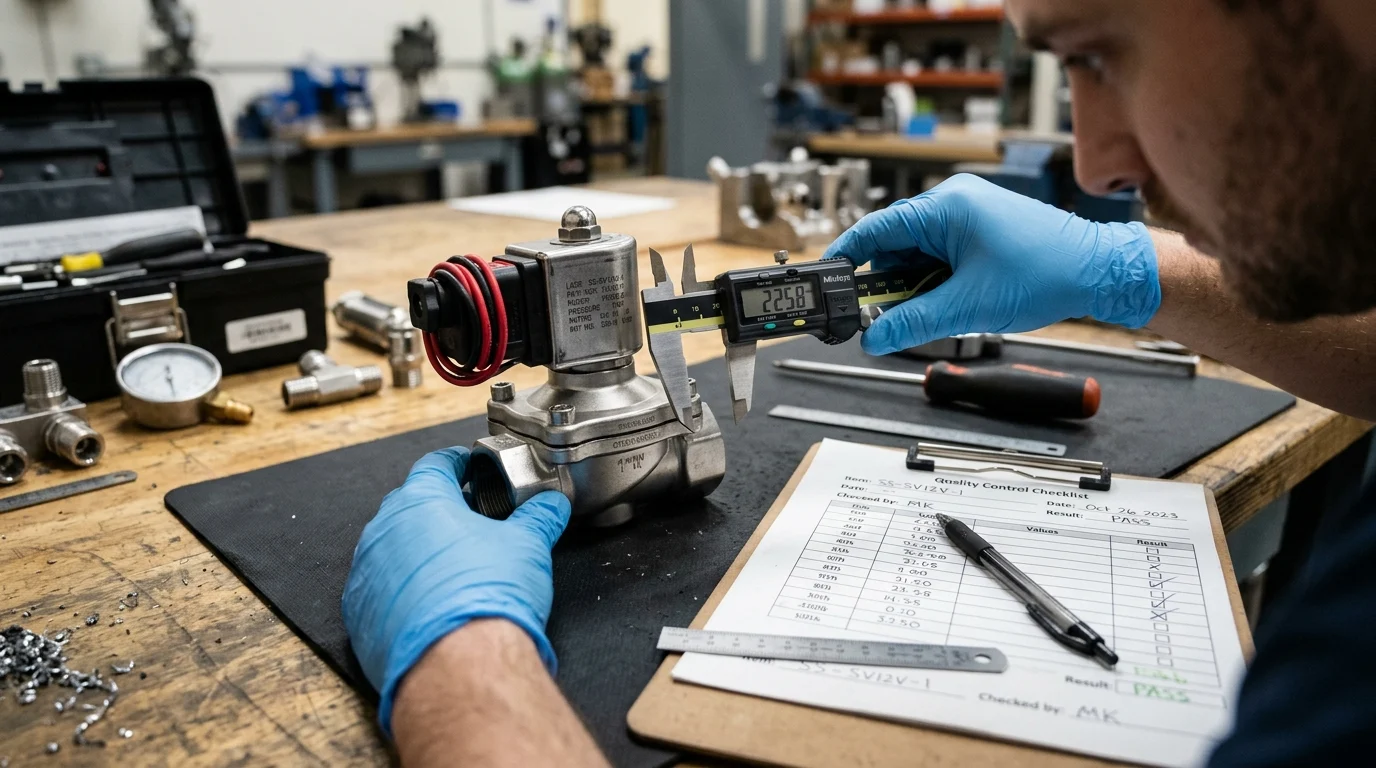
Proper valve selection requires a rigorous analysis of the system’s operational parameters. Engineers must cross-reference the physical and chemical demands of the application with the specific design tolerances of the solenoid valve to guarantee seamless integration and safe actuation.
Media, pressure, and temperature compatibility
The foremost specification check involves the thermodynamic and kinetic properties of the controlled media. Stainless steel solenoid valves are engineered to handle extreme parameters, with certain high-pressure variants rated for up to 10,000 PSI (690 bar).
Temperature compatibility is equally critical. Cryogenic applications utilizing liquid nitrogen demand specialized 316L valves capable of maintaining seal integrity at -196°C, whereas high-pressure steam systems require configurations certified for continuous operation at temperatures exceeding 250°C. The viscosity of the media, typically measured in centistokes (cSt), must also be evaluated; most standard solenoid valves are limited to media with a maximum viscosity of 50 cSt before actuation kinetics are severely impaired.
Valve configuration: 2-way vs 3-way
The internal flow path configuration dictates how the valve routes fluid and responds to electrical signals. A 2-way valve features one inlet and one outlet, serving as a straightforward isolation mechanism. These are specified as either Normally Closed (NC), which prevents flow until energized, or Normally Open (NO), which permits flow until energized.
Conversely, 3-way valves feature three ports and two orifices, enabling complex fluid routing such as diverting flow between two separate circuits or exhausting pressure from an actuator cylinder. The selection between 2-way and 3-way, as well as the default resting state, must align precisely with the system’s fail-safe requirements in the event of an unexpected power loss.
Body grade, seals, coil protection, and ports
While the valve body provides structural integrity, the internal elastomers and electrical components determine functional survivability. The coil housing must carry an appropriate ingress protection rating; NEMA 4X or IP67 ratings are standard for outdoor or washdown environments, ensuring total protection against dust and high-pressure water jets.
Seal material selection is arguably the most critical variable within the valve assembly, as the elastomer must withstand both the chemical makeup and the temperature profile of the media without swelling or degrading.
| Seal Material | Temperature Range | Primary Chemical Compatibility | Typical Application |
|---|---|---|---|
| NBR (Nitrile) | -10°C to 90°C | Water, neutral fluids, air | General utility lines |
| FKM (Viton) | -15°C to 200°C | Oils, fuels, dilute acids | Petrochemical refining |
| EPDM | -40°C to 150°C | Steam, hot water, alkalis | CIP/SIP cleaning systems |
| PTFE (Teflon) | -200°C to 250°C | Aggressive solvents, cryogenics | High-purity chemical dosing |
Comparing Valve Options
Once baseline specifications are established, the procurement process shifts to comparing specific valve mechanisms and performance metrics. Understanding the operational mechanics behind different solenoid designs is essential for optimizing flow efficiency and system responsiveness.
Core comparison criteria
A primary comparative metric is the Flow Coefficient (Cv), which quantifies the volume of water (in gallons per minute) that will pass through the valve at a 1 PSI pressure drop. Valves must be sized with a Cv that matches the required system flow rate to prevent excessive pressure drops or fluid cavitation.
Additionally, engineers must choose between direct-acting and pilot-operated (servo-assisted) mechanisms. Direct-acting valves utilize the magnetic force of the coil to lift the armature and open the orifice directly, allowing them to operate from a 0 PSI differential. Pilot-operated valves leverage the pressure of the fluid itself to assist in opening the main diaphragm, requiring a minimum pressure differential—typically between 0.5 and 1.5 bar—to function properly, but enabling the control of much higher flow rates with a smaller electromagnetic coil.
Trade-offs in corrosion resistance and response time
Comparing valve options frequently involves navigating trade-offs between mechanical robustness and electrical efficiency. Direct-acting stainless steel valves offer exceptionally fast response times, often actuating within 5 to 20 milliseconds. However, to overcome high fluid pressures without pilot assistance, they require powerful coils that consume between 10 and 25 watts of continuous power.
Pilot-operated valves offer lower power consumption (often under 8 watts) and higher flow capacities, but their response times are slower, typically ranging from 50 to 150 milliseconds. Furthermore, pilot-operated valves contain tiny internal pilot orifices that are highly susceptible to clogging if particulate matter is present in the media. In highly corrosive or debris-laden applications, engineers may sacrifice the energy efficiency of a pilot-operated design in favor of the reliable, clog-resistant nature of a direct-acting stainless steel valve.
Quality, Compliance, and Supply Chain
In heavily regulated sectors, a stainless steel solenoid valve is only as viable as the documentation and manufacturing pedigree that support it. Procurement teams must rigorously vet both the product’s certifications and the supplier’s quality management systems.
Required certifications and documentation
Regulatory compliance dictates specific certifications based on the installation environment. For explosive atmospheres found in oil and gas facilities, valves must carry ATEX, IECEx, or UL hazardous location certifications, ensuring the coil design prevents the ignition of ambient flammable gases.
In the food, beverage, and pharmaceutical industries, valves must adhere to FDA guidelines, 3-A Sanitary Standards, or USP Class VI requirements. This necessitates specialized 316L stainless steel bodies with a surface finish typically polished to an Ra value of 0.4 µm to 0.8 µm to prevent bacterial accumulation. Additionally, safety-critical systems require valves with Safety Integrity Level (SIL) ratings, commonly SIL 2 or SIL 3, which provide statistically verified failure rates for integration into Safety Instrumented Systems (SIS).
Manufacturer capability and testing standards
Evaluating a manufacturer’s capability is equally important as assessing the product itself. Top-tier manufacturers maintain ISO 9001 certified facilities and utilize advanced testing protocols, such as mass spectrometry helium leak testing, ensuring fugitive emission rates remain below 1×10^-9 atm cc/sec.
Supply chain resilience is another critical factor. Specialized stainless steel valves often involve complex supply chains for raw exotic alloys. Buyers must evaluate the manufacturer’s typical lead times—which can range from 2 weeks for standard 316 SS models to 10-14 weeks for custom assemblies featuring Monel or Hastelloy internal components. Understanding Minimum Order Quantities (MOQs) is also vital, as custom coil voltages or specialized elastomer seals may require MOQs of 50 to 100 units, impacting inventory strategies for spare parts.
Decision Process for Selection
Selecting the optimal stainless steel solenoid valve requires a structured decision-making framework that balances immediate technical requirements against long-term commercial realities. A methodical approach prevents over-specification, which inflates capital expenditure, and under-specification, which jeopardizes system integrity.
Step-by-step shortlist and validation workflow
The validation workflow begins with mapping the exact media characteristics, including chemical composition, state (liquid or gas), maximum system pressure, and operating temperature range. This data directly dictates the required stainless steel grade (e.g., 304 vs. 316L) and the internal elastomer material.
Next, engineers must define the electrical and environmental parameters. This includes specifying the available control voltage (e.g., 24V DC, 120V AC), identifying necessary hazardous area certifications, and determining the required ingress protection rating. Finally, the mechanical fit is validated by calculating the required Flow Coefficient (Cv) to ensure the chosen port size and actuation type (direct vs. pilot-operated) will meet the system’s volumetric flow demands without inducing excessive pressure loss.
Price versus lifecycle cost
While a 316 stainless steel solenoid valve commands a higher initial purchase price compared to standard brass alternatives, procurement decisions must be evaluated through the lens of Total Cost of Ownership (TCO). In aggressive environments, the lifecycle cost of a cheaper, incompatible valve quickly surpasses the initial premium of a stainless steel unit due to frequent replacement cycles and maintenance labor.
The financial disparity becomes evident when analyzing a five-year operational horizon in a mildly corrosive chemical dosing application.
| Cost Factor (5-Year Horizon) | Standard Brass Valve | 316 Stainless Steel Valve |
|---|---|---|
| Initial Capital Expenditure (CapEx) | $150 | $450 |
| Expected Lifespan in Service | 8 Months | 60+ Months |
| Replacement Units Required | 7 | 0 |
| Total Hardware Cost | $1,200 | $450 |
| Maintenance Labor (@ $80/hr) | $1,120 (14 hours) | $80 (1 hour routine) |
| Total Cost of Ownership | $2,320 | $530 |
By factoring in the costs of maintenance labor, replacement parts, and the mitigated risk of unplanned downtime, the higher initial investment in a properly specified stainless steel solenoid valve consistently yields a substantially lower lifecycle cost.
Key Takeaways
- The most important conclusions and rationale for Stainless Steel Solenoid Valve
- Specs, compliance, and risk checks worth validating before you commit
- Practical next steps and caveats readers can apply immediately
Frequently Asked Questions
When should I choose 316 or 316L over 304 stainless steel?
Use 316 or 316L for chloride exposure, saline media, aggressive chemicals, or high-purity processes. Choose 304 for milder water or less corrosive service.
How do I decide between a 2/2-way and a 3-way stainless steel solenoid valve?
Pick a 2/2-way valve for simple on/off isolation. Use a 3-way valve when you need to divert flow or exhaust pressure from an actuator.
What operating data should I confirm before selecting a stainless steel solenoid valve?
Check media type, pressure range, temperature, viscosity, port size, voltage, and required fail-safe state. Matching these prevents leakage, slow response, and early failure.
Which coil protection rating is best for washdown or outdoor installations?
Choose IP67 or NEMA 4X coil protection for wet, dusty, or washdown environments. This helps protect the coil from water ingress and corrosion.
Can NBSENYA provide customized stainless steel solenoid valves for industrial OEM projects?
Yes. NBSENYA supports OEM buyers with customized pneumatic and fluid-control solutions, stable supply, and application-focused selection for demanding industrial environments.