
What Are Push-in Fittings in Pneumatic Systems?
Push-in fittings also called quick connect pneumatic fittings, which are essential components in modern pneumatic systems. They are designed to connect tubing quickly and securely without the need for special tools.
- Commonly used in compressed air systems and automation equipment
- Allow instant connection and disconnection of pneumatic tubing
- Available in various materials like brass, plastic, and stainless steel
- Compatible with PU, PA, and PE tubing types
- Widely used in industrial automation and machinery systems
These push-in fittings improve upon traditional connection methods by simplifying the installation process while maintaining a reliable airtight seal. In pneumatic systems, they facilitate the highly efficient transmission of fluid media—enabling rapid delivery while simultaneously minimizing the risk of leakage.
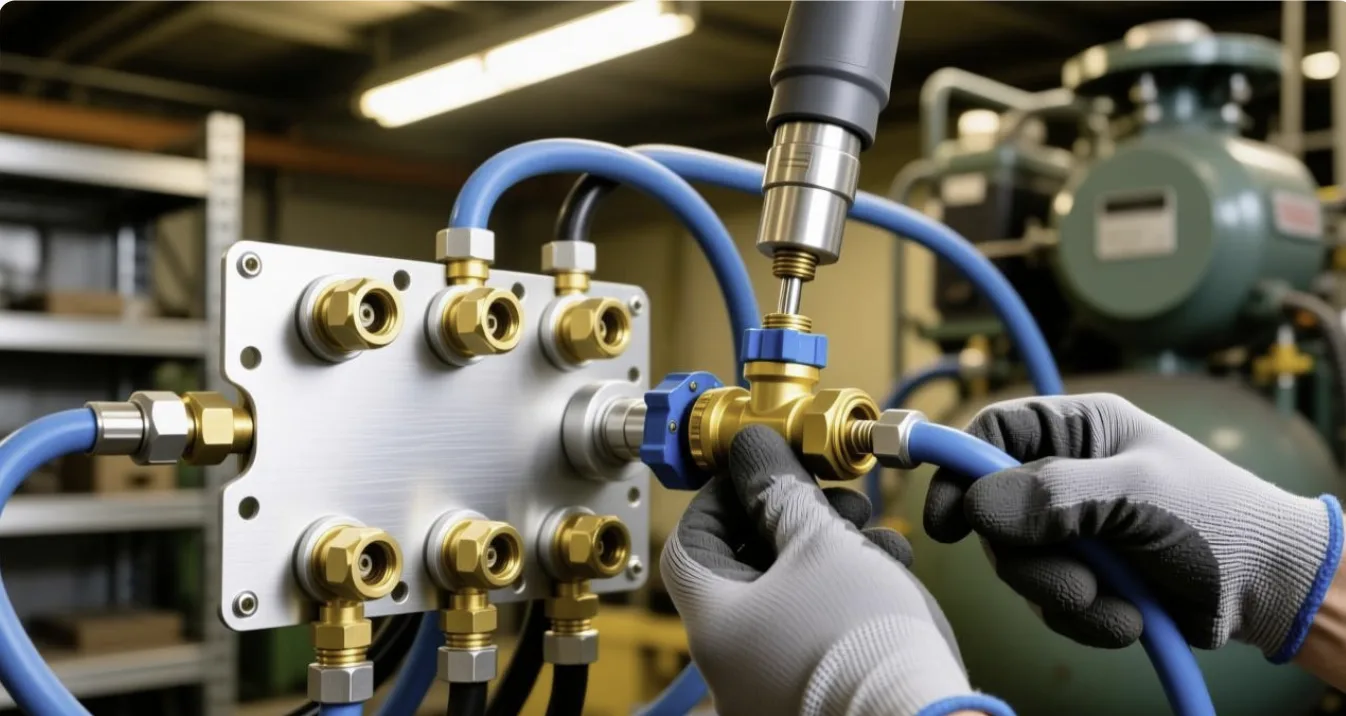
How Push-to-Connect Pneumatic Fittings Work
The working principle of push-in air fittings is based on a simple but effective internal locking mechanism.
Step 1: Tube insertion
The pneumatic tube is pushed directly into the fitting body.
Step 2: Grip mechanism activation
Stainless steel gripping teeth automatically lock the tube in place.
Step 3: Sealing process
An internal O-ring compresses around the tube to ensure airtight sealing.
Step 4: Secure hold under pressure
The fitting maintains a strong grip even under continuous air pressure.
Step 5: Quick release (if needed)
By pressing the release ring, the tube can be easily removed without damage.
This tool-free design makes pneumatic push-in connectors highly efficient for fast assembly lines.
Key Advantages of Push-in Air Fittings
Push-in pneumatic connectors are widely preferred due to their convenience and performance benefits.
- Fast installation – No need for clamps, glue, or threading
- High sealing performance – Prevents air leakage effectively
- Reusable design – Tubing can be connected and disconnected multiple times
- Space-saving structure – Compact design suitable for tight installations
- Wide compatibility – Works with various pneumatic tubing sizes and materials
These advantages make them ideal for automation systems, robotics, and air control systems.
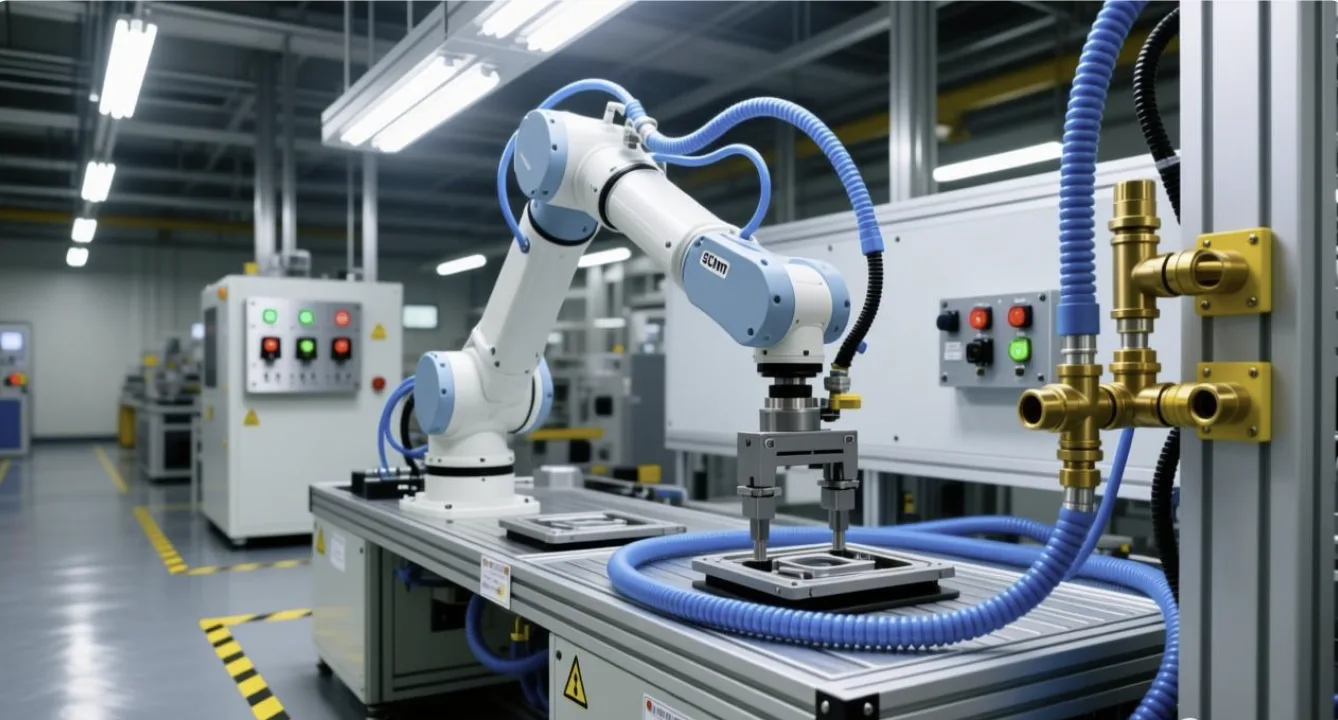
Common Applications of Pneumatic Quick Connect Fittings
Push-in fittings are used across multiple industries where compressed air systems are required.
- Industrial automation equipment and robotic arms
- Packaging and filling machinery
- Automotive assembly lines
- Pneumatic control systems and valves
- Air compressors and workshop air distribution systems
Their versatility makes them a standard choice in modern pneumatic engineering.
Installation and Maintenance Tips for Pneumatic Push Fittings
To ensure long-term performance, proper installation and maintenance are important.
- Ensure tubing is clean and cut flat before insertion
- Avoid excessive bending near the fitting connection point
- Check air pressure compatibility before use
- Regularly inspect for leaks or wear on O-rings
- Use correct tubing size to ensure secure locking
Following these steps helps extend the lifespan of push-in air line fittings and improves system reliability.
FAQ: Push-in Fittings in Pneumatic Systems
What are push-in fittings used for in pneumatic systems?
They are used to quickly connect and secure air tubing in compressed air systems without tools, ensuring fast installation and reliable sealing.
How do push-to-connect pneumatic fittings prevent air leaks?
They use an internal O-ring and gripping teeth that tightly seal the tubing, preventing compressed air from escaping.
Can pneumatic push-in fittings be reused?
Yes, most push-to-connect fittings are reusable and allow multiple insertions and removals without damaging the tubing.
What types of tubing work with push-in air fittings?
They are compatible with PU, PA, and PE pneumatic tubing, commonly used in industrial air systems.
Are push-in fittings suitable for high-pressure applications?
Yes, but each fitting has a specific pressure rating, so it is important to match it with system requirements.
About
Senya specializes in the design and manufacturing of high-quality pneumatic components, including push-in fittings, air hose connectors, solenoid valves, and related automation accessories. Through our website, we provide reliable technical insights and product solutions for global industrial customers.
Our products are widely used in automation equipment, pneumatic control systems, and industrial machinery. With strong engineering capabilities and strict quality control, we focus on delivering durable, high-precision pneumatic fittings that ensure stable system performance, easy installation, and long service life.
We are committed to providing efficient pneumatic connection solutions that help customers improve productivity and reduce maintenance costs across various industrial applications.