
What is a Solenoid Valve?
A solenoid valve is an automated control device that uses electromagnetic force to control the flow of liquids or gases. It is a core component in pneumatic, hydraulic, HVAC, irrigation, and industrial automation systems. It converts electrical energy into mechanical motion to control the opening and closing of fluid channels, ensuring the efficient and reliable operation of automated systems.
Understanding the different types of solenoid valves, their structural components, and their working principles is crucial for various consumer groups designing, maintaining, and optimizing pneumatic systems.
How a Solenoid Valve Works?
To understand the working principle of a solenoid valve, it is first necessary to understand its structural components. A solenoid valve mainly consists of the following three core components:
Coil – Generates a magnetic field when an electric current passes through it.
Plunger/Valve Core – Moves under the influence of magnetic force, opening or closing the valve.
Valve Body – Carries the medium and forms the flow channel.
These components work together to enable the solenoid valve to respond quickly to control signals, providing precise fluid control for cylinders, actuators, or piping systems.
Working Principle of Different Types of Solenoid Valve
Solenoid valves can be classified by function into direct-acting and pilot-operated types, and by structure into single-acting and double-acting types.
Direct-Acting: The electromagnetic force directly actuates the valve core to open or close the valve. This type can control flow without relying on system pressure, making it suitable for low-flow or low-pressure systems.
Pilot-Operated/Indirect: The main valve is actuated by the system medium pressure. The solenoid valve controls a small pilot port, allowing the pressure to actuate the main valve. Suitable for high-flow or high-pressure systems, with low power consumption.
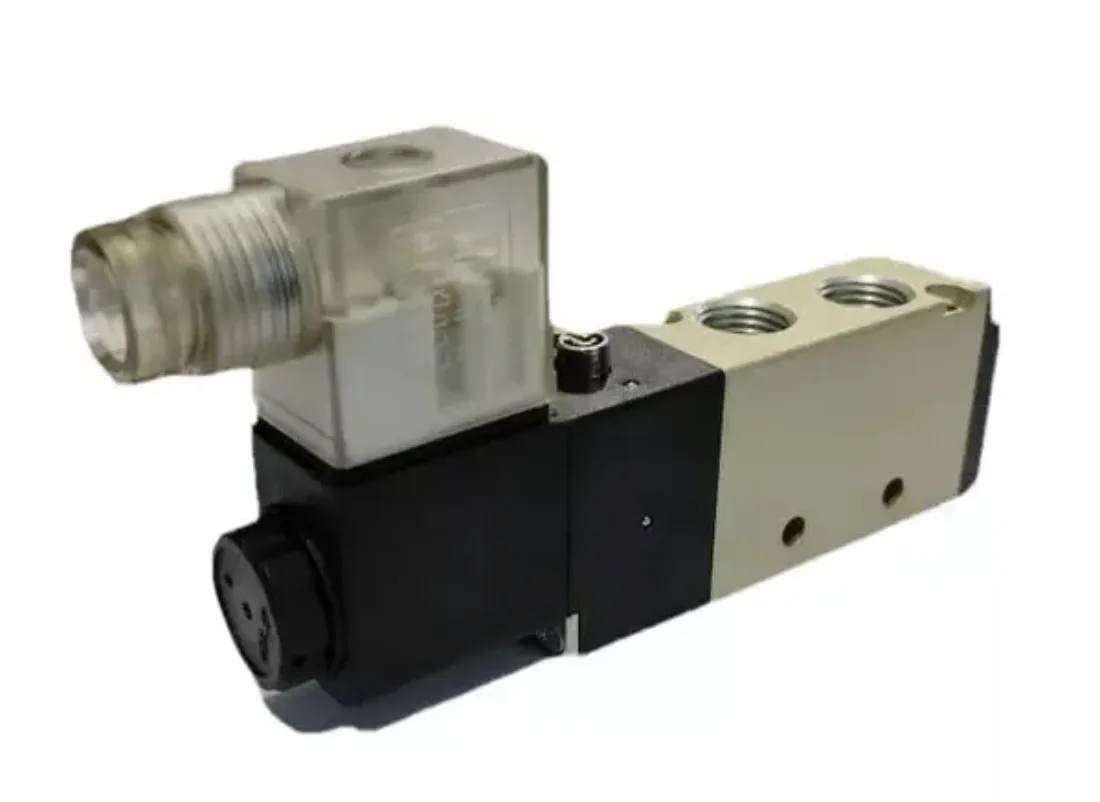
Single-Acting: Only one solenoid coil controls the valve opening. The valve returns to its original position by a spring or system pressure when power is off. Suitable for safety applications requiring a default open or closed state.
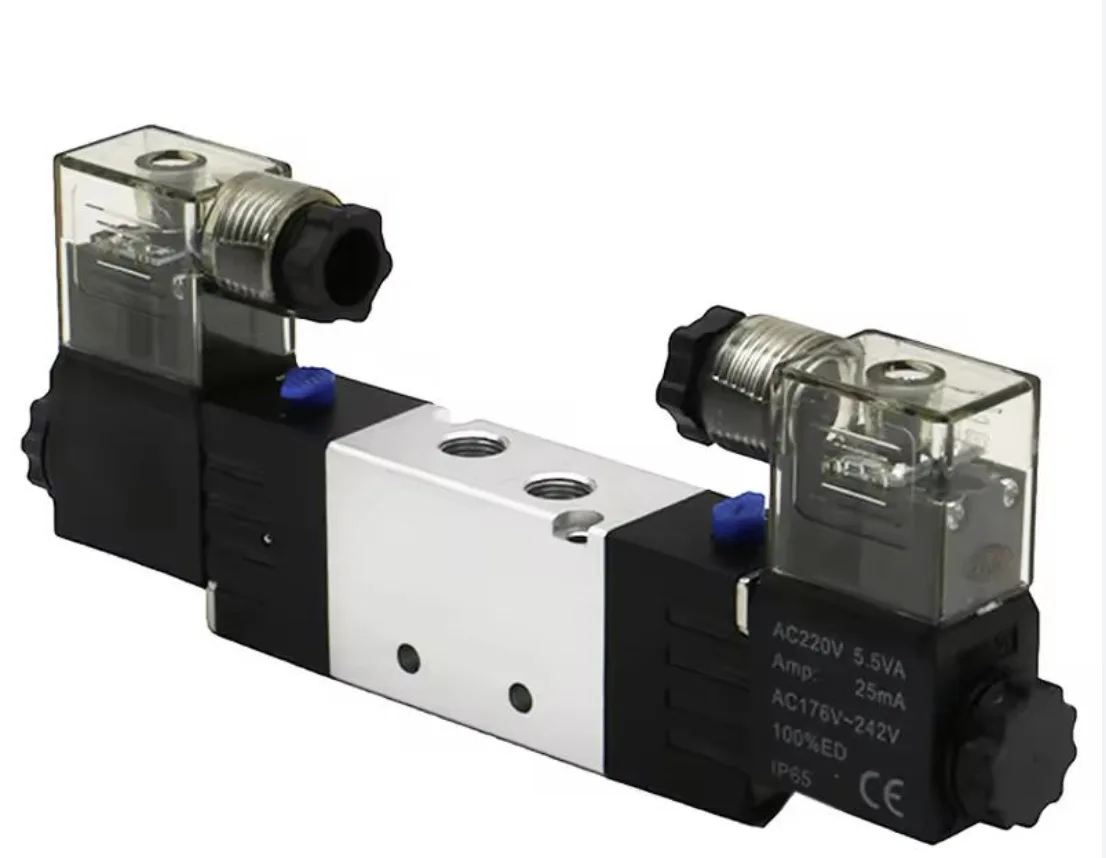
Double-Acting: Equipped with two solenoid coils, one for opening and one for closing. No spring return is required, enabling high-frequency actuation control, ideal for double-acting cylinders or systems requiring precise control.
Solenoid Valve Other Types:
2/2 Solenoid Valve: The simplest on/off valve, controls flow in one direction or a simple circuit.
3/2 Solenoid Valve: Three ports, two positions, used for single-acting cylinder control with one inlet, one exhaust, and one outlet.
4/2 Solenoid Valve: Four ports, two positions, controls extension and retraction of double-acting cylinders.
4/3 Solenoid Valve: Four ports, three positions, with a neutral hold or exhaust function to improve system safety.
5/2 Solenoid Valve: Five ports, two positions, used for complex double-acting cylinders or multi-actuator pneumatic circuits.
5/3 Solenoid Valve: Five ports, three positions, supports multi-channel switching for high-frequency or coordinated multi-cylinder control.
Applications of Solenoid Valves in Pneumatic Systems
Solenoid valves are typically used in conjunction with cylinders, pneumatic fittings, and pneumatic tubing to achieve automated operation:
Cylinder Control: Controls the extension and retraction of single-acting or double-acting cylinders.
Industrial Automation: Precisely controls liquid or gas flow rates in assembly lines, sorting machines, and packaging systems.
Irrigation and Water Treatment: Remotely and automatically adjusts water flow for intelligent control.
The choice between direct-acting or pilot-operated, single-acting or double-acting solenoid valves depends on the system’s flow rate, pressure, and operating frequency.
Advantages and Maintenance Considerations of Solenoid Valves
Advantages:
Fast response, precise control, suitable for automated production lines.
Compact structure, modular design, easy installation and maintenance.
Supports remote operation via electrical signals, improving system automation levels.
Maintenance Considerations:
Sensitive to impurities; it is recommended to install a pneumatic filter to ensure cleanliness.
Dependent on power supply; normally closed valves automatically close when power is off, while normally open valves may pose a safety risk when power is off.
Regularly inspect the coil and valve core to extend service life.
Introduction to the Importance of Solenoid Valves
Solenoid valves are the “core control components” of pneumatic and hydraulic systems. Understanding different types of solenoid valves—single-acting/double-acting, direct-acting/pilot-operated—and their working principles is crucial for optimizing system performance.
Choosing the right solenoid valve ensures reliable, efficient, and precise operation of cylinders, actuators, and piping systems, making it an indispensable key component of modern automation systems.
SENYA Solenoid Valve Manufacturer
We are a professional pneumatic products manufacturer, dedicated to providing high-quality pneumatic solutions for various automation systems. The company is equipped with advanced production facilities and a strict quality management system. Our products are widely used in industrial automation, smart manufacturing, logistics equipment, environmental irrigation, HVAC systems, and other fields.
We offer not only standardized pneumatic components, including cylinders, pneumatic valves, fittings, and tubing, but also customized complete pneumatic system solutions according to customer requirements, helping enterprises improve production efficiency and automation levels.