
In any pneumatic system, since compressed air is used as the power source, it is necessary to centrally control the equipment and manage the quality of the compressed air. This means a reliable and clean air supply is required to ensure all components achieve their optimal service life. Proper air treatment improves reliability, accuracy, and safety, and ensures the most efficient use of energy.
How Does an Air Purification Device Work?
A typical air treatment unit usually consists of multiple components, including:
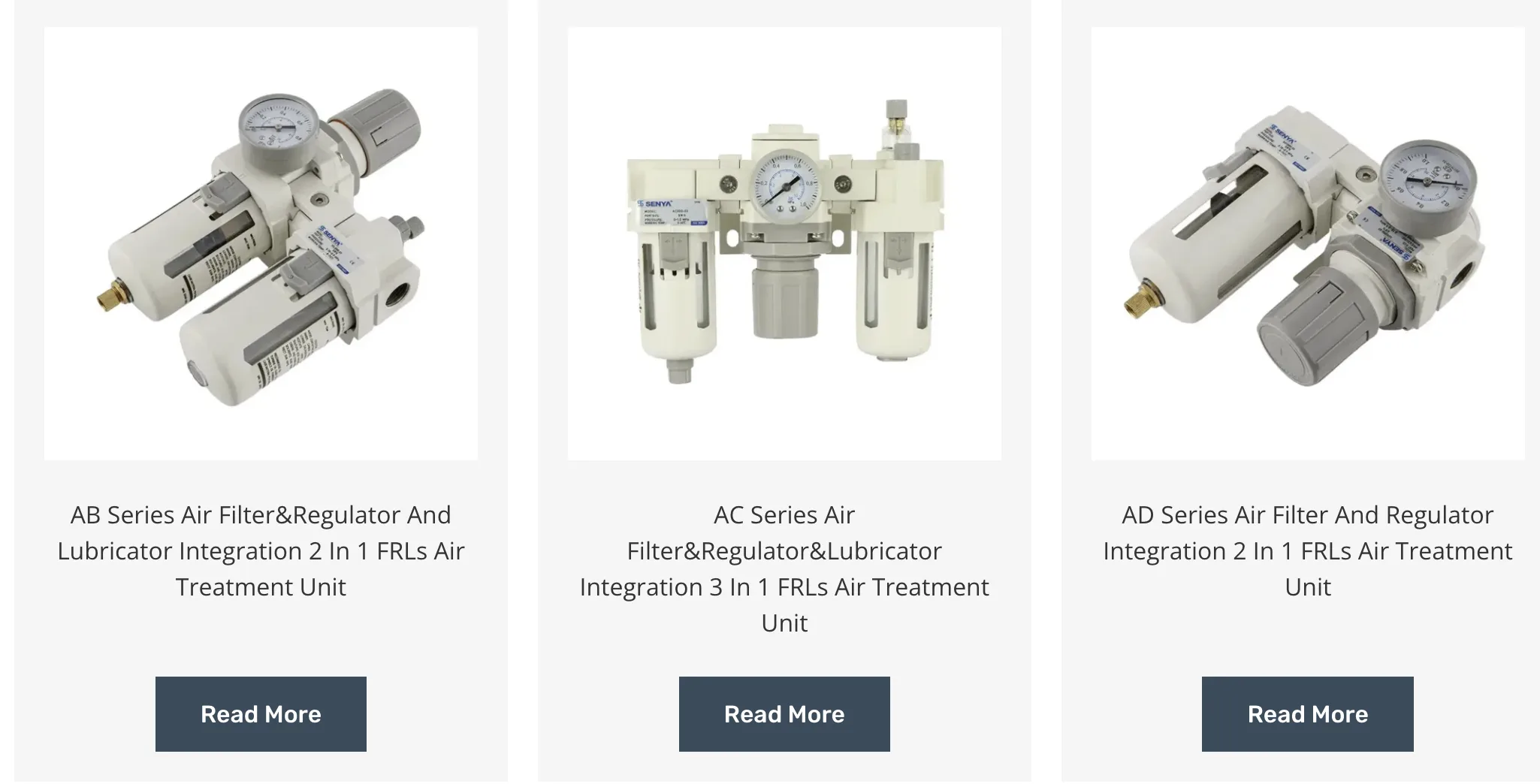
Filters, with optional fine filters, high-flow filters, and activated carbon filters.
Pneumatic air Regulators, including pressure regulators.
Pneumatic compressed air Lubricator: Its main function is to spray a mist of lubricating oil into the compressed air. As the compressed air passes through a series of basic pneumatic components—including control valves, pneumatic actuators, and pneumatic pipelines—it lubricates the entire pneumatic system.
Some functional valves, including pressure regulating valves, safety valves, and switching valves.
Pneumatic Filter: The function of a filter is to remove dust, water droplets, oil, and other impurities from the air, ensuring that the compressed air is clean. Air first passes through the filtering material, which blocks larger particles. For higher precision filtration, fine filters can remove smaller particles, while high-flow filters are suitable for large volumes of air and are less likely to clog. Activated carbon filters can also absorb oil mist and odors, further increasing air purity.
Regulator: The regulator adjusts the air pressure to the required level for the equipment, ensuring that downstream pneumatic components are not damaged by excessively high or low pressure. As air passes through the regulator, internal springs and diaphragms control the airflow, stabilizing the output pressure. If the pressure exceeds the set value, excess air is released, keeping the system safe and reliable.
Dryer: A dryer is used to further remove moisture from the air, preventing water accumulation in pipes or equipment that could affect operation. Membrane dryers contain moisture-absorbing membranes; as air passes through, water is absorbed, lowering the pressure dew point and producing drier air, which is suitable for moisture-sensitive pneumatic systems.
Lubricator: A lubricator sprays a fine mist of oil into the air, lubricating pneumatic components such as cylinders, valves, and pipelines. This reduces wear and extends their service life. As air flows through the lubricator, the oil mist is carried throughout the system, ensuring that each component receives adequate lubrication.
Sensors: Sensors are used to monitor air pressure and flow in real time, aiding in the centralized control of the pneumatic system. Pressure sensors can measure pressure directly in the pipe without requiring airflow, while flow sensors must be installed along the airflow direction to ensure accurate measurement, allowing the system’s operating status to be clearly monitored and adjusted.
Valves: Valves control air flow and system safety, including pressure-regulating valves, safety valves, and shut-off valves. Pressure-regulating valves adjust working pressure and release excess air, safety valves protect equipment and personnel when pressure is too high, and shut-off valves can cut off air supply for maintenance and operation convenience.
SENYA Pneumatic:Preparation, Safety, and Sustainability
In pneumatic systems, proper air treatment can significantly extend the service life of pneumatic equipment and improve pneumatic system performance. With various configurations and optional additional units, you can fine-tune the purity and pressure of the air supply according to different requirements. Moreover, it enhances the safety of the pneumatic system, reduces energy consumption, and provides overall benefits for environmental protection.