
Introduction
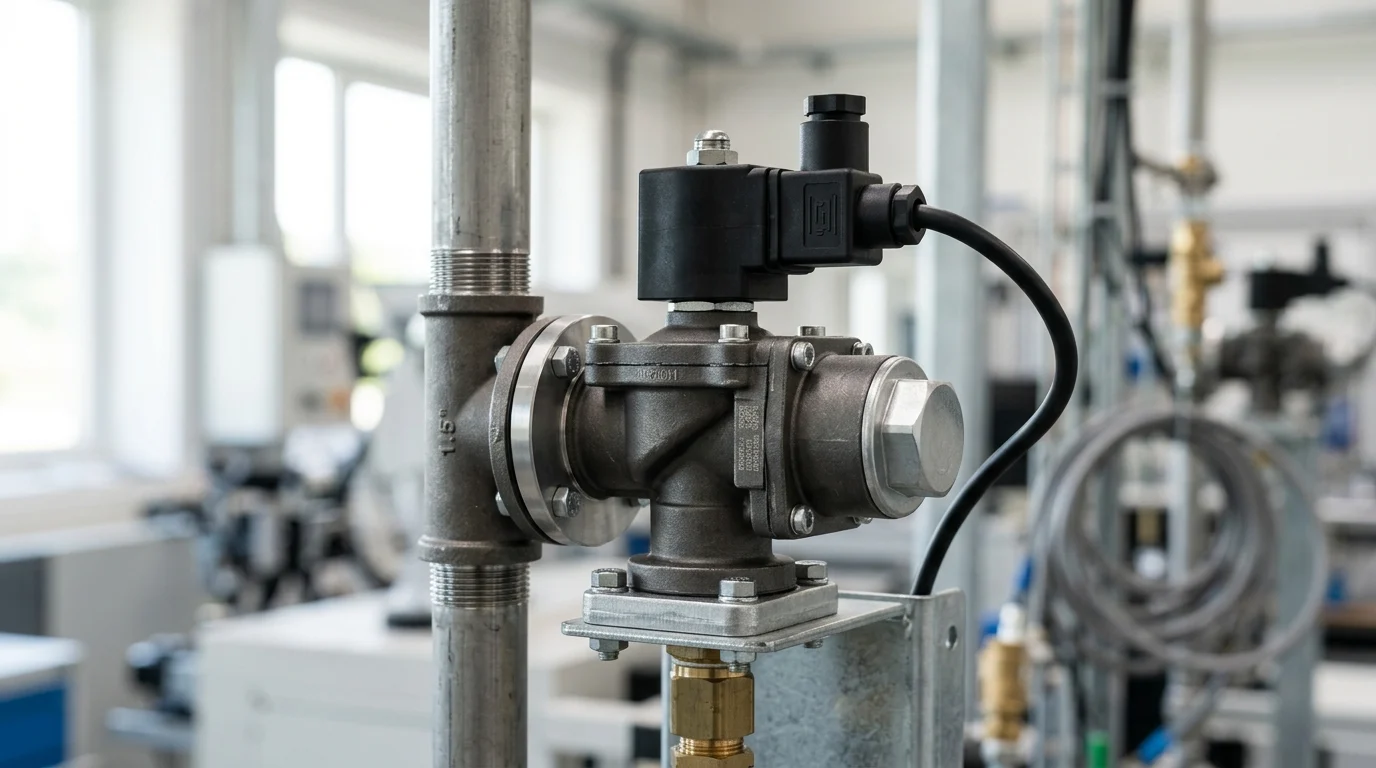
Selecting a pulse solenoid valve for a dust collection system is not just a matter of matching pipe size or voltage. The valve’s opening speed, peak flow, pressure compatibility, and durability directly influence filter cleaning performance, compressed air use, and maintenance intervals. A poor match can weaken the cleaning pulse, raise differential pressure, and shorten filter life. This article explains the key factors that determine whether a valve will perform effectively in a reverse-pulse setup, including pneumatic response, diaphragm design, installation conditions, and electrical specifications, so you can compare options with a clearer view of how each choice affects system efficiency and reliability.
How the Right Pulse Solenoid Valve Affects Dust Collection
Pulse solenoid valves function as the critical pneumatic interface within a reverse-pulse dust collection system, governing the release of high-pressure compressed air to clean filter media. Their primary role is to generate an instantaneous shockwave that dislodges accumulated particulate cake from filter bags or cartridges without interrupting the continuous filtration process.
Because the efficiency of a baghouse is directly tied to the differential pressure across the filters, the performance of the pulse valve dictates the overall energy consumption and maintenance cycles of the entire dust collection facility. Selecting the correct valve requires evaluating fluid dynamics, electrical requirements, and mechanical durability.
Why valve selection affects cleaning efficiency
The fundamental metric of cleaning efficiency is the valve’s ability to deliver a high peak flow rate with an extremely rapid opening response. Effective dust cake removal relies on a sonic shockwave rather than sheer air volume. A high-performance pulse valve typically achieves full opening in under 15 milliseconds, allowing a precisely metered burst of air—usually lasting between 50 and 150 milliseconds—to travel down the blow tube.
Valves that open sluggishly fail to produce the necessary acoustic shock, resulting in a slow pressure rise that merely inflates the filter bag without dislodging the dust. This inefficiency forces operators to increase the pulse frequency or system pressure, which drastically inflates compressed air consumption—often accounting for over 50% of a dust collector’s operating energy cost.
Common operating failures linked to valve choice
Suboptimal valve selection frequently leads to premature mechanical failure and system blinding. The most common point of failure is diaphragm rupture, which occurs when the elastomer material is mismatched with the operating temperature or chemical environment. A ruptured diaphragm causes continuous air leakage, instantly dropping the header tank pressure below the minimum operational threshold of 0.3 MPa (45 psi) and rendering the cleaning cycle ineffective.
Another frequent failure mode is coil burnout, typically caused by specifying an inadequate ingress protection rating (such as an IP54 coil in a high-moisture outdoor environment) or operating the valve outside its specified voltage tolerance. Furthermore, undersized valves that restrict flow capacity (Cv/Kv) will lead to incomplete cleaning of the lower filter sections, accelerating media blinding and forcing premature filter replacement.
Key Specifications for Choosing a Pulse Solenoid Valve
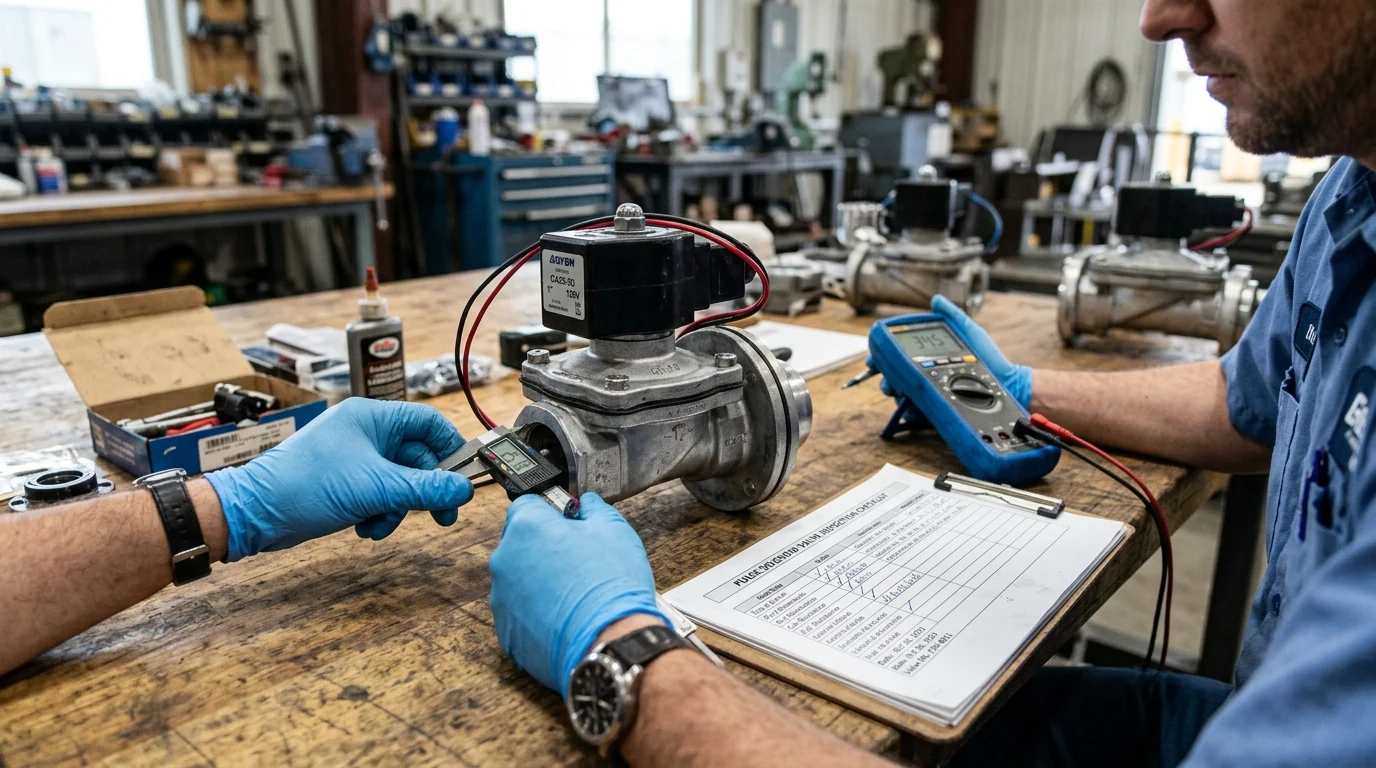
Engineering the correct pulse solenoid valve requires matching the component’s specifications to the pneumatic architecture of the baghouse. The valve must handle the required volumetric flow while withstanding the ambient and media conditions present in the facility. Engineers must evaluate dimensional constraints, pressure ratings, and electrical parameters to ensure seamless integration.
Port size, diaphragm design, and flow capacity
Port size is the primary determinant of flow capacity, directly correlating to the number of filter bags a single valve can effectively clean. Standard pulse valves are available in port sizes ranging from 3/4-inch for small bin vents up to 3.5 inches for massive structural baghouses. The flow coefficient (Cv or Kv) must be matched to the blow tube volume and filter surface area.
Diaphragm design scales with port size. Valves up to 1.5 inches typically utilize a single diaphragm architecture. However, larger port sizes (2 to 3.5 inches) require a double-diaphragm design—consisting of a main and a secondary (bleed) diaphragm—to ensure rapid opening and closing times despite the larger surface area and higher air volumes involved.
Pressure range, air quality, temperature, and media conditions
Standard pulse valves are engineered to operate within a pressure range of 0.3 to 0.8 MPa (43 to 116 psi). Operating below this range prevents the pilot from functioning correctly, while exceeding it risks diaphragm extrusion and structural failure. The quality of the compressed air (ISO 8573-1 class) also impacts longevity; excessive moisture or compressor oil carryover will rapidly degrade standard elastomers.
Temperature and media chemistry strictly dictate the diaphragm material selection, as outlined in the specification matrix below:
| Material | Temperature Range | Ideal Application |
|---|---|---|
| NBR (Nitrile) | -20°C to +85°C | Standard industrial dust collection, dry air |
| FKM (Viton) | -15°C to +200°C | High-temperature flue gas, chemical processing |
| Silicone | -40°C to +150°C | Extreme low temperature, food-grade environments |
Enclosure rating, coil voltage, and duty cycle
Electrical actuation requires specifying the correct coil voltage and enclosure rating. Common industrial voltages include 24VDC, 110VAC, and 220VAC. DC coils are increasingly preferred in modern PLC-controlled systems for their electrical safety and consistent magnetic pull, though they draw slightly higher continuous amperage than AC counterparts.
The enclosure rating determines the valve’s survivability in harsh environments. A minimum of IP65 (NEMA 4) is required for standard indoor dust collectors, while outdoor installations or washdown environments necessitate IP67-rated encapsulated coils. Additionally, while the pulse duration is brief, the coil’s duty cycle rating must be 100% ED (continuous duty) to withstand potential control system faults that might lock the circuit in an energized state.
How to Compare Valve Designs and Materials
Beyond basic dimensional and electrical specifications, the internal architecture and material composition of the valve determine its lifecycle and maintenance overhead. Industrial buyers must evaluate the trade-offs between different actuation designs and construction materials to maximize the mean time between failures (MTBF).
Direct-acting vs pilot-operated designs
Pulse solenoid valves are categorized by their actuation method: integral pilot (direct-acting) and remote pilot (pilot-operated). Integral pilot valves feature the solenoid coil mounted directly on the valve body, venting the pilot chamber directly to the atmosphere. Remote pilot systems separate the pneumatic valve from the electrical solenoid, housing multiple pilot solenoids in a single, remote enclosure connected to the valves via pneumatic tubing.
| Feature | Integral Pilot (Direct-Mounted) | Remote Pilot (Pilot-Operated) |
|---|---|---|
| Wiring Complexity | High (individual cables to each valve) | Low (single multiconductor to pilot box) |
| Environmental Vulnerability | Higher (coils exposed to dust/weather) | Lower (coils protected in remote enclosure) |
| Response Time | Ultra-fast (<15 ms) | Slightly delayed due to pneumatic tubing length |
| Cost per Valve | Higher | Lower (but requires pilot box investment) |
Body materials, seal compounds, and serviceability
The standard body material for pulse valves is die-cast aluminum alloy (commonly ADC12), which offers an excellent balance of structural integrity, low weight, and cost-effectiveness. The aluminum is typically anodized or powder-coated to resist external corrosion. However, for highly corrosive environments, such as marine applications or corrosive chemical processing, 316 stainless steel bodies are required despite their significantly higher mass and cost.
Serviceability is a critical design consideration. Valves featuring a dress-nut or quick-mount clamp design allow for rapid diaphragm replacement without unthreading the valve body from the header tank or blow tube. This reduces maintenance downtime from hours to minutes per row. High-quality stainless steel springs and specialized seal compounds further prevent internal galling and ensure smooth operation over years of service.
Cycle life, consistency, and certifications
Cycle life is the ultimate metric of a pulse valve’s mechanical quality. Standard commercial valves are rated for approximately 1 million cycles before requiring a diaphragm rebuild. Premium valves, utilizing advanced reinforced elastomers and optimized internal geometries, can reliably exceed 3 million to 5 million cycles.
Certifications provide independent verification of manufacturing consistency and safety. Depending on the installation region and industry, specifiers should look for CE and RoHS compliance for general European markets, UL/CSA for North America, and ATEX or IECEx certifications if the dust collector operates in an explosive dust atmosphere (such as grain handling or powder coating facilities).
How to Specify and Source the Right Valve
Procuring pulse solenoid valves requires more than just matching a part number. A rigorous sourcing strategy mitigates supply chain risks, ensures compatibility during retrofits, and controls total procurement costs. Establishing a systematic workflow for specification and supplier evaluation is essential for large-scale dust collector builds or critical facility turnarounds.
Application data to collect before requesting quotes
Before requesting quotes from manufacturers or distributors, engineers must compile a comprehensive application data sheet. This checklist must include the exact port size and connection type (e.g., NPT vs. G thread vs. quick-mount dresser nut), the required flow coefficient (Cv), and the header tank pressure range.
Additionally, the data sheet must specify the ambient operating temperature, the chemical composition of the dust and carrier gas, and the required electrical specifications (voltage, frequency, and IP rating). Providing this complete dataset prevents the costly error of receiving valves that thread perfectly into the manifold but fail rapidly due to elastomer incompatibility with the process gas.
Interchangeability, lead times, and supplier support
In retrofit applications, interchangeability is a primary concern. Many global manufacturers design their valves to be drop-in replacements for legacy industry standards (such as those established by Goyen, ASCO, or Mecair). Verifying exact dimensional parity—specifically the distance between the centerlines of the inlet and outlet ports—is crucial to avoid expensive header tank modifications.
Supply chain logistics also dictate supplier selection. Standard aluminum pulse valves typically carry lead times of 2 to 4 weeks, but specialized configurations (such as ATEX-certified coils or stainless steel bodies) can push lead times to 8 to 12 weeks. Buyers must also clarify Minimum Order Quantities (MOQs); while standard units can often be purchased individually, custom elastomer combinations may require an MOQ of 50 to 100 units to justify the production run.
A selection workflow to reduce commissioning risk
To reduce commissioning risk on large capital projects, procurement teams should implement a phased selection workflow. This begins with standardizing the valve specification across all facility baghouses to minimize spare parts inventory. Next, engineers should request a small batch of prototype valves for rigorous bench testing.
During prototype evaluation, maintenance teams can verify the ease of diaphragm replacement and measure the actual electrical draw and acoustic signature of the pulse. Only after the valve successfully passes these bench tests and a 30-day field trial on a single collector row should the procurement team authorize the full-scale purchase order.
Final Criteria for Selecting the Best Pulse Solenoid Valve

The final selection of a pulse solenoid valve hinges on a Total Cost of Ownership (TCO) analysis rather than the initial purchase price alone. Facilities must balance the upfront capital expenditure against long-term maintenance labor, compressed air energy costs, and the financial impact of unplanned baghouse downtime.
Balancing performance margin and maintenance needs
Standard maintenance protocols dictate that diaphragm repair kits be replaced every 12 to 24 months, depending on the pulse frequency and operating pressure. When evaluating competing valve options, engineers must factor in the cost and availability of these rebuild kits. A cheaper valve that requires proprietary, high-cost repair kits will quickly erase its initial price advantage.
Furthermore, the labor required to service the valve must be quantified. Valves engineered with captive hardware and top-loading diaphragm access significantly reduce the maintenance hours required during a facility outage. If a plant operates in a high-labor-cost region, investing in a valve design that cuts rebuild time by 50% yields a rapid return on investment.
When a premium valve is worth the cost
Determining when to upgrade to a premium valve involves analyzing the specific application stresses. While a standard $40 to $60 aluminum NBR valve is perfectly adequate for ambient woodworking or aggregate dust collection, it becomes a liability in demanding environments.
In high-temperature cement kilns, pharmaceutical processing, or explosive chemical environments, spending $150 to $300 per valve for premium FKM diaphragms, specialized stainless steel bodies, and ATEX-rated coils is necessary. Furthermore, premium valves with highly optimized internal aerodynamics can reduce compressed air consumption by 10% to 15% per pulse. In a large facility with multiple 1,000-bag collectors, this reduction in compressor load will easily pay for the premium valve upgrade within the first year of operation.
Key Takeaways
- The most important conclusions and rationale for pulse solenoid valve
- Specs, compliance, and risk checks worth validating before you commit
- Practical next steps and caveats readers can apply immediately
Frequently Asked Questions
What port size should I choose for a pulse solenoid valve?
Match port size to blow tube volume and the number of bags or cartridges per valve. Small bin vents often use 3/4–1 inch, while larger baghouses may need 1.5–3.5 inch valves.
What pressure range is suitable for most dust collection pulse valves?
Most pulse solenoid valves work best at 0.3–0.8 MPa. Below 0.3 MPa, cleaning becomes weak; above 0.8 MPa, diaphragm damage and premature failure are more likely.
Which diaphragm material is best for my dust collection system?
Use NBR for standard dry-air service, FKM for high temperature or chemical exposure, and silicone for very low temperatures or food-related environments. Match material to both temperature and media.
Why does valve response speed matter in dust collectors?
A fast-opening valve creates the shockwave needed to release dust from filters. Slow valves waste compressed air, reduce cleaning efficiency, and can increase pulse frequency and operating costs.
Can NBSENYA provide customized pulse solenoid valve solutions for OEM projects?
Yes. NBSENYA supports OEM pneumatic projects with material, voltage, and configuration options, helping buyers match valve performance, environmental resistance, and supply requirements to their dust collection systems.