
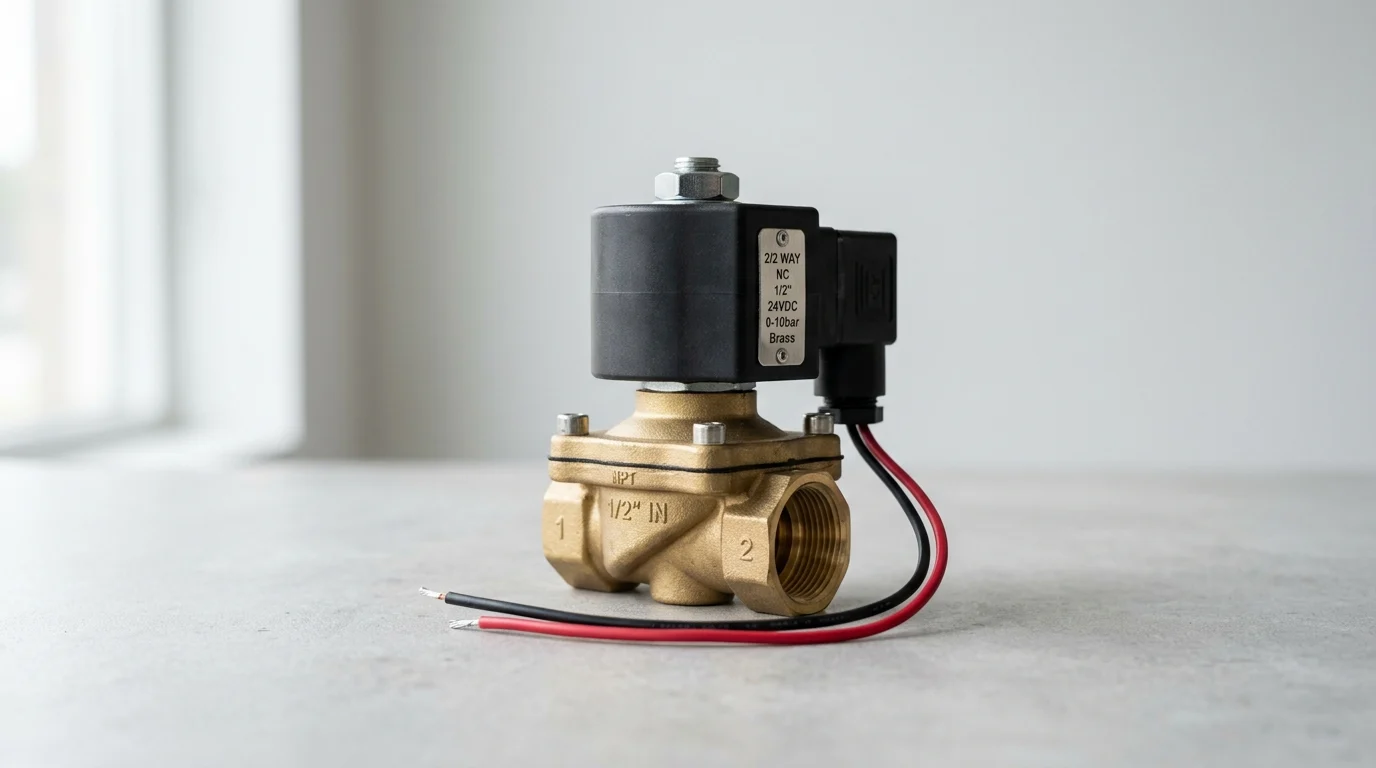
Why Proper 2/2 Way Solenoid Valve Installation Matters
In industrial automation and fluid control systems, the 2/2 way solenoid valve serves as a critical junction for directing, starting, or stopping the flow of compressed air, water, or specialized media. For B2B procurement teams, distributors, and system integrators, ensuring these components are installed correctly is not merely a technical formality; it is a fundamental requirement for maintaining operational integrity.
A 2/2 way solenoid valve features two ports (inlet and outlet) and two positions (open and closed). While the mechanical premise is straightforward, improper installation directly compromises the valve’s lifecycle, leading to erratic actuation, fluid leakage, and electrical failures. Establishing a standardized installation protocol safeguards capital investments and protects end-users from catastrophic system shutdowns.
Impact on uptime and total cost
The direct correlation between precise installation and system uptime cannot be overstated. In continuous manufacturing environments, such as packaging lines or automotive assembly, an unexpected pneumatic failure can result in downtime costs exceeding $10,000 per hour. A correctly installed 2/2 way solenoid valve, operating within its specified parameters, is typically engineered to exceed 20 to 50 million cycles depending on the seal material and mechanical design.
Conversely, a valve subjected to pipeline stress from improper threading or unsupported pipe weight will experience premature wear on its internal armature and seals. This drastically inflates the total cost of ownership (TCO). Procurement managers must recognize that the initial unit cost of a valve is negligible compared to the secondary costs incurred by frequent replacements, maintenance labor, and lost production yields caused by poor installation practices.
Effect of operating conditions on performance
Environmental and operational conditions dictate how a valve must be installed to guarantee optimal performance. Ambient temperature, media temperature, and fluid viscosity heavily influence valve actuation. For instance, standard NBR (Nitrile) seals are generally rated for temperatures between -5°C and 80°C. Installing a standard valve in an environment where radiant heat pushes ambient temperatures beyond 80°C will cause seal degradation and coil insulation failure.
Furthermore, fluid viscosity must be accounted for during the system design phase. Most direct-acting and pilot-operated 2/2 way solenoid valves are optimized for media with a kinematic viscosity of 20 cSt or lower. If the valve is installed in a system where particulate accumulation or media thickening occurs due to temperature drops, the internal pilot orifices can clog. Proper orientation and strategic placement away from extreme vibration sources ensure the magnetic core moves freely and the coil does not suffer from mechanical fatigue.
Specifications to Verify Before Installation
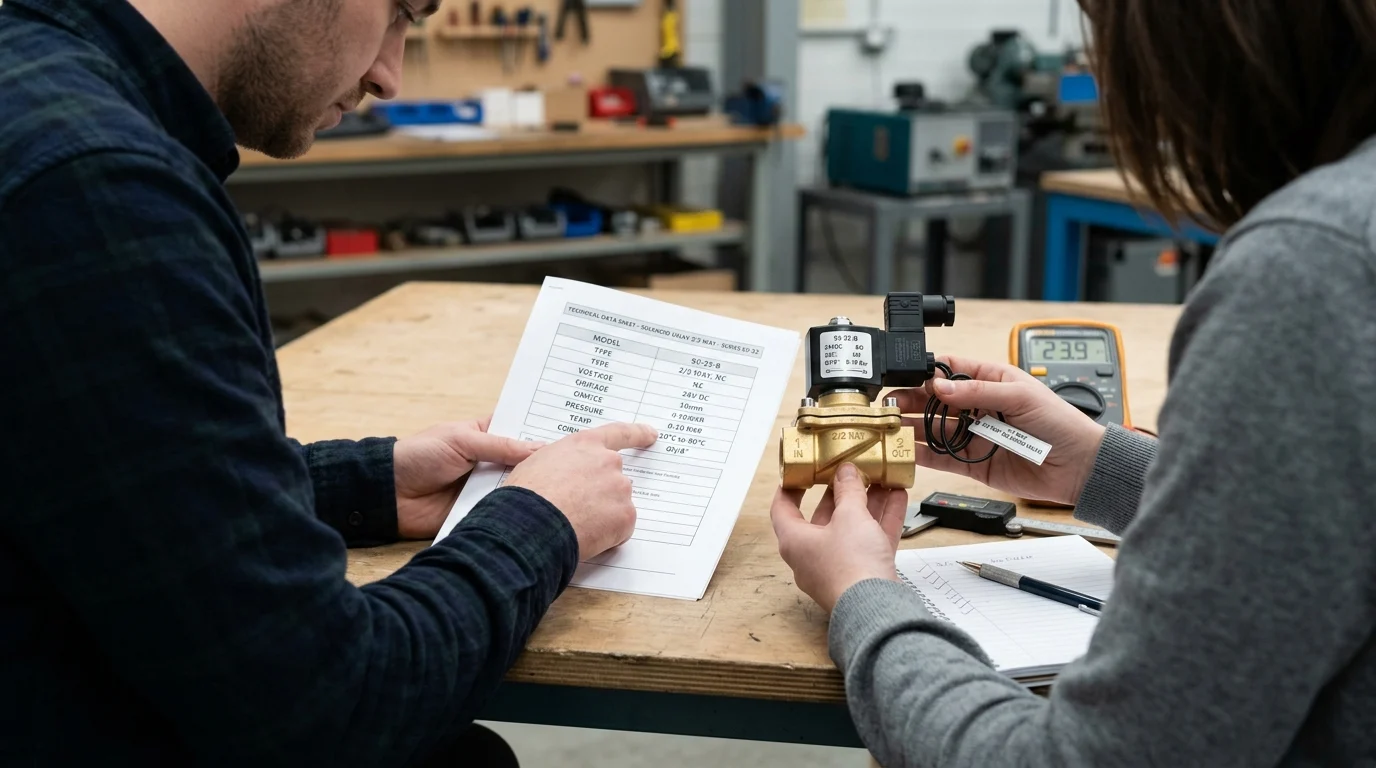
Before a technician ever applies Teflon tape to a fitting, a rigorous verification of valve specifications must occur. B2B distributors and OEM engineers must cross-reference the physical hardware with the schematic requirements to prevent costly field rework. Mismatched specifications are the leading cause of immediate post-installation failures.
Port size, flow rate, and pressure range
Selecting the correct port size and flow coefficient (Cv or Kv value) is vital for achieving the desired actuation speed and fluid volume. A valve that is undersized will create a severe pressure drop, starving downstream pneumatic cylinders or fluid actuators. Conversely, an oversized pilot-operated valve may fail to shift if the system cannot generate the minimum pressure differential required (typically 0.1 to 0.15 MPa) to overcome the internal spring force.
Pressure ratings must also align perfectly with system capabilities. Direct-acting valves can operate from 0 MPa up to their maximum rated pressure, making them suitable for vacuum or low-pressure gravity-fed systems. Pilot-operated models generally handle higher maximum pressures (e.g., up to 1.6 MPa) but require a minimum operating pressure. Verification of these parameters is essential for safe and efficient operation.
| Valve Type | Typical Port Sizes | Operating Pressure Range | Minimum Differential Pressure | Primary Application |
|---|---|---|---|---|
| Direct-Acting | 1/8″ to 1/2″ | 0 to 1.0 MPa | 0 MPa | Low flow, zero pressure systems, vacuums |
| Pilot-Operated | 3/8″ to 2″ | 0.1 to 1.6 MPa | 0.1 MPa | High flow, standard industrial air/water mains |
Normally closed vs normally open selection
The choice between a Normally Closed (NC) and Normally Open (NO) valve dictates the fail-safe behavior of the system. An NC valve remains closed until electrical power is applied to the coil, making it the standard choice for systems that must halt fluid flow during a power outage. An NO valve allows flow until energized, which is critical for emergency venting or cooling systems.
From an energy consumption standpoint, the selection impacts long-term operational costs. If a system requires a valve to be open 80% of the time, installing a Normally Open valve prevents the coil from drawing continuous current, thereby reducing thermal load and extending the coil’s lifespan. Verifying the correct actuation type before installation prevents system logic errors and reduces unnecessary energy expenditure.
Compliance and documentation requirements
Industrial components must adhere to strict regulatory and safety standards to be legally integrated into commercial machinery. Buyers must verify that the 2/2 way solenoid valve carries appropriate certifications such as CE for the European market, RoHS for hazardous substance compliance, and ISO 9001:2015 manufacturing traceability. Missing documentation can delay OEM machine shipping and void end-user insurance policies.
Ingress Protection (IP) ratings are equally critical. A valve installed in a washdown environment (e.g., food and beverage processing) must feature an IP65- or IP67-rated coil and DIN connector to prevent water and dust from short-circuiting the electrical terminals. Procurement teams must ensure the supplier provides comprehensive spec sheets and certificates of compliance prior to bulk ordering.
2/2 Way Solenoid Valve Installation Steps
Executing a flawless installation requires adherence to a standardized, step-by-step methodology. By treating the installation as a precise mechanical and electrical procedure, technicians can eliminate the variables that typically lead to leaks, electrical shorts, or erratic valve behavior.
Pre-installation preparation
Preparation begins with ensuring the pipeline is entirely free of debris. Metal shavings from thread cutting, rust, welding slag, and excess pipe sealant are the primary enemies of solenoid valves. The upstream piping must be thoroughly flushed before the valve is connected. Even microscopic debris can lodge between the valve seat and the diaphragm, resulting in a continuous internal leak.
To mitigate future contamination, it is highly recommended to install a strainer or a pneumatic air treatment unit immediately upstream of the valve. For standard industrial applications, a 40-micron filter is typically sufficient to protect the internal tolerances of a 2/2 way solenoid valve. Additionally, the technician must verify the flow direction arrow stamped on the valve body; reversing the flow will cause pilot-operated valves to fail immediately.
Mechanical and electrical installation
During mechanical installation, the valve should ideally be mounted with the coil facing upward. While many modern valves can be mounted in any orientation, an upright coil prevents impurities from accumulating in the armature tube. When attaching fittings, technicians must apply the correct torque. For example, over-tightening a 1/4″ NPT brass fitting past the recommended 15-20 Nm can distort the valve body, leading to internal binding.
Electrical installation requires matching the power supply precisely to the coil’s nominal voltage (e.g., 24V DC, 110V AC, or 220V AC). Solenoid coils typically tolerate a voltage fluctuation of ±10%. Dropping below this threshold will result in a sluggish response or a buzzing AC coil, while exceeding it will cause rapid overheating and insulation burnout. Electrical connections must be secured using proper DIN plugs or flying leads with adequate strain relief.
Commissioning and leak testing
Once mechanically and electrically integrated, the system must undergo a rigorous commissioning phase. The line should be pressurized gradually to the maximum working pressure to check for external leaks around the port threads and the body-to-coil interface. A specialized leak-detection fluid should be used on all pneumatic connections.
Following the external leak test, the valve should be dry-cycled (actuated without fluid, if safe for the specific valve type) and then wet-cycled. Technicians must verify the response time—typically 10 to 50 milliseconds for standard valves—and listen for any abnormal humming or clicking, which could indicate a seated debris issue or an under-voltage condition. Only after passing these tests should the valve be signed off for continuous operation.
Common Installation Mistakes and Troubleshooting
Even with strict protocols, field installations can encounter issues. Understanding the most frequent points of failure allows B2B distributors to provide better technical support and allows maintenance teams to execute rapid troubleshooting, thereby minimizing costly system downtime.
Frequent causes of failure
The most frequent cause of immediate post-installation failure is particulate contamination. When debris blocks the pilot hole (often less than 1mm in diameter), the valve will fail to close or open fully. Another common error is reversed installation; installing a valve backward against the flow direction arrow will force the system pressure to lift the seal, causing an uncontrollable bypass leak.
Electrical failures frequently stem from improper voltage application. Applying AC voltage to a DC coil, or vice versa, will result in immediate catastrophic failure. Furthermore, if the armature is physically jammed by debris, an AC coil will draw continuous in-rush current, causing the coil to reach temperatures exceeding 120°C and burn out within minutes. Normal operating coil surface temperatures typically stabilize around 70°C to 80°C.
Troubleshooting checklist
When a 2/2 way solenoid valve malfunctions, a systematic troubleshooting approach isolates the root cause efficiently. Technicians should always check the electrical supply first, ensuring the voltage at the coil terminals under load is within the ±10% tolerance, before disassembling the mechanical components.
| Symptom | Potential Cause | Verification / Solution |
|---|---|---|
| Valve will not open | No power / Low voltage | Check coil with multimeter; verify voltage drop is <15% under load. |
| Valve will not close | Debris in valve seat / Torn diaphragm | Isolate pressure, dismantle valve body, inspect and clean internal components. |
| Coil burns out rapidly | Armature jammed / Over-voltage | Verify fluid is free of particulates; ensure power supply matches coil rating exactly. |
| External leakage | Damaged O-ring / Loose casing | Check torque on retaining nuts; replace O-rings if pinched during assembly. |
How to Choose a 2/2 Way Solenoid Valve Supplier
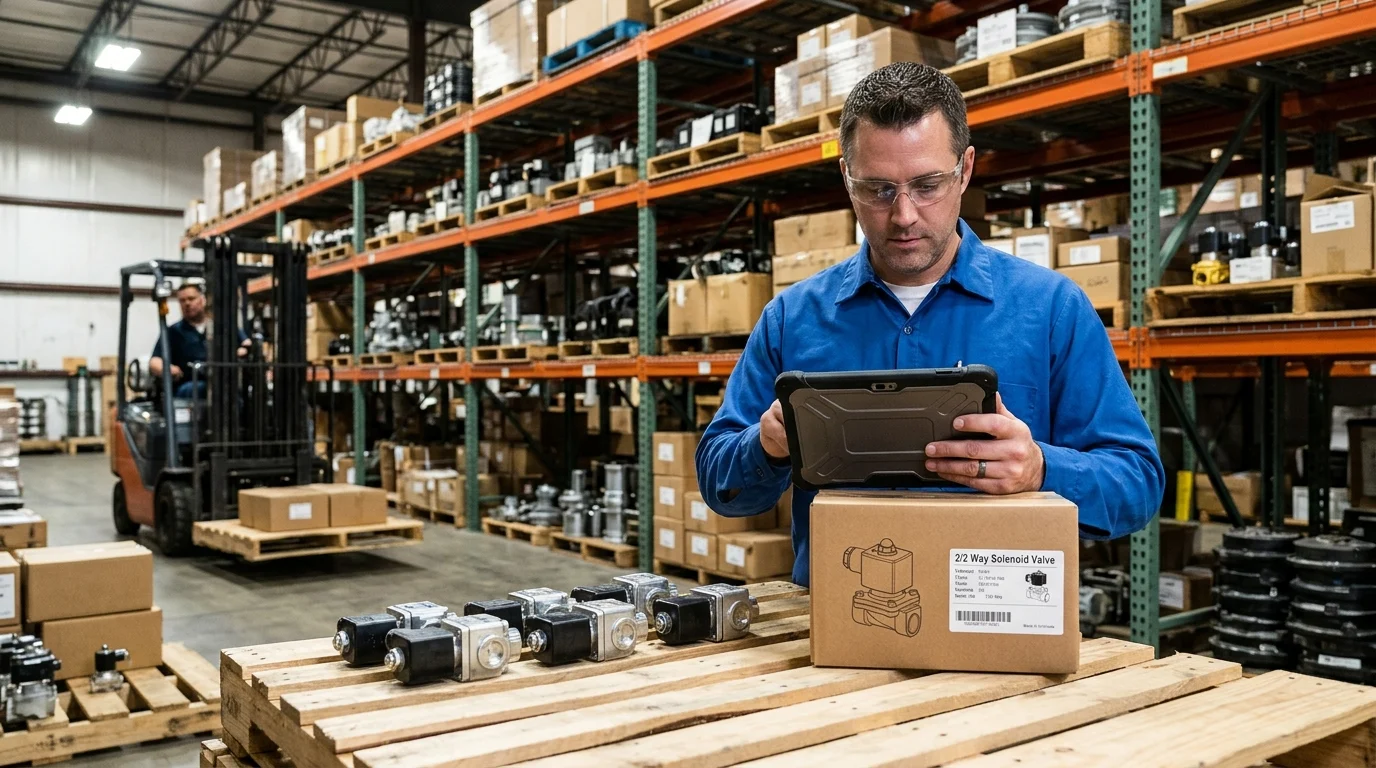
For B2B buyers, distributors, and OEMs, sourcing a reliable 2/2 way solenoid valve supplier is as critical as the installation process itself. A partner capable of delivering consistent quality, scalable production, and robust technical support directly impacts the profitability and reputation of the buying organization.
When evaluating manufacturers, particularly those in competitive hubs like China, procurement teams must look beyond unit pricing. Evaluating a supplier involves analyzing their supply chain resilience, engineering capabilities, and commitment to international export standards.
MOQ, customization, and packaging factors
Minimum Order Quantities (MOQ) heavily influence inventory management for distributors. A flexible supplier might offer MOQs ranging from 100 to 500 units for standard configurations, allowing buyers to test market demand without tying up excessive capital. Customization capabilities are equally important; buyers often require specific seal materials (like FKM for high temperatures or EPDM for certain chemicals) or custom coil voltages to meet regional machinery standards.
Packaging is a crucial, yet often overlooked, factor in international trade. Industrial pneumatic components require robust export packaging to prevent thread damage and coil moisture ingress during sea freight. Suppliers should utilize vacuum-sealed inner bags, compartmentalized foam inserts, and double-corrugated export cartons capable of withstanding rough logistical handling.
Manufacturer capabilities and quality control
A manufacturer’s internal capabilities dictate the long-term reliability of their components. Companies like Ningbo SENYA Pneumatic Technology Co., Ltd., founded in 1994, represent the integrated R&D and manufacturing model that sophisticated buyers seek. Suppliers with in-house CNC machining, automated coil winding, and dedicated testing laboratories can maintain strict dimensional tolerances and electrical consistency.
Quality control should be quantifiable, ensuring every unit meets the required pressure and electrical standards before shipment.
Key Takeaways
- Wholesale sourcing and supply-chain implications for 2/2 Way Solenoid Valve
- Specifications, compliance, and commercial terms buyers should validate
- Actionable recommendations for distributors and procurement teams
Frequently Asked Questions
What should I verify before installing a 2/2 way solenoid valve?
Check port size, flow rating, pressure range, voltage, media compatibility, and whether the valve is NC or NO. Match these to your system drawing to avoid leakage or failed actuation.
Can a pilot-operated 2/2 way solenoid valve work at zero pressure?
No. Pilot-operated valves usually need a minimum differential pressure, often around 0.1 MPa. For zero-pressure or vacuum service, choose a direct-acting model instead.
What installation mistakes most often shorten valve life?
Common issues are wrong flow direction, over-tightened threads, unsupported pipe load, dirty media, and mounting near heat or vibration. These can damage seals, armatures, and coils quickly.
Should a 2/2 way solenoid valve be installed with a filter?
Yes. Install an upstream filter to keep particles out of the orifice and seals. This is especially important for compressed air, water, and dusty industrial environments.
How can SENYA help if I need a valve for a specific industry or custom requirement?
SENYA supplies standard and customizable pneumatic components for packaging, food, energy, warehousing, and more. Share your media, pressure, voltage, and mounting needs to get a suitable valve recommendation or quote.