
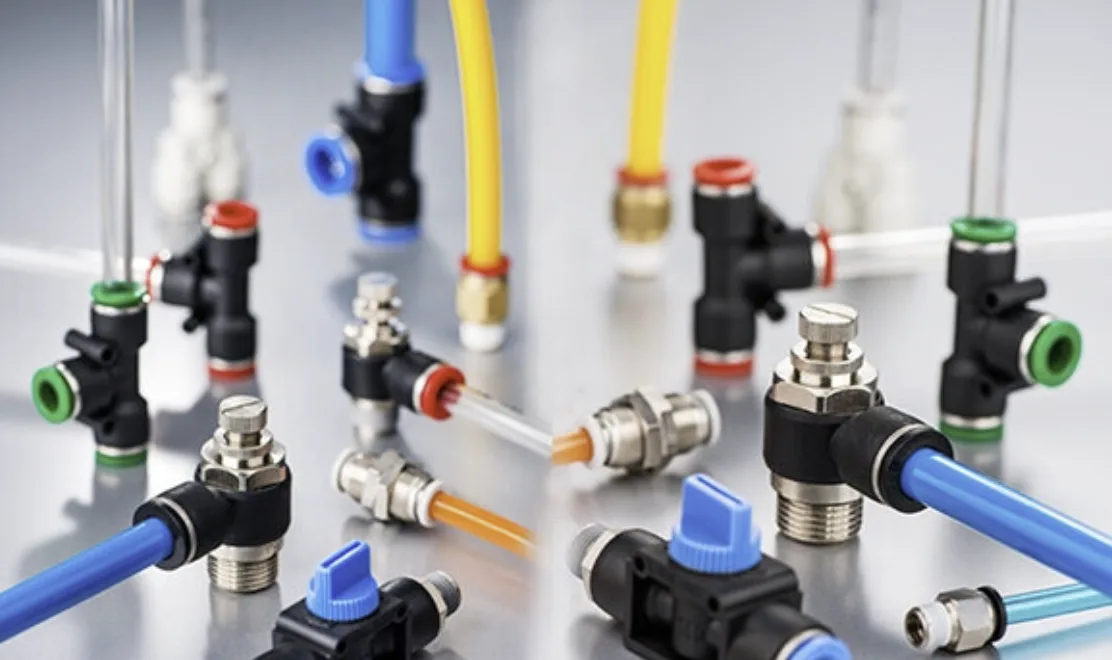
Why is Proper Installation of Pneumatic Fittings Critical for System Efficiency?
In industrial automation and air preparation units, the integrity of your pneumatic circuit depends entirely on the connection points. Improperly installed fittings are the primary cause of pressure drops, energy waste, and component fatigue. Whether you are using push-to-connect fittings, compression fittings, or threaded adapters, a “near-perfect” seal is mandatory to maintain the operational integrity of your pneumatic system.
According to industry standards from organizations like ISO, air leaks can account for up to 30% of total energy consumption in a poorly maintained factory. Mastering the installation process ensures your system remains cost-effective and safe.
What Are the Most Common Types of Pneumatic Fittings?
Before installation, you must identify your hardware. Mixing incompatible threads or materials is a common mistake that leads to catastrophic failure.
| Fitting Type | Connection Method | Best Use Case |
| Push-to-Connect | Instant manual insertion | Fast prototyping, low-pressure automation. |
| Compression Fittings | Metal sleeve (ferrule) and nut | High-pressure, high-temperature industrial lines. |
| Threaded Fittings | NPT, BSPP, or BSPT threads | Permanent connections to valves or cylinders. |
| Barbed Fittings | Friction-fit with hose clamps | Low-cost, soft tubing applications. |
How to Prepare Your Tubing for a Perfect Seal?
Preparation is 90% of the job. You cannot achieve a leak-free seal on a poorly prepared tube.
Step 1: Choosing the Right Tubing Material
Ensure your tubing (Polyurethane, Nylon, or PTFE) is compatible with the chemical environment and pressure ratings of your fittings. For high-precision setups, we recommend high-quality Polyurethane Tubing to ensure flexibility and durability.
Step 2: The Perfect Square Cut
The end of the tube must be cut at a 90-degree angle. Using a specialized pneumatic tube cutter is mandatory.
-
Why? An angled cut prevents the internal O-ring of a push-to-connect fitting from sealing evenly, leading to slow “hissing” leaks.
-
Pro Tip: Avoid using scissors or side cutters, as they flatten the tube, distorting its roundness.
Step 3: Deburring and Cleaning
Remove any jagged edges or plastic “swarf.” Ensure the tube is free of dust, grease, or moisture before insertion.
What are the Steps to Install Push-to-Connect Fittings?
Push-to-connect (also known as “one-touch”) fittings are the industry standard for modern automation due to their speed.
-
Mark the Insertion Depth: Measure the depth of the fitting socket and mark it on your tube with a felt pen. This ensures the tube is fully “home.”
-
Push Firmly: Push the tube through the collet and O-ring until it hits the internal stop.
-
The Tug Test: Gently pull back on the tube. The internal locking claws should bite into the tubing, preventing it from releasing.
-
Verify the Seal: Turn on the air supply and use a leak detection spray (or soapy water) to check for bubbles.
How to Properly Install Threaded Pneumatic Fittings?
Threaded connections require a different technical approach depending on whether the thread is Tapered or Parallel.
NPT and BSPT (Tapered Threads)
Tapered threads seal via “metal-to-metal” wedging.
-
Sealant: Use PTFE tape (Teflon) or a liquid thread sealant.
-
Direction: Wrap tape in the direction of the threads (clockwise) to prevent it from unravelling during installation.
-
Torque: Hand-tighten, then apply 1–2 full turns with a wrench. Over-tightening can crack the female housing.
BSPP and Metric (Parallel Threads)
Parallel threads do not seal on the threads themselves. They require an O-ring or a Bonded Washer.
-
Note: Never use PTFE tape on parallel threads; it interferes with the mechanical seating of the washer.
-
Alignment: Ensure the Pneumatic Valve port is clean so the washer sits perfectly flat.
What Are the Signs of Incorrect Pneumatic Fitting Installation?
If your system is experiencing the following, you likely have an installation error:
-
Audible Hissing: A clear sign of a misalignment or poor cut.
-
Pressure Fluctuations: Often caused by “internal leaks” where air bypasses a seal.
-
Tube Blowouts: Indicates either the pressure exceeds the fitting rating or the “Tug Test” was skipped.
-
Corrosion/Discoloration: Suggests material incompatibility.
FAQ
How deep should I push the tube into a push-in fitting?
Each fitting size has a specific “seat depth.” Generally, for a 6mm tube, the depth is approximately 15-18mm. Always mark your tubing to ensure it has passed the internal O-ring, which is usually located behind the locking collet.
Can I reuse pneumatic fittings after they have been uninstalled?
Push-to-connect fittings are designed for reuse, provided the internal O-ring isn’t damaged. However, for threaded connections using PTFE tape, you must completely clean the old tape off and apply a fresh layer before re-installation. For compression fittings, the “ferrule” is a one-time-use component and must be replaced.
Why is my pneumatic fitting leaking even after tightening?
The most common cause is over-tightening. In tapered threads (NPT), excessive torque can cause “galling” or crack the fitting. In parallel threads, over-tightening often crushes the O-ring, causing it to squeeze out of place and lose its sealing properties.
Is PTFE tape better than liquid pipe sealant for air lines?
Both have their place. PTFE tape is convenient and clean but can introduce debris into the system if applied incorrectly (leaving the first thread bare is best practice). Liquid sealants are excellent for high-vibration environments as they also act as a mild thread-locker. For high-performance Air Preparation Units, liquid sealants are often preferred by OEMs.
How do I choose between NPT, BSPT, and BSPP threads?
This is usually determined by your geographical location or the origin of your equipment. NPT is standard in North America, while BSP (British Standard Pipe) is the norm in Europe and Asia. You can identify them by measuring the pitch and angle: NPT has a 60° thread angle, while BSP has a 55° angle. Never attempt to force an NPT male into a BSP female.