
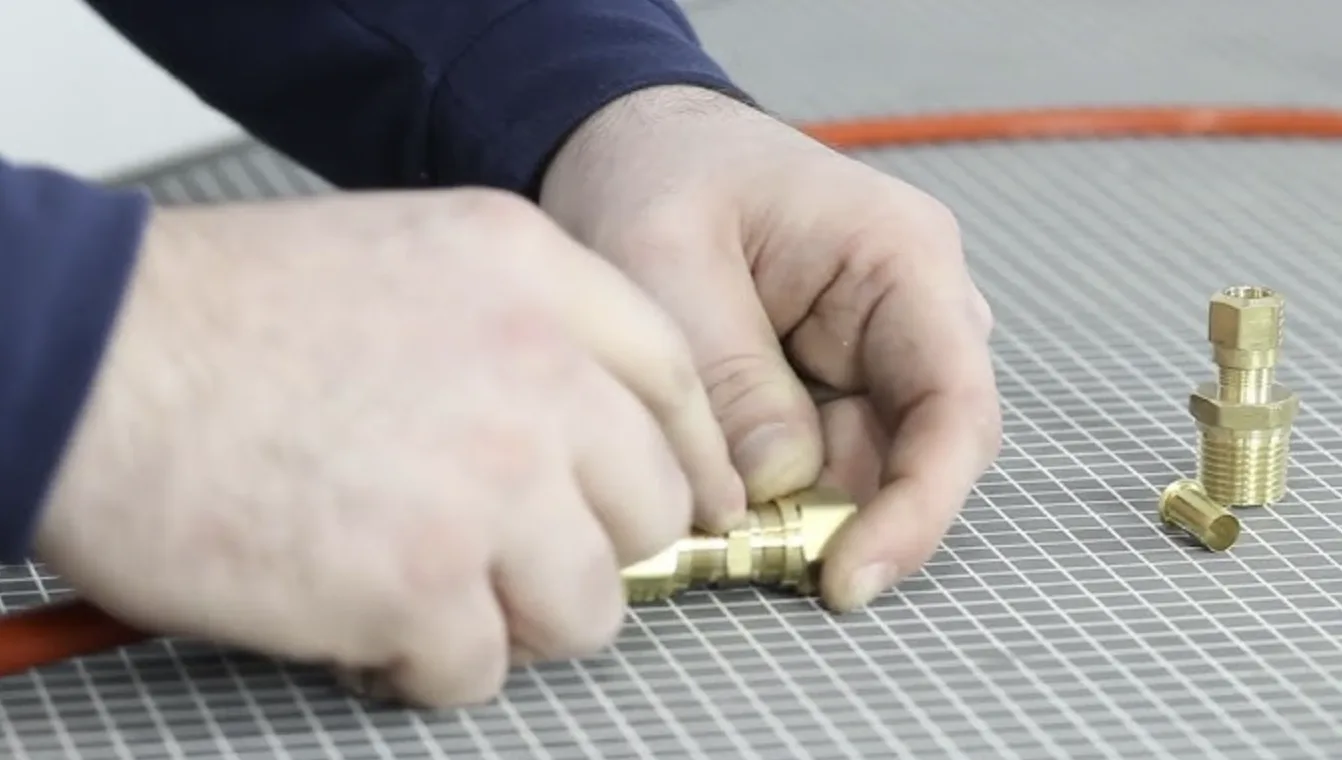
To safely disassemble Pneumatic Push-in Fittings, first completely release the system pressure to avoid sudden air ejection. Evenly press the outer release ring (clamp ring) towards the connector body to loosen the inner locking claws, and then, while maintaining pressure, pull the air hose straight out.
Understanding Pneumatic Push-in Fittings
Pneumatic push-in fittings are widely used in compressed air systems due to their quick and easy installation. They consist of an external release ring (clamp ring) and internal locking claws, which securely fasten the air hose and maintain an airtight seal. Understanding the structure and working principle of this pneumatic fitting is crucial before disassembling it; otherwise, the fitting or air hose may be damaged.
Key Safety Precautions
Safety is always paramount when operating pneumatic fittings. Always shut off the main air supply and completely release system pressure to prevent sudden air ejection. Inspect the fitting and tubing for wear or damage before operation. Wearing protective gloves and goggles is recommended to prevent injury from unexpected airflow.
Procedure for Disassembling Pneumatic Push-in Fittings
To safely disassemble, apply even pressure to press the retaining ring towards the fitting body to release the internal locking claws. If space is limited or the fitting is tight, use a dedicated disassembly tool, small wrench, or SharkBite tool to help apply even pressure to the retaining ring. While holding the retaining ring, gently pull the tubing straight out; do not twist, bend, or use excessive force to avoid damaging the seal or fitting.
Key Safety Steps
Turn off the gas supply:Always close the main valve and ensure there is no residual pressure in the hose.
Inspect the connections:Inspect the connections and tubing for damage before operation.
Apply even pressure:Maintain even pressure when pressing the retainer to avoid damaging it.
Use tools if necessary:For confined spaces or difficult-to-remove connections, use SharkBite tools, small wrenches, or specialized removal tools to press the retainer.
Remove the tubing:While holding the retainer, gently pull out the tubing; do not twist or bend it.
Avoid repeated insertion and removal:Avoid repeatedly inserting and removing the tubing to prevent damage to the internal O-rings.
Maintenance Recommendations and Common Mistakes
Proper operation and maintenance of Pneumatic Push-in Fittings can extend their service life and ensure the airtightness and safety of pneumatic systems.
Regularly Inspect Fittings and Tubing
Regularly inspect fittings and tubing for wear, scratches, cracks, or signs of aging. Damaged tubing or fittings may lead to decreased airtightness or leaks and should be replaced promptly.
Keep Clean
Ensure the area around fittings and tubing is clean, preventing dust, oil, or metal shavings from entering the fittings. Contaminants can affect the performance of the seals, causing leaks or malfunctions.
Avoid Excessive Bending and Stretching of Tubing
Keep tubing straight during installation or follow the manufacturer’s specified minimum bending radius to avoid stretching or twisting. Excessive bending or stretching can damage internal O-rings or cause fittings to detach.
Properly Insert and Remove Tubing
When inserting or removing tubing, operate in a straight line, avoiding rotation, bending, or excessive force. Frequent insertion and removal can wear down internal seals, reducing airtightness. Use specialized removal tools when necessary.
Control System Pressure
Ensure the pneumatic system pressure operates within the connector’s rated range. Overpressure may cause connector bursting or seal damage. For systems used long-term, it is recommended to equip them with a pressure regulator and pressure relief valve.
Regular Lubrication
Some brands or models allow slight lubrication of the O-rings with compatible silicone oil to extend seal life, but do not use incompatible greases or solvents, as this may damage the sealing material.
Avoid frequent insertion and removal of the air hose, as this will wear down the internal O-rings and affect sealing performance. After disassembly, inspect the connectors and air hoses for scratches or deformation; replace them if damaged.
Pneumatic Push-in Fittings Manufacturer Introduction
Ningbo SENYA Pneumatic Technology Co., Ltd. is a professional manufacturer specializing in the R&D, production, and export of high-quality pneumatic components. Since its establishment in 1994, the company has focused on the design and manufacturing of pneumatic valves, cylinders, and related automation products, Browse our blog for more information about pneumatic products.We are accumulating rich industry application experience and a strong brand reputation. Adhering to the product development philosophy of “realizing customer value,” the company ensures the stable and reliable performance of each product through high-corrosion-resistant stainless steel valves, high-concentricity machining technology, and a precision digital testing platform.