

The optimal brass solenoid valve for your project is determined by its unique requirements. The global market for these valves shows significant growth, with projections reaching billions by 2031. Brass is a popular material choice for its cost-effectiveness and suitability for many non-aggressive applications. You see brass solenoid valve applications in diverse sectors, including industrial automation and a brass solenoid valve for water system control. Knowing the different brass solenoid valve types and their brass solenoid valve specification helps you make the right decision.
Key Takeaways
- Choose the right brass solenoid valve by understanding its type, like direct-acting or pilot-operated, based on your project’s needs.
- Consider the fluid and environment. Brass valves work best with water, air, and non-aggressive liquids, but not with strong acids or dirty fluids.
- Check important details like pressure limits, temperature, and electrical needs to make sure the valve works correctly and lasts a long time.
- Decide between normally open or normally closed valves based on what your system should do if the power goes out, ensuring safety and proper function.
- Make sure the valve size is correct for your fluid flow. This prevents problems like cavitation and helps your system work well.
Understanding Brass Solenoid Valve Types for Your Project

Choosing the right brass solenoid valve starts with knowing the different types available. Each design offers unique benefits and drawbacks for specific applications.
Direct-Acting Brass Solenoid Valves
Direct-acting valves are straightforward in their operation. An electrical current through the solenoid coil creates a magnetic field. This field moves an internal plunger, which directly opens or closes the valve’s orifice. The plunger has two seals, one at each end, and the seal disc attaches directly to it. In a normally closed valve, the lower seal blocks flow when de-energized. These valves operate independently of pressure differences between ports. They feature minimal moving parts, which leads to reduced maintenance and a longer service life. They are also compact and economical. However, direct-acting valves have limited flow capabilities, making them best for low flow rates. They also consume more power, and the coil can burn out easily with high-frequency power.
Pilot-Operated Brass Solenoid Valves
Pilot-operated valves use the system’s fluid pressure to assist in opening and closing the main valve. A small electromagnetic head requires low power consumption, typically 0.1-0.2W. This allows for frequent or long-term energization without burning out the coil, saving energy. These valves handle a higher fluid pressure range and offer a larger flow capacity. They are more economical for higher flow values. However, pilot-operated valves require a minimum pressure differential to function. Impurities in the liquid can easily block the pilot valve holes, making them unsuitable for liquids with high impurity levels. They also have a slower response time compared to direct-acting valves because a small pilot valve opens first, then the main valve.
Step-by-Step Direct-Acting Brass Solenoid Valves
Step-by-step direct-acting valves combine features from both direct-acting and pilot-operated designs. They often handle higher pressures than standard direct-acting valves without always needing a significant pressure differential like pilot-operated ones. This design provides a controlled, two-stage opening or closing action, offering a balance between power consumption, flow capacity, and pressure handling for specific applications.
Selecting the Right Brass Solenoid Valve Based on Media and Environment
Choosing the correct brass solenoid valve also means thinking about what goes through it and where it will operate. These factors greatly affect how well the valve works and how long it lasts.
Media Compatibility for Your Brass Solenoid Valve
The type of fluid or gas you use is very important. Brass valves work well with water and neutral gases. They also handle compressed air, inert gas, synthetic oils, alcohols, argon, nitrogen, and other compatible liquids and gases. You can use them for non-acidic fluids and mildly corrosive fluid media. However, if the fluid is not compatible, it can damage the valve quickly or contaminate your system. It is crucial to check all parts that touch the fluid, not just the outside of the valve. Internal components must also be compatible with the chemicals.
Environmental Factors Affecting Brass Solenoid Valve Performance
The environment around your valve also plays a big role. Brass solenoid valves offer decent resistance to corrosion. This makes them suitable for non-corrosive liquids and places like urban water systems. However, brass does not do well with highly acidic substances. This limits its use in some chemical processes.
Consider these environmental conditions:
- Temperature: Very hot temperatures can make the solenoid coil overheat and fail. Very cold temperatures can thicken or freeze the fluid, stopping the valve from working.
- Humidity: High humidity can cause metal parts to corrode. Moisture can also get into the solenoid coil, leading to short circuits. Excessive humidity can even cause mold growth.
- Chemical Exposure: Some chemicals react with valve materials. This causes corrosion, damage, or breakdown.
- Dust and Particles: Dirt can block the valve. It can also wear down moving parts, making the valve last less time.
- Vibration and Shock: Too much vibration can loosen or break valve parts, causing leaks. Strong shocks can damage the solenoid coil or other sensitive pieces.
- Altitude: Lower air pressure at high altitudes can affect how the valve works. It might need more power for the solenoid coil.
| Environmental Factor | Considerations |
|---|---|
| Outdoor Exposure | Valves need resistance to UV rays and weather. Brass or stainless steel works well. |
| High Temperatures | Materials must handle heat without breaking down. |
| Corrosive Substances | Valves need high chemical resistance for chemicals or corrosive materials. |
| Explosive/Dusty Areas | Valves must meet safety rules to prevent fires. |
| Moist/Submerged Conditions | Waterproof and corrosion-resistant materials are necessary. |
| IP Rating | This rating shows resistance to water, dust, and other dangers. |
Key Performance Specifications for Your Brass Solenoid Valve
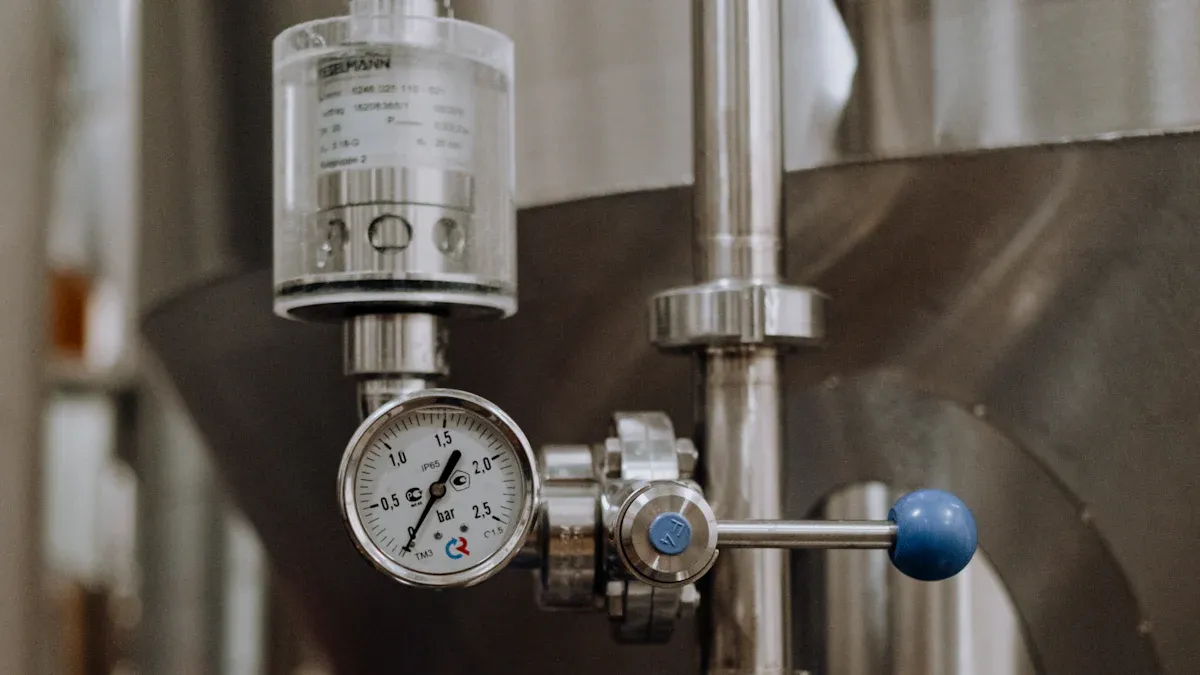
You need to understand key performance specifications to pick the best valve. These details tell you how the valve will perform under different conditions.
Pressure and Temperature Ratings for Brass Solenoid Valves
Brass valves have specific limits for pressure and temperature. Brass has a lower melting point and cannot handle as much pressure as stainless steel. This means you should use brass valves in low-pressure and low-temperature situations. High temperatures can cause the valve to deform and fail too soon. It also might not withstand very high pressures, like those in petrochemical plants. However, many brass solenoid valve models offer a wide range of pressure capabilities. For example, piloted diaphragm valves can handle up to 150 PSI. Direct-acting valves often work up to 200 PSI. Some 2-way valves with a floating seal can even manage pressures up to 1000 PSI.
Flow Rate and Valve Size for Your Brass Solenoid Valve
Getting the valve size right is very important. An undersized valve will not let enough fluid through. An oversized valve might not open fully because it lacks enough pressure difference. Incorrect sizing can lead to big problems. For instance, an oversized valve can cause cavitation. This happens when high-velocity fluid creates bubbles that then burst, damaging the metal inside the valve. This damage can cause leaks and shorten the valve’s life. You can figure out the needed flow rate by calculating the valve flow coefficient (Cv or Kv). This value helps you match the valve to your system’s needs. For liquids, you use a formula that considers flow rate, inlet and outlet pressures, and the fluid’s specific gravity. For example, if you have a Kv value of 35 and a 3 bar pressure difference for water, the flow would be about 60.62 liters per minute.
Electrical Requirements for Your Brass Solenoid Valve
Every solenoid valve needs specific electrical power to work. You must match the valve’s electrical needs to your power supply. Solenoid coils come in both DC (direct current) and AC (alternating current) options.
| Coil Type | Power | Voltage Options |
|---|---|---|
| DC | 6 – 6.5W | 12V DC, 24V DC |
| AC | 6 – 8.5VA | 24V AC, 110V AC, 220V AC |
For example, a 1-inch AC electric brass solenoid valve might use 28 watts at 110V AC. A 2-inch DC electric valve could use 40 watts at 24V DC. Always check these specifications to ensure proper operation and prevent coil burnout.
Functional Considerations for Your Brass Solenoid Valve
When you select a brass solenoid valve, its functional design plays a big role. You need to think about how the valve behaves by default and how many paths it controls. These choices directly impact your system’s safety and efficiency.
Normally Open vs. Normally Closed Brass Solenoid Valves
Solenoid valves come in two main default states: normally open (NO) or normally closed (NC). This refers to the valve’s position when it does not receive electrical power.
| Feature | Normally Open (NO) Solenoid Valve | Normally Closed (NC) Solenoid Valve |
|---|---|---|
| Default State | Open (allows flow when de-energized) | Closed (prevents flow when de-energized) |
| Actuation | Closes when electrical current is applied | Opens when electrical current is applied |
| Power Usage | Consumes power only when actuated to close (mostly open) | Consumes power when actuated to open (mostly closed) |
| Fail-Safe | Maintains flow during power failure | Stops flow during power failure |
| Typical Use | Applications requiring continuous flow for safety/operation | Applications requiring flow stoppage for safety/emergencies |
A normally open brass solenoid valve allows fluid to flow when de-energized. It closes when you apply an electrical current. Brass is a good choice for the valve bodies of normally open solenoid valves. It offers corrosion resistance, strength, and cost-effectiveness. A normally closed valve stops flow when de-energized. It opens only when it receives electrical power. Consider your system’s fail-safe requirements when choosing between these types.
2-Way vs. 3-Way Brass Solenoid Valve Configurations
Solenoid valves also differ in the number of ports they have. This determines how they direct fluid.
- 2-way valves feature one inlet and one outlet port. They have a single opening.
- 3-way valves feature three port connections and two valve openings.
A 3-way valve can direct flow in different ways. Some common configurations include:
| Configuration | Ports | Function |
|---|---|---|
| L-Port | 2 Outlets, 1 Inlet | Diverting |
| T-Port | 2 Inlets, 1 Outlet | Mixing |
A 3-way normally closed solenoid valve has three pipe connections. It allows for two paths of flow. In its default state, one opening remains closed, stopping flow. When energized, the plunger opens the body opening. This allows flow from the body opening port to the stop port. A 3-way normally open solenoid valve also has three pipe connections. It offers two paths of flow. In its default state, one opening is always open, letting fluid pass. When energized, the plunger seals off the body opening. It then opens the stop opening, allowing flow from the cavity port to the stop port.
You find 3-way solenoid valves in many applications. These include controlling single-acting cylinders or spring-return actuators. They also appear in mobile equipment, gas sampling, and compressors. You can find them in coffee shops for espresso machines and in HVAC systems for refrigerant control. They are useful in water treatment, pneumatic systems, and even agricultural settings for crop spraying.
Selecting the right valve for your project involves a careful review of many factors. You explored the various types, the media they handle, and their operating environment. We also discussed crucial specifications like pressure ratings and electrical needs. Considering these important details helps you make an informed decision. This ensures your system performs optimally and reliably for years to come.
FAQ
What are brass solenoid valves best for?
Brass solenoid valves work well with water, air, and non-aggressive fluids. People often choose them for their cost-effectiveness and good corrosion resistance in urban water systems and industrial automation. They suit low-pressure and low-temperature applications.
Can brass solenoid valves handle all liquids?
No, brass valves do not handle all liquids. They are not suitable for highly acidic substances or fluids with many impurities. Always check the fluid’s compatibility with brass to prevent damage to the valve and your system.
What is the difference between normally open and normally closed?
A normally open valve allows fluid flow when it has no power. It closes when energized. A normally closed valve stops flow when it has no power. It opens when energized. This choice depends on your system’s fail-safe needs.
Why is correct valve sizing important?
Correct valve sizing ensures proper fluid flow. An undersized valve restricts flow, while an oversized valve might not open fully. Incorrect sizing can cause issues like cavitation, which damages the valve and shortens its lifespan.