
Introduction
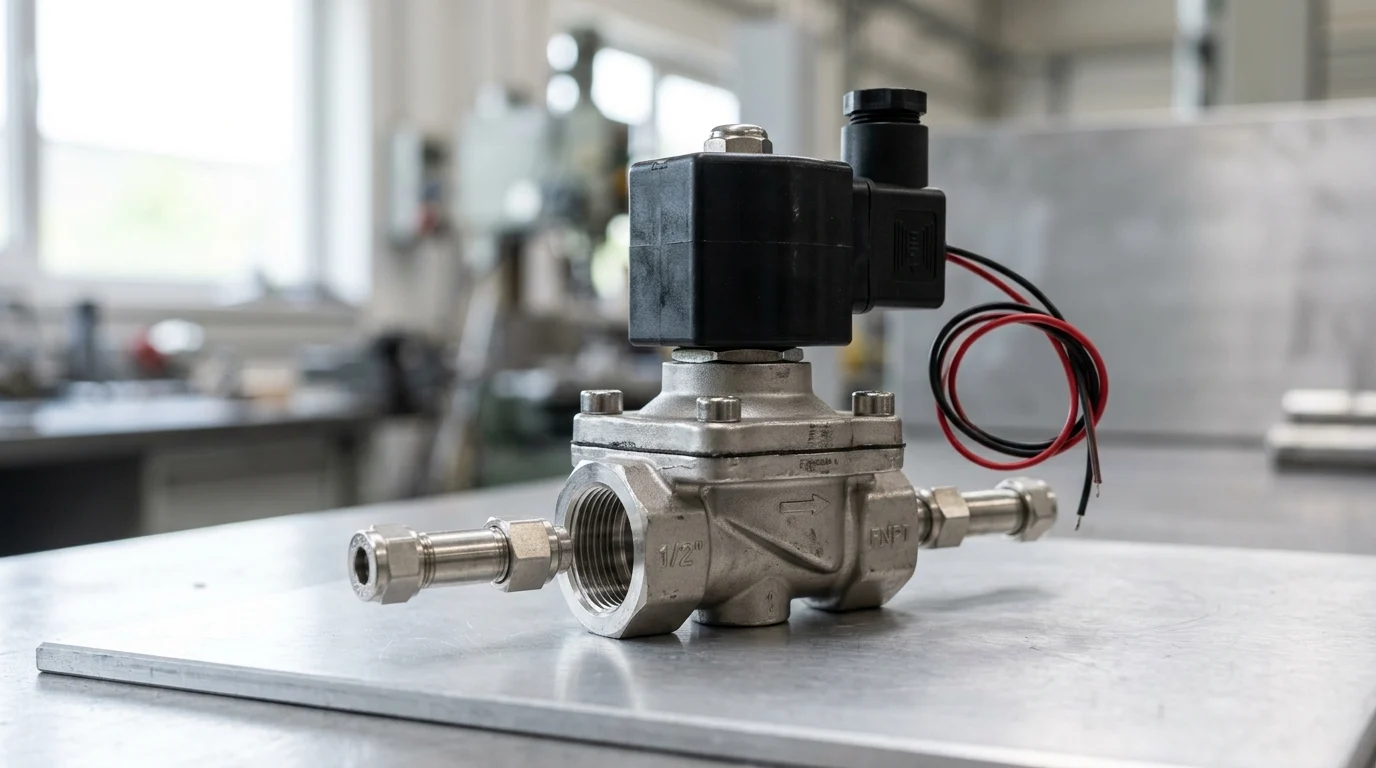
Choosing a stainless steel solenoid valve involves more than matching port size and voltage. Material grade, seal compatibility, pressure range, temperature limits, and media chemistry all affect service life, safety, and maintenance cost. This FAQ explains the questions buyers should ask before ordering, including when to choose 304 versus 316/316L, how to evaluate corrosion resistance, and which operating conditions can shorten valve performance. It also helps clarify common specification terms so procurement teams, engineers, and maintenance staff can compare options more confidently and avoid costly mismatches. With that foundation, the rest of the article breaks down the practical details that matter most in real applications.
Why Stainless Steel Solenoid Valve Selection Matters
Procuring fluid control components for harsh or highly regulated environments requires rigorous attention to material science. A stainless steel solenoid valve is often the default specification for corrosive media, extreme temperatures, and sanitary applications. However, treating these valves as generic commodities exposes industrial systems to significant operational risks.
The metallurgical properties of the valve body—typically 304 or 316/316L stainless steel—dictate its resistance to oxidation and chemical attack. For instance, the addition of 2.0% to 3.0% molybdenum in 316 stainless steel elevates its Pitting Resistance Equivalent Number (PREN) above 23, making it vastly superior to 304 grades in chloride-rich environments. Selecting the correct grade and configuration is foundational to ensuring long-term system integrity.
Media compatibility, uptime risk, and total cost
The interaction between the process media and the valve components directly impacts system uptime and Total Cost of Ownership (TCO). When aggressive fluids such as nitric acid, sodium hydroxide, or demineralized water flow through improperly specified valves, localized corrosion or seal degradation can occur rapidly. An unexpected valve failure in a continuous process facility can cost tens of thousands of dollars per hour in lost production, dwarfing the initial capital expenditure (CapEx) of the valve itself.
Evaluating TCO requires looking beyond the purchase price. Buyers must factor in the expected mean time between failures (MTBF), maintenance intervals, and the labor costs associated with replacement. A premium stainless steel solenoid valve with high-cycle internal components may cost 40% more upfront but can extend the maintenance interval from one million to over five million cycles, drastically reducing the lifetime cost.
Industries that rely on stainless steel solenoid valves
Specific industrial sectors mandate the use of stainless steel due to strict regulatory and operational environments. In chemical and petrochemical processing, the valves must withstand volatile, corrosive, and highly pressurized fluids without structural degradation. In these settings, the mechanical strength of stainless steel provides a critical safety barrier against catastrophic leaks.
Similarly, the pharmaceutical and food and beverage industries rely on stainless steel solenoid valves to maintain hygienic standards. These applications frequently utilize Clean-in-Place (CIP) and Steam-in-Place (SIP) protocols, which subject the valves to alkaline washes and steam temperatures exceeding 130°C. The non-porous surface of electropolished 316L stainless steel prevents bacterial adhesion and withstands these aggressive sterilization cycles without compromising performance.
Key Technical Specifications to Evaluate
A successful procurement process hinges on matching the valve’s technical specifications to the exact demands of the fluid circuit. Over-specifying inflates budgets unnecessarily, while under-specifying guarantees premature failure. Buyers must analyze body materials, actuation methods, and default states.
Body grade, seal material, pressure, and temperature
The valve body grade and the elastomeric seal material must be evaluated in tandem. While 304 stainless steel is adequate for mild aqueous solutions, 316 or 316L is mandatory for marine, chemical, and high-purity applications. Pressure ratings for these bodies can range from vacuum conditions up to 150 bar (2,175 psi) for high-pressure variants.
Seal selection is equally critical, as the elastomer is typically the first point of failure. The media chemistry and operating temperature dictate the choice of seal.
| Seal Material | Temperature Range | Primary Applications | Limitations |
|---|---|---|---|
| NBR (Nitrile) | -10°C to 80°C | Water, air, neutral gases, light oils | Poor resistance to ozone and strong acids |
| EPDM | -30°C to 120°C | Hot water, low-pressure steam, alkalis | Incompatible with petroleum-based oils |
| FKM (Viton) | -10°C to 150°C | Hydrocarbons, acids, aggressive solvents | Not suitable for steam or hot water |
| PTFE (Teflon) | -20°C to 180°C | High-temperature steam, harsh chemicals | Rigid material; requires higher actuation force |
Direct-acting vs pilot-operated designs
Solenoid valves operate via different internal mechanisms depending on the flow and pressure requirements. Direct-acting valves rely solely on the magnetic field generated by the coil to lift the plunger and open the orifice. They are characterized by rapid response times (often under 20 milliseconds) and the ability to operate at a 0 bar differential pressure, making them ideal for low-flow, low-pressure, or closed-loop vacuum systems.
Pilot-operated (or servo-assisted) valves utilize the pressure of the media itself to assist in opening and closing the main diaphragm or piston. This design allows a relatively small coil to control high flow rates (high Cv values) and large port sizes (e.g., 1″ to 2″). However, they strictly require a minimum pressure differential—typically between 0.3 and 0.5 bar—to function. If the system pressure drops below this threshold, the valve will fail to actuate reliably.
Normally closed vs normally open configurations
The resting state of the valve—Normally Closed (NC) or Normally Open (NO)—determines how it behaves when the electrical coil is de-energized. An NC valve remains closed until power is applied, whereas an NO valve allows flow until power interrupts it. The choice depends entirely on the required fail-safe condition of the system during a power outage.
Continuous energy consumption is a major factor when selecting configurations. If a process requires a valve to be open 90% of the time, utilizing an NC valve means the coil will be energized almost constantly, drawing 10 to 20 watts continuously. This generates excess heat and accelerates coil degradation. In such scenarios, selecting a Normally Open valve or a magnetic latching (bistable) solenoid—which requires only a brief pulse of DC current to change state—significantly reduces thermal stress and energy costs.
How to Compare Valve Options
Once the foundational specifications are established, procurement professionals must compare competing options through a standardized set of performance and compliance criteria. This ensures apples-to-apples comparisons across different manufacturers and geographical regions.
Core comparison criteria for buyers
The primary sizing metric for any valve is its flow coefficient (Cv) or flow factor (Kv), which measures the volume of fluid that passes through the valve at a specific pressure drop. Undersizing the Cv restricts flow and starves downstream equipment, while oversizing can lead to sluggish operation in pilot-operated designs. Buyers must request accurate Cv charts from manufacturers mapped against the specific gravity and viscosity of their media.
Electrical criteria are equally vital. Buyers must verify the coil’s insulation class, which dictates its maximum allowable operating temperature. A Class F coil is rated up to 155°C, while a Class H coil can withstand up to 180°C. For installations in harsh ambient conditions or where the valve handles high-temperature fluids like steam, specifying a Class H epoxy-encapsulated coil prevents thermal burnout.
Certifications, leakage standards, and cycle life
Industrial compliance and testing standards separate premium manufacturers from low-tier suppliers. Depending on the installation environment, specific third-party certifications are non-negotiable.
| Certification / Standard | Governing Body | Application Focus |
|---|---|---|
| ATEX / IECEx | EU / International | Explosion-proof enclosures for hazardous atmospheres (e.g., Zone 1/21) |
| FDA / NSF 61 | USA | Food safety and potable water compliance for wetted materials |
| SIL 2 / SIL 3 | IEC 61508 | Functional safety and reliability in critical shutdown systems |
| NEMA 4X / IP67 | NEMA / IEC | Ingress protection against dust, water immersion, and corrosion |
Furthermore, buyers should assess the manufacturer’s stated leakage standards. Precision stainless steel solenoid valves should conform to ANSI/FCI 70-2 Class VI standards, ensuring bubble-tight shutoff. Finally, request documentation on cycle life testing; a robust industrial valve should be rated for a minimum of 1 to 2 million cycles under standard operating conditions before requiring a seal rebuild.
Sourcing, Quality Control, and Delivery Checks
Sourcing stainless steel solenoid valves involves vetting the supply chain to ensure consistent metallurgical quality and reliable delivery. The global market is saturated with options ranging from premium Original Equipment Manufacturers (OEMs) to budget-tier distributors, making stringent quality control protocols essential.
How to assess manufacturers, distributors, and OEMs
Evaluating a supplier begins with understanding their manufacturing capabilities. True OEMs possess in-house CNC machining centers capable of maintaining tight dimensional tolerances (often ±0.01 mm) on stainless steel billets or castings. Buyers should request ISO 9001:2015 audit reports and inquire about the origin of the raw steel.
Distributors can offer faster localized delivery and broader catalogs, but buyers must ensure the distributor is an authorized channel partner for the OEM. Unauthorized gray-market distributors risk supplying counterfeit valves or units with expired elastomeric seals that have degraded during prolonged warehouse storage.
Inspection steps, documentation, and sample testing
Quality control for stainless steel components requires specific inspection steps. Buyers should mandate Positive Material Identification (PMI) to verify that the valve body is genuinely 316/316L stainless steel and not a cheaper substitute like 304 or 201. Documentation is critical; require an EN 10204 Type 3.1 material certificate with every batch, which traces the chemical composition and mechanical properties back to the original steel mill.
Before committing to a high-volume purchase, procure sample units for destructive and non-destructive testing. The OEM should perform hydrostatic pressure testing at 1.5 times the maximum working pressure to ensure casting integrity. For critical gas applications, helium leak testing should be requested to verify the micro-porosity of the stainless steel and the integrity of the armature tube welds.
Lead time, spare parts, packaging, and logistics
Supply chain resilience is a major factor in vendor selection. Standard configurations typically carry lead times of 2 to 4 weeks, but customized manifolds, specific ATEX coils, or non-standard seal materials (like Kalrez) can push lead times to 10 to 14 weeks. Buyers must negotiate Minimum Order Quantities (MOQs) and establish blanket orders to secure pricing while allowing for staggered, just-in-time deliveries.
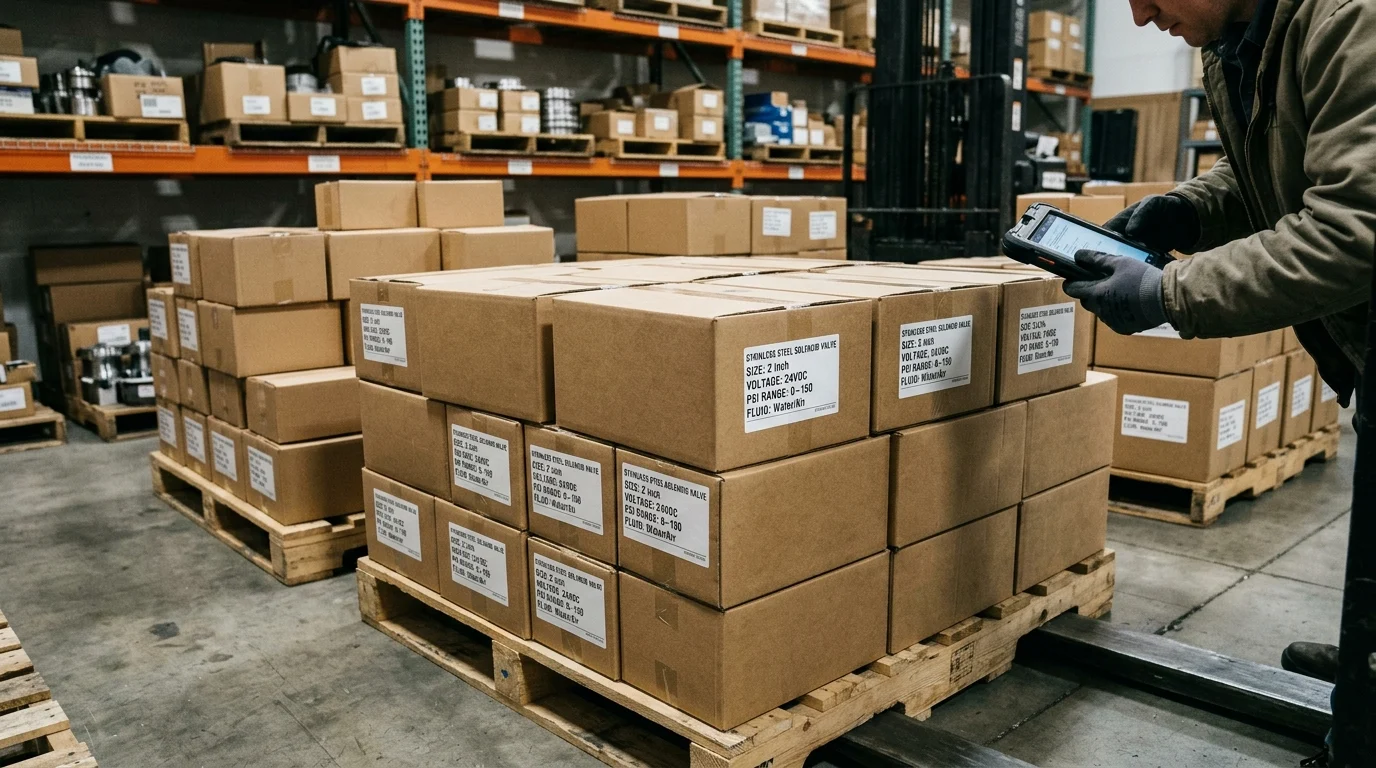
Logistics and packaging also require scrutiny. Stainless steel valves are heavy and their precision-machined threads (NPT, BSPP, or flanged connections) are vulnerable to impact damage during transit. Ensure the supplier uses rigid foam inserts and caps all ports. Additionally, inquire about spare parts availability; a reliable vendor should guarantee the availability of replacement coil assemblies and elastomer rebuild kits for at least 5 to 7 years post-purchase.
How to Make the Final Buying Decision
Transitioning from technical evaluation to a final procurement decision requires synthesizing engineering requirements with commercial realities. A structured approach minimizes the risk of specifying an incompatible product.
A step-by-step shortlist process
Begin the shortlist process by defining the absolute non-negotiables: media compatibility, pressure ranges (e.g., 0-10 bar), temperature limits, and required certifications (e.g., ATEX). Eliminate any vendor that cannot provide EN 10204 3.1 material traceability. Next, compare the flow coefficients (Cv) to ensure the valve meets system demands without excessive pressure drops.
Once the technical parameters are met, evaluate the commercial terms. Request 3D CAD or STEP files from the remaining vendors to ensure seamless integration into the system’s spatial footprint. Finally, conduct a 5-year Total Cost of Ownership (TCO) analysis that weighs the initial unit cost against energy consumption (coil wattage), projected rebuild intervals, and the vendor’s warranty terms.
Common procurement mistakes to avoid
Procurement professionals frequently encounter pitfalls when purchasing solenoid valves. A common error is neglecting the effects of water hammer in liquid systems; selecting a fast-acting direct valve for high-velocity fluids can cause severe hydraulic shock, damaging pipework. In these cases, specifying a valve with an adjustable closing time mitigates the risk.
Another frequent mistake is ignoring electrical voltage drops over long cable runs. If a 24V DC coil experiences a voltage dip greater than 10% (dropping below 21.6V) due to inadequate wire gauge, the magnetic field may weaken, causing the valve armature to flutter or fail to open entirely. Ensuring alignment between electrical engineering parameters and the valve’s coil specifications is essential for flawless field operation.
Key Takeaways
- The most important conclusions and rationale for Stainless Steel Solenoid Valve
- Specs, compliance, and risk checks worth validating before you commit
- Practical next steps and caveats readers can apply immediately
Frequently Asked Questions
When should I choose 316 or 316L stainless steel instead of 304?
Choose 316/316L for chloride exposure, chemicals, marine service, or sanitary processes. Use 304 for milder water, air, or neutral media where corrosion risk is low.
What seal material is best for a stainless steel solenoid valve?
Match the seal to media and temperature: NBR for air/water, EPDM for hot water and alkalis, FKM for oils and solvents, PTFE for harsh chemicals or high heat.
Should I select a direct-acting or pilot-operated stainless steel solenoid valve?
Use direct-acting for 0 bar differential pressure, low flow, or fast response. Choose pilot-operated for higher flow with available pressure differential and better energy efficiency.
Can stainless steel solenoid valves handle steam or CIP/SIP cleaning?
Yes, if the body grade and seal are specified correctly. For steam or CIP/SIP, 316/316L with PTFE or suitable high-temperature sealing is usually preferred.
Can NBSENYA provide customized stainless steel solenoid valves for industrial OEM projects?
Yes. NBSENYA supports OEM customization on valve type, materials, pressure range, and application needs, with stable supply and export experience for industrial buyers.