
What Is a Brass Solenoid Valve and How Does It Work?
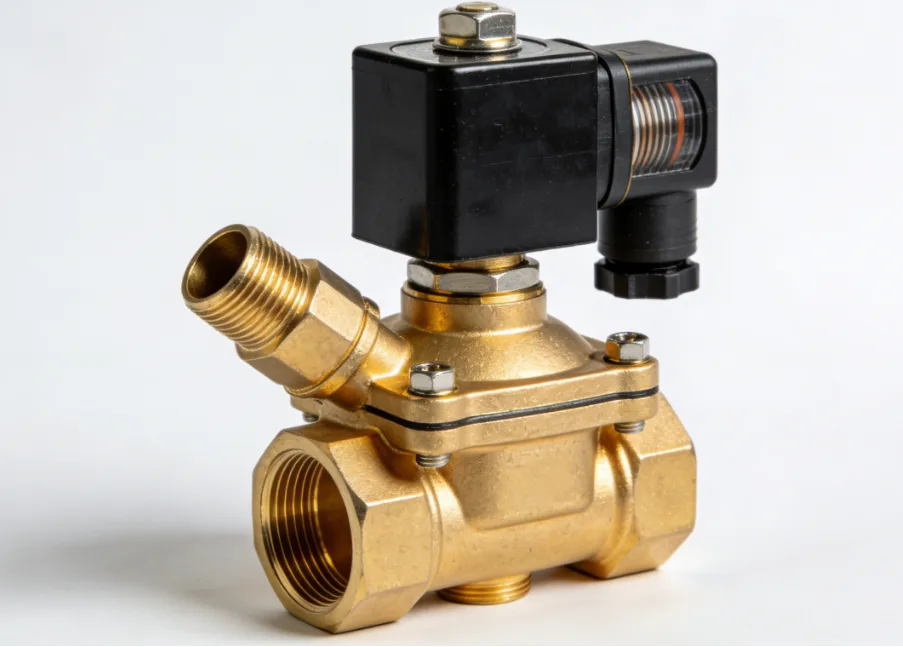
A Brass Solenoid Valve is an electromechanically operated valve designed to control the flow of liquids or gases. At its core, it consists of two main components: an electrical solenoid (coil) and a valve body made from high-grade brass alloy (typically CW617N or C36000).
The fundamental principle involves Electromagnetism. When an electrical current passes through the coil, it creates a magnetic field that moves a plunger (armature). Depending on the design—Normally Closed (NC) or Normally Open (NO) —this movement either opens or closes the orifice, allowing or obstructing fluid passage.
Technical Definition of Components
- The Coil: The “brain” that converts electrical energy into mechanical motion.
- The Plunger: Usually made of stainless steel with magnetic properties (AISI 430F).
- The Seal: Critical for leak prevention, often made of NBR, EPDM, or FKM (Viton) .
- The Body: Forged or cast brass, chosen for its excellent machinability and pressure resistance.
Why Choose Brass Over Stainless Steel or Plastic Valves?
When selecting a valve body material, engineers must weigh cost against performance. Brass sits in the “Golden Mean” of industrial materials.
Comparison Table: Material Performance Matrix
| Feature | Brass (HPb59-1 / CZ122) | Stainless Steel (304/316) | Plastic (PVC/Nylon) |
|---|---|---|---|
| Corrosion Resistance | High (except for acids) | Very High | High (Chemical specific) |
| Pressure Rating | Up to 50+ Bar | 100+ Bar | Low (usually <10 Bar) |
| Temperature Range | -20°C to 180°C | -196°C to 600°C | 0°C to 60°C |
| Cost-Efficiency | Excellent | Expensive | Very Low |
| Machinability | Superior | Difficult | Molded |
Key Insight: Brass is naturally antimicrobial, making it the preferred choice for potable water systems. However, for highly corrosive environments like seawater or concentrated acids, Stainless Steel Valves are recommended.
What Are the Different Types of Brass Solenoid Valve Operations?
Understanding the “Acting Type” is crucial for system longevity. Using the wrong type can lead to “Water Hammer” or coil burnout.
1. Direct Acting Solenoid Valves
In a direct-acting valve, the plunger is directly linked to the opening orifice. It does not require a minimum pressure differential to operate.
- Best for: Small flow rates and vacuum applications.
2. Pilot Operated (Indirect) Solenoid Valves
These valves use the pressure of the fluid itself to assist in opening and closing. The solenoid controls a small pilot hole which changes the pressure balance on a diaphragm or piston.
- Best for: High-flow industrial pipelines.
- Requirement: Requires a minimum pressure differential (usually >0.5 bar).
3. Assisted Lift (Zero Differential) Valves
A hybrid design where the plunger is mechanically linked to the diaphragm. It works from 0 bar but can handle high flow.
How to Select the Right Seal Material for Your Brass Valve?
The “Brass” is only as good as the elastomer sealing it. Selecting the wrong seal results in chemical degradation and system failure.
Seal Selection Guide
-
NBR (Nitrile Butadiene Rubber):
- Temp Range: -10°C to 80°C.
- Best for: Water, compressed air, light oils.
-
EPDM (Ethylene Propylene Diene Monomer):
- Temp Range: -30°C to 130°C.
- Best for: Hot water, steam, and low-pressure steam. Warning: Never use with oils.
-
FKM / Viton:
- Temp Range: -10°C to 180°C.
- Best for: High temperatures and aggressive chemicals/fuels.
Which Industrial Applications Rely on Brass Solenoid Valves?
Because brass is spark-resistant and durable, it is found in almost every sector of modern infrastructure.
HVAC and Cooling Systems
In large-scale chillers, brass valves control the flow of refrigerants and cooling water. Their thermal conductivity allows them to withstand rapid temperature fluctuations without cracking.
Water Treatment and Irrigation
From municipal water filtration to automated greenhouse irrigation, brass valves provide the necessary “Potable Water” safety ratings that plastics often lack. Check out our latest water control solutions for more details.
Compressed Air Systems
In pneumatic circuits, the fast response time (10ms to 50ms) of a brass solenoid valve is essential for high-speed manufacturing lines.
How to Properly Install a Brass Solenoid Valve? (Step-by-Step)
Incorrect installation is the #1 cause of “leaking” complaints. Follow these professional steps to ensure a 10-year service life.
- Check Flow Direction: Look for the arrow cast into the brass body. Installing it backward will cause the valve to vibrate or remain open.
- Flush the Lines: Before installation, flush the pipes to remove metal shavings or PTFE tape debris. Small particles are the primary cause of diaphragm blockage.
- Positioning: Most manufacturers recommend installing the valve with the Coil Upright. This prevents sediment from settling in the plunger tube.
- Wiring and Voltage: Ensure your power supply matches the coil label (e.g., 220VAC vs 24VDC). Using a DC coil on an AC circuit will instantly burn the solenoid.
- Use a Strainer: Always install a Y-strainer upstream to protect the valve orifice.
What Common Troubleshooting Issues Should You Watch For?
Even the best brass valves encounter issues over time. Here is a diagnostic checklist.
-
The Valve Won’t Open:
- Check for power supply.
- Burned out coil (test resistance with a multimeter).
- Insufficient pressure differential (for pilot valves).
-
The Valve Won’t Close:
- Debris stuck under the seal.
- Damaged or worn diaphragm.
- Residual magnetism (rare, usually indicates a need for a plunger replacement).
-
Loud Humming/Buzzing:
- Incorrect voltage (AC/DC mismatch).
- Dirt inside the armature tube causing the plunger to vibrate.
For advanced maintenance, refer to our complete valve maintenance checklist.
FAQ: Frequently Asked Questions About Brass Solenoid Valves
How long does a brass solenoid valve typically last?
A high-quality brass solenoid valve is rated for 1 million to 5 million cycles, depending on the fluid medium and environment. In a standard water application with clean filtration, this translates to roughly 5 to 10 years of continuous service. Factors like “Water Hammer” and high-frequency switching can reduce this lifespan significantly.
Is brass safe for drinking water applications?
Yes, but with a caveat. For drinking water, you must ensure the brass is Lead-Free (meeting NSF/ANSI 61 standards). Standard industrial brass may contain trace amounts of lead (up to 2.5%) for machinability. If your project involves potable water, always specify “Lead-Free Brass” to ensure regulatory compliance and safety.
Can I use a brass solenoid valve for fuel or gasoline?
You can use brass for fuels, but you must use an FKM (Viton) seal. Standard NBR seals will swell and disintegrate when exposed to gasoline or diesel, leading to catastrophic valve failure. Additionally, ensure the valve is “Explosion-Proof” (ATEX/Ex rated) if it is being used in an environment with flammable vapors.
Why is my solenoid valve coil getting very hot?
It is normal for a solenoid coil to be warm to the touch (up to 80°C) during continuous operation, as the electrical energy generates heat. However, if the coil is smoking or melting, it usually indicates a “Voltage Overload” or a mechanical blockage preventing the plunger from seating, which causes the coil to draw excessive current.
What is the difference between NC and NO valves?
NC (Normally Closed) means the valve remains closed when there is no power and opens only when energized. NO (Normally Open) means the valve stays open by default and closes when the power is turned on. Choose NC for safety systems where the flow must stop during a power failure, and NO for systems where flow is critical even without electricity.