
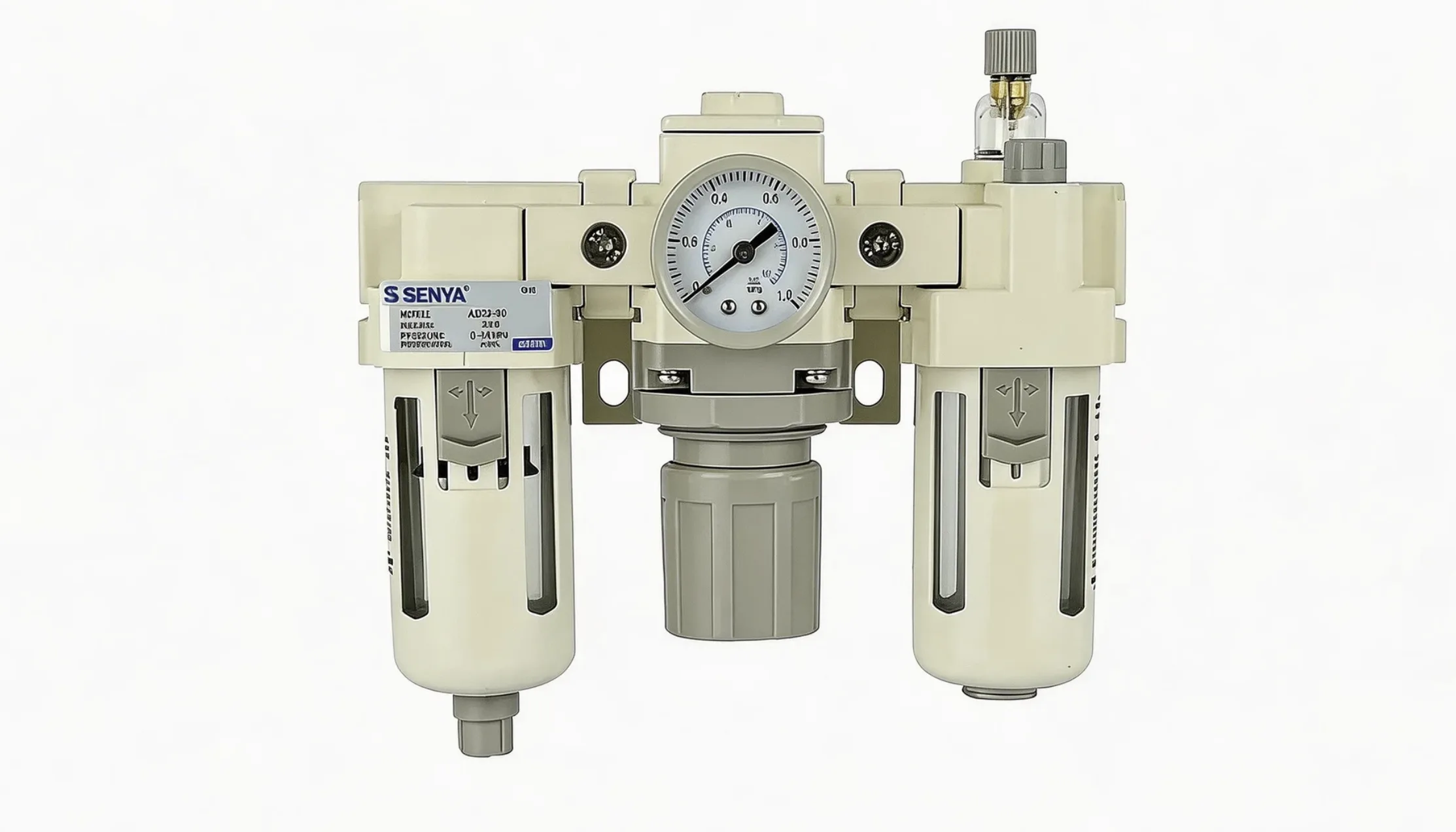
Air Source Treatment Units Introduce
In a pneumatic system, an air source treatment unit is an essential auxiliary component; it can also be referred to as an air preparation unit.
A complete air preparation unit typically consists of a filter-regulator-lubricator (FRL) that combines three functions. The filter removes water, dust, and other harmful particles larger than 5 microns. The pressure regulator continuously adjusts the pressure to a stable level, maintaining consistency even if the input pressure fluctuates. The pressure can be set between 0.1 and 1.0 bar (1 to 14 psi). The lubricator introduces oil into the pneumatic air to reduce internal friction in pneumatic components.
Pneumatic Filter
Features and Function: The main function of a pneumatic filter is to remove impurities from compressed air, including dust, water droplets, and oil, ensuring that downstream equipment receives clean air and extending the service life of pneumatic components. It can block large particles and can be used in combination with fine filters to capture smaller particles.
Structure and Functionality: A filter generally consists of a filter element, a filter bowl, and a drainage device. Air enters the filter element through the inlet, where dust and water are trapped. The collected water gathers at the bottom of the filter bowl and is discharged through a manual or automatic drain. Clean air then flows out of the outlet to the downstream equipment.
Pneumatic Regulator
Features and Function: The main function of a pneumatic regulator is to maintain the compressed air pressure within the range required by the equipment. Even if the input pressure fluctuates, the regulator ensures a stable output pressure, protecting downstream pneumatic components from damage caused by excessively high or low pressure.
Structure and Functionality: The regulator mainly consists of a valve body, diaphragm, spring, and pressure adjustment handwheel. As air enters the regulator, the diaphragm and spring control the airflow to stabilize the output pressure. If the output pressure exceeds the set value, excess air is released through the exhaust port. The user can adjust the pressure by rotating the handwheel and lock the set value after adjustment.
Pneumatic Lubricator
Features and Function: A lubricator introduces a fine mist of oil into the compressed air to lubricate pneumatic components such as cylinders, valves, and pipelines, reducing friction and wear, and extending equipment lifespan. Some modern equipment does not require lubrication, and the lubricator is only used when downstream devices need it.
Structure and Functionality: The lubricator mainly consists of an oil cup, adjustment valve, and oil injection device. As air passes through the lubricator, the adjustment valve evenly sprays the oil mist into the air, which is then carried by the airflow to all pneumatic components in the system, providing proper lubrication.
Air Source Treatment Units Conclusion
Air purifiers perform exceptionally well in automation, machine tool, and production line applications, consistently providing clean, dry, and pressure-stable air — a fundamental requirement for efficient pneumatic system operation. The air preparation units manufactured by SENYA Pneumatic features a corrosion-resistant aluminum construction that maintains long-term structural integrity even in humid environments, while the ergonomically designed pressure adjustment mechanism offers precise control and clear visual indication.Visit our blog website to access more industry insights and solutions related to pneumatic components.