
What Is a Pneumatic Cylinder and How Does It Work?
A Pneumatic Cylinder is a mechanical actuator that uses compressed air to create linear motion and force. It is widely used in industrial automation, packaging machinery, automotive manufacturing, food processing, electronics assembly, and smart production systems. A standard pneumatic cylinder usually consists of a cylinder barrel, piston, piston rod, seals, and end caps. When compressed air enters the cylinder, the air pressure pushes the piston to move, generating pushing, pulling, lifting, clamping, or positioning actions.
Compared with hydraulic systems, Air Cylinders offer a simpler structure, faster response speed, lower maintenance costs, and cleaner operation. Because of these advantages, pneumatic actuators have become essential components in modern automation equipment. Depending on application requirements, manufacturers may choose single acting cylinders, double acting cylinders, compact cylinders, guided cylinders, or rodless cylinders.
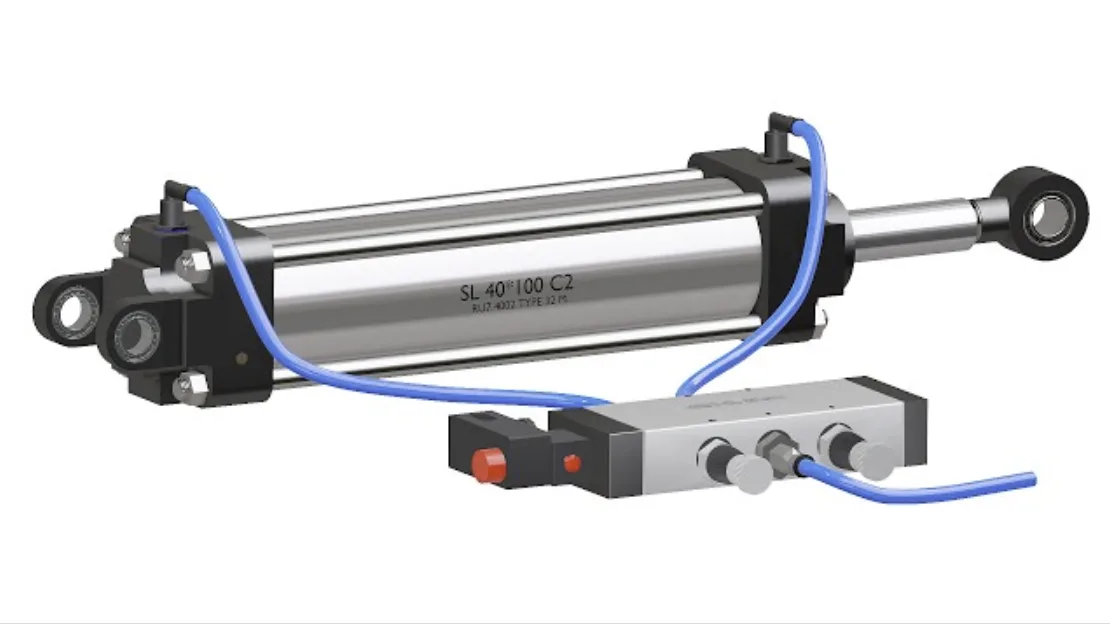
Common Types of Pneumatic Cylinders in Industrial Automation
There are many types of Pneumatic Cylinders designed for different industrial applications. One of the most commonly used types is the Double Acting Cylinder, which uses compressed air on both sides of the piston to achieve bidirectional motion. This type is ideal for automated production lines and high-frequency operations.
Single Acting Cylinders use air pressure in one direction and rely on a spring return mechanism, making them suitable for light-duty and short-stroke applications. Compact Cylinders are designed for installations with limited space, while Rodless Cylinders are often used in material handling systems and conveyor equipment because they save installation space during long-stroke movements.
In addition, ISO Standard Pneumatic Cylinders are highly popular in the global industrial market because of their standardized dimensions and strong compatibility. When selecting a Pneumatic Actuator, engineers usually consider factors such as operating pressure, load capacity, stroke length, speed control, and mounting style.
Key Advantages of Using Pneumatic Cylinders
The growing popularity of Pneumatic Cylinders in modern manufacturing is mainly due to their efficiency and low operating costs. First, compressed air is widely available and safe to use. Unlike hydraulic systems, pneumatic systems do not involve oil leakage, making them ideal for clean industries such as food processing, medical equipment, and electronics manufacturing.
Another major advantage is the fast response speed of pneumatic systems. Air Actuators can start and stop quickly, which makes them highly suitable for automated production lines requiring repetitive and high-speed movements. Their simple internal structure also reduces maintenance complexity and lowers long-term operating costs.
Modern pneumatic systems can also integrate with solenoid valves, sensors, PLC controllers, and smart factory automation systems for precise motion control. As Industry 4.0 continues to evolve, more companies are adopting high-performance Pneumatic Cylinders to improve productivity and automation efficiency.
How to Choose the Right Pneumatic Cylinder
Choosing the correct Pneumatic Cylinder is critical for stable machine performance. The first step is determining the required force and load capacity because the cylinder output force directly depends on the bore size and operating pressure. Users should also consider stroke length and installation space to ensure proper equipment integration.
For high-speed automation systems, manufacturers often select cylinders with fast response times and excellent wear resistance. In harsh environments involving moisture, heat, or corrosion, Industrial Pneumatic Cylinders with corrosion-resistant materials and high-quality sealing systems are recommended. Additional features such as magnetic switches, cushioning mechanisms, and precision positioning functions should also be considered during cylinder selection.
A high-quality Pneumatic Cylinder can significantly improve machine efficiency, reduce downtime, and lower maintenance expenses. Therefore, it is important to work with a reliable supplier that offers advanced manufacturing technology and strict quality control.
Why High-Quality Pneumatic Cylinders Matter in Modern Industry
With the rapid development of smart manufacturing and industrial automation, Pneumatic Cylinders have become essential driving components in automated machinery. High-quality pneumatic actuators not only improve operational stability but also increase productivity, reduce energy consumption, and extend equipment service life.
In real industrial applications, factors such as sealing performance, machining precision, and material durability directly affect cylinder performance. In high-speed and high-frequency production environments, premium Pneumatic Actuators can greatly reduce failure rates and improve overall production line efficiency.
For this reason, companies should focus not only on price but also on product quality, technical support, and supplier experience when purchasing pneumatic components. Choosing a trusted Pneumatic Cylinder manufacturer helps businesses achieve long-term automation reliability and production efficiency.
FAQ
What is the difference between a pneumatic cylinder and a hydraulic cylinder?
A Pneumatic Cylinder uses compressed air as the power source, while a hydraulic cylinder uses hydraulic oil. Pneumatic systems are cleaner, faster, and more suitable for light-duty applications, while hydraulic systems are better for heavy loads and high-pressure operations.
What are pneumatic cylinders used for?
Pneumatic Cylinders are widely used in automation equipment, packaging machinery, automotive manufacturing, food processing, electronics assembly, conveyor systems, and industrial robots for pushing, pulling, clamping, lifting, and positioning tasks.
How do I choose the correct pneumatic cylinder size?
To select the correct cylinder size, users should consider load weight, operating pressure, stroke length, installation space, and movement speed. The required output force usually determines the appropriate bore size.
What are the main advantages of pneumatic cylinders?
Pneumatic Cylinders offer several advantages, including simple structure, low cost, easy maintenance, fast operation speed, clean performance, and high safety, making them ideal for industrial automation.
How long does a pneumatic cylinder last?
The lifespan of a Pneumatic Cylinder depends on operating conditions, working frequency, and maintenance practices. With proper use and regular maintenance, high-quality industrial cylinders can operate reliably for many years.
About Senya Pneumatic
Senya Pneumatic specializes in the research, development, and manufacturing of industrial automation pneumatic components. The company is committed to providing high-performance Pneumatic Cylinders, pneumatic actuators, pneumatic valves, pneumatic push-in fitting and automation solutions for global customers. With advanced manufacturing processes, strict quality inspection systems, and extensive industry experience, Senya products are widely used in smart manufacturing, packaging machinery, electronics equipment, automotive production, and food processing industries.
By offering reliable product performance, fast delivery capabilities, and professional technical support, Senya Pneumatic continues to deliver cost-effective automation solutions to customers worldwide. The company focuses on technological innovation and product quality to improve automation efficiency and help businesses achieve more stable and efficient industrial production.