
A pneumatic regulator is a mechanical device that reduces and stabilizes compressed air pressure to a preset downstream level. The core function of a pneumatic regulator is simple: maintain consistent outlet pressure even when inlet pressure or air demand changes. This stability protects pneumatic tools, cylinders, valves, and automation equipment from pressure fluctuation.
In industrial plants, compressed air is widely recognized as a costly utility. The U.S. Department of Energy notes that better compressed air management can generate meaningful energy savings in manufacturing systems. Pressure regulation is one of the most practical control methods because excessive pressure often increases leakage, wear, and operating cost. Source: U.S. Department of Energy Compressed Air Systems.
For buyers comparing components, typical solutions include pneumatic regulator, air filter regulator, FRL unit, precision pressure regulator, mini air regulator, and industrial pneumatic accessories.
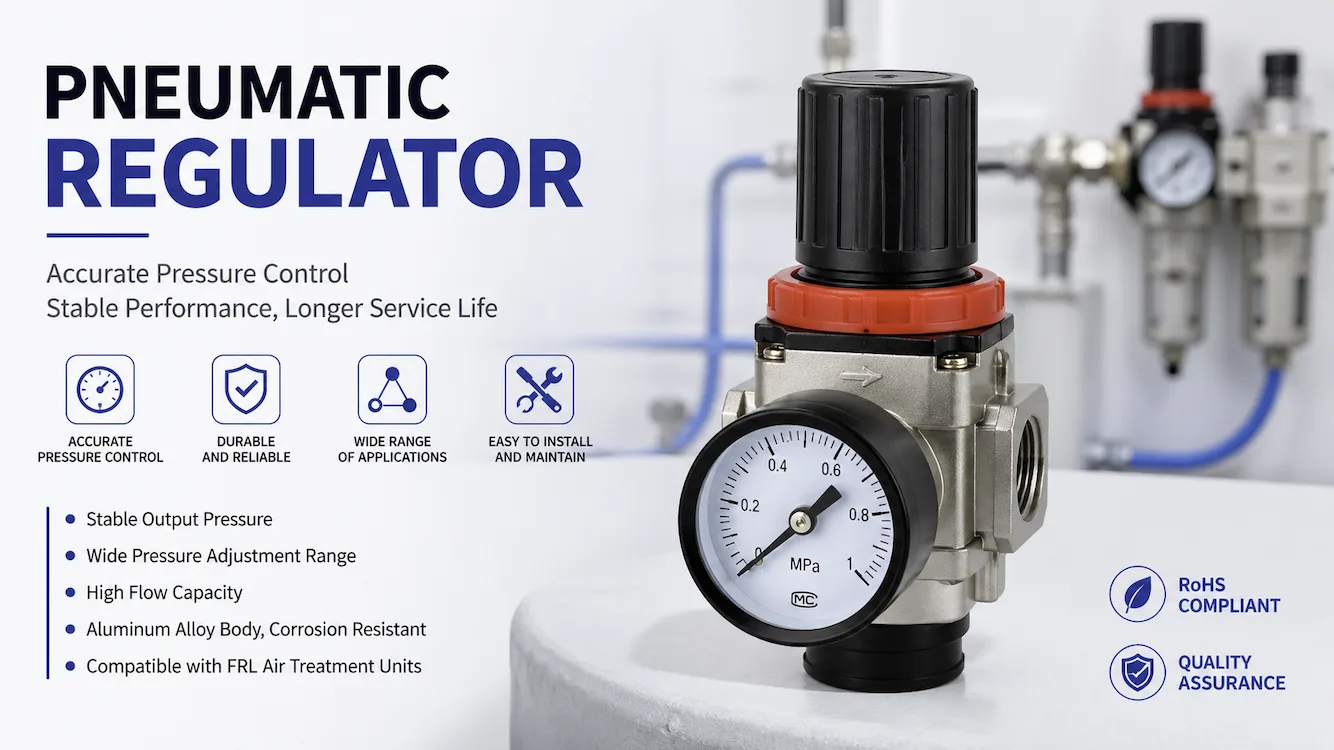
How a Pneumatic Regulator Works in Compressed Air Systems
A pneumatic regulator uses a spring, diaphragm, valve seat, and adjusting knob. When the outlet pressure drops below the setpoint, the internal valve opens and allows more air to pass. When outlet pressure rises to the target value, the valve throttles or closes.
This balancing action creates controlled downstream pressure for tools and actuators. In production lines, stable pressure improves repeatability because cylinders extend with more consistent force and valves switch more predictably.
| Component | Main Function | Typical Benefit |
|---|---|---|
|
Adjusting Knob |
Sets target pressure |
Easy operator control |
|
Spring |
Applies loading force |
Stable setpoint |
|
Diaphragm |
Senses outlet pressure |
Fast response |
|
Valve Seat |
Meters airflow |
Efficient regulation |
Why Pneumatic Pressure Regulators Matter for Energy Efficiency
Many facilities run air systems at higher pressure than required. Every unnecessary PSI can increase leakage flow through fittings, hoses, and seals. Lowering point-of-use pressure with a pneumatic regulator often reduces waste without changing compressor settings.
The U.S. Department of Energy recommends system optimization, end-use pressure review, and proper controls for compressed air efficiency. Pressure regulators support all three actions. Source: DOE Energy Guidance.
Key conclusions include:
Lower tool pressure can reduce air consumption.
Stable pressure can reduce scrap caused by inconsistent motion.
Correct pressure can extend seal and valve life.
Local regulation can improve multi-machine balance.
Main Types of Pneumatic Regulators for Industrial Use
Different pneumatic applications require different regulator designs. Selection should match flow rate, pressure range, and control precision.
General Purpose Pneumatic Regulator
Used for tools, blow-off stations, packaging machines, and standard automation. Cost-effective and common in workshops.
Precision Air Pressure Regulator
Used in testing equipment, dosing systems, instrumentation, and sensitive actuators where pressure drift must remain low.
Filter Regulator or FRL Regulator
Combines filtration and regulation. Many users choose filter regulator combo units where air cleanliness and pressure control are both required.
Mini Pneumatic Regulator
Compact design for tight panels, robotics arms, and portable equipment.
| Type | Best Use Case | Control Accuracy |
|---|---|---|
|
General Purpose |
Standard machinery |
Medium |
|
Precision |
Instruments |
High |
|
Filter Regulator |
Dirty air lines |
Medium |
|
Mini |
Space-limited systems |
Medium |
How to Size a Pneumatic Regulator Correctly
Incorrect sizing is a common cause of pressure drop. A regulator that is too small may hold static pressure but fail under flow demand.
Use this checklist:
Required inlet pressure
Desired outlet pressure range
Maximum flow rate (SCFM, NL/min, or L/min)
Port size and piping size
Media quality and filtration level
Ambient temperature
Acceptable pressure droop during peak demand
For high-accuracy systems, verify calibration methods against recognized metrology standards. NIST maintains pressure measurement programs from low pressure to high ranges. Source: NIST Pressure Calibration.
Common Pneumatic Regulator Problems and Fixes
A pneumatic regulator is reliable, but maintenance still matters.
| Problem | Likely Cause | Corrective Action |
|---|---|---|
|
Outlet pressure creeps upward |
Worn seat or contamination |
Rebuild or replace |
|
Pressure drops under load |
Undersized unit |
Increase Cv / flow capacity |
|
Slow response |
Dirty internals |
Clean and service |
|
Knob will not adjust |
Mechanical damage |
Replace handle or unit |
Install upstream filtration whenever particles, oil mist, or condensate exist. Contamination is a leading reason regulators lose accuracy.
Pneumatic Regulator Safety and Compliance Basics
Compressed air can be hazardous when misused. OSHA highlights rules for compressed gas and air equipment, including air receivers and safe cleaning practices. For example, compressed air used for cleaning is subject to pressure limitations and guarding requirements. Source: OSHA Standards.
A regulator supports safer operation because it limits downstream pressure at the point of use. However, a regulator is not a substitute for relief valves, lockout procedures, or proper hose selection.
How to Choose the Best Pneumatic Regulator?
Pressure Range
Choose a regulator with an output pressure range that matches your equipment. Make sure it can maintain stable pressure during operation.
Flow Capacity
Check the airflow demand of your pneumatic system. A regulator with insufficient flow capacity may cause pressure drop and poor performance.
Port Size / Thread Type
Select the correct inlet and outlet port size (such as 1/4″, 3/8″, 1/2″) and thread standard (NPT, BSP, PT) for easy installation.
Regulation Accuracy
For applications requiring precise pressure control, choose a high-accuracy regulator with minimal fluctuation.
FAQ
1. What is the difference between a pneumatic regulator and a pressure relief valve?
A pneumatic regulator controls normal downstream working pressure. A relief valve is a safety device that opens when pressure exceeds a limit. One manages process pressure; the other protects equipment from overpressure events.
2. Can a pneumatic regulator increase pressure?
No. A standard pneumatic regulator reduces inlet pressure to a lower controlled outlet pressure. It cannot raise pressure above the available supply pressure.
3. How often should a pneumatic regulator be replaced?
Replacement depends on duty cycle, contamination level, and seal wear. Clean indoor systems may run for years, while harsh environments may require annual inspection and more frequent rebuild kits.
4. Why does outlet pressure change during airflow demand?
This effect is called pressure droop. Internal flow resistance causes lower outlet pressure as demand rises. Selecting a larger regulator or precision model usually improves performance.
5. Should every machine have its own air regulator?
In many factories, yes. Point-of-use regulation gives each machine the pressure it actually needs, improves consistency, and reduces waste caused by running the whole system at one high pressure level.