
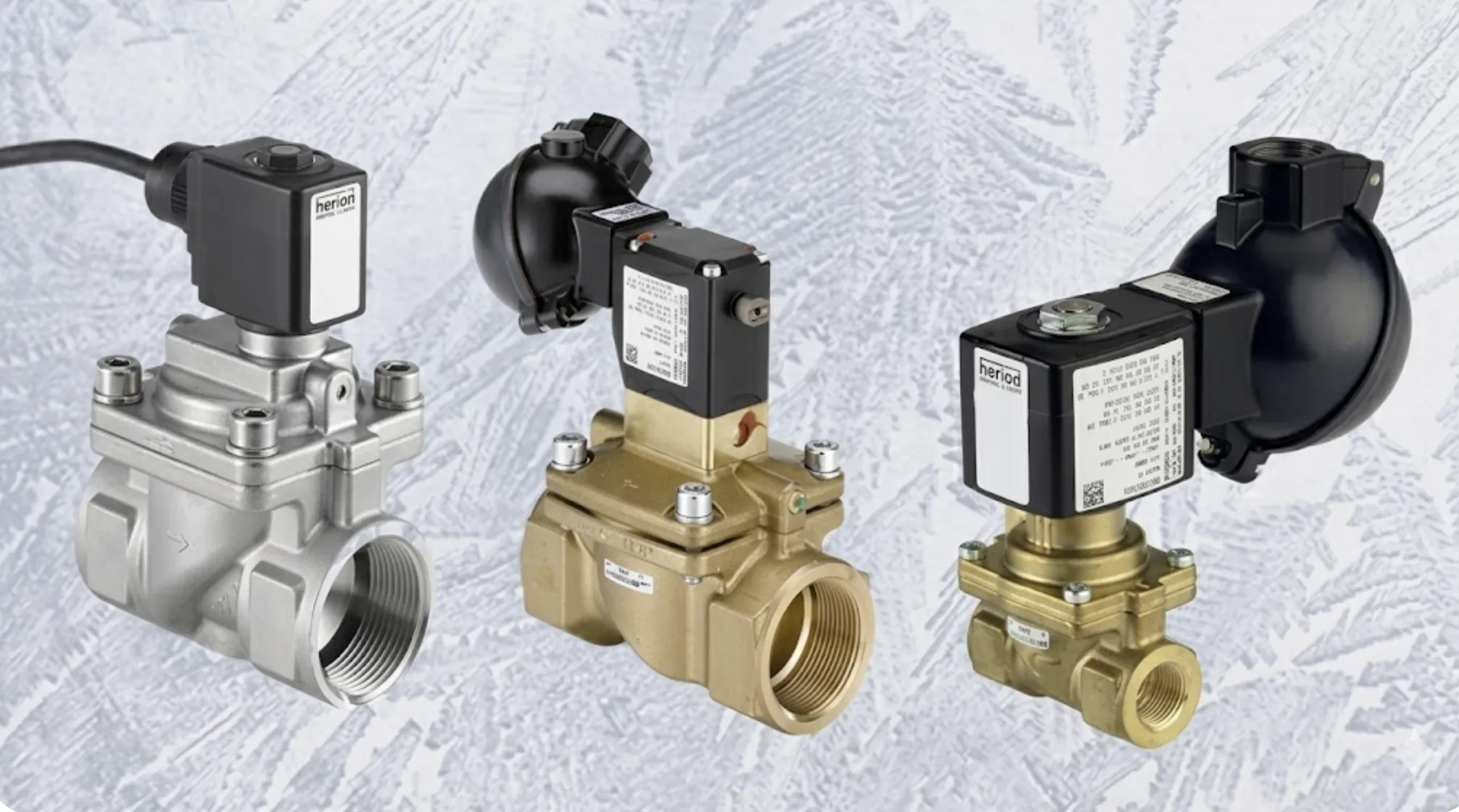
Introduction: What is a Solenoid Valve?
A solenoid valve is an automated control device that uses electromagnetic force to control the flow of liquids or gases. In pneumatic systems, pilot-operated solenoid valves act as “switches” for small flow rates, quickly and precisely controlling the flow of gas or liquid; direct-acting solenoid valves can directly control large flow rates.
In our pneumatic product field, solenoid valves are widely used in cylinder drive systems, pneumatic actuators, and pipeline control systems. They are also used in HVAC, industrial automated production lines, irrigation systems, and other industries, making them an indispensable core component of modern automated equipment.
Working Principle of a Solenoid Valve
The core working principle of a solenoid valve is based on electromagnetism: when current passes through the coil inside the valve body, a magnetic field is generated, causing the valve core to move, thereby opening or closing the valve and controlling the fluid passage.
A solenoid valve mainly consists of the following parts:
To understand the operation and key advantages of a solenoid valve, you first need to be familiar with its components.
Coil: Generates magnetic force when energized.
Plunger: Moves under the action of magnetic force to achieve opening and closing.
Valve Body: Carries the fluid and forms the flow channel.
In pneumatic systems, solenoid valves can quickly respond to the actuation needs of cylinders, such as controlling the extension or retraction of the cylinder to achieve high-frequency mechanical actions.
Types of Solenoid Valves
Solenoid valves can be classified into different types according to their structure and control method:
Normally Open Valve and Normally Closed Valve
A normally closed valve remains closed when there is no current and opens when energized; Normally closed solenoid valves are suitable for cylinder start-up control.
A normally open valve remains open when there is no current and closes when energized; Normally open solenoid valves suitable for safety pressure relief or continuous air supply scenarios.
Solenoid Valves Classified by Material
Brass Valve Body
Features: High pressure resistance, moderate cost. Suitable for: General pneumatic systems, air or water media.
Stainless Steel Valve Body
Features: Corrosion resistant, high temperature resistant, long service life. Suitable for: Corrosive gases, chemical, and food industries.
Engineering Plastic (Plastic/POM, PVC) Valve Body.
Features: Lightweight, acid and alkali resistant, good insulation.
Applications: Low-pressure gas, water, or mildly corrosive liquid systems.
Solenoid Valves Classified by Number of Channels/Positions
2/2 Valve
Function: The simplest on/off valve.
Applications: One-way control of cylinder extension/retraction, or simple pneumatic circuit switching.
3/2 Valve
Function: Used for single-acting cylinder control, one channel for intake, one for exhaust, and one for output.
Applications: One-way cylinder action, pneumatic circuit switching control.
4/2 or 4/3 Valve
Function: Commonly used in double-acting cylinders, controlling cylinder extension and retraction.
Features: 4/3 position valves have a neutral holding or exhaust function, which can improve system safety.
5/2 or 5/3 Valve
Function: Used in more complex double-acting cylinders or multi-actuator pneumatic circuits.
Features: Supports multi-channel switching, suitable for pneumatic circuit control in automated production lines.
Analysis of the Advantages and Disadvantages of Solenoid Valves in Pneumatic Systems
Advantages:
Fast response speed, capable of precisely controlling cylinder movements, suitable for automated production lines.
High control accuracy, enabling remote operation and centralized control via electrical signals.
Compact structure, convenient installation and maintenance, suitable for modular design of pneumatic systems.
Disadvantages:
Limited pressure range; pilot-operated valves are required for high-pressure or high-flow applications.
High requirements for air supply; susceptible to dust and impurities, requiring the use of pneumatic filters.
Reliant on power supply; normally closed valves automatically close during power outages, while normally open valves may pose safety risks.
Application and Summary of Solenoid Valves
In pneumatic systems, solenoid valves work closely with cylinders, pneumatic fittings, and pneumatic piping to achieve automated operation. For example:
Automated production lines: Controlling the extension and retraction of cylinders to complete assembly, sorting, and other actions.
Pneumatic handling devices: Achieving precise material positioning by controlling cylinders through solenoid valves.
Irrigation and environmental protection equipment: Regulating gas or water flow to achieve remote automatic control.
Summary
Solenoid valves are the “core control element” of pneumatic systems, determining the operating speed, accuracy, and reliability of the entire pneumatic equipment. For pneumatic product manufacturers, selecting high-quality solenoid valves not only improves equipment performance but also provides customers with stable and reliable automation solutions.
SENYA Manufacturer Introduce
We are a professional pneumatic products manufacturer, dedicated to providing high-quality pneumatic solutions for various automation systems. The company is equipped with advanced production facilities and a strict quality management system. Our products are widely used in industrial automation, smart manufacturing, logistics equipment, environmental irrigation, HVAC systems, and other fields.
We offer not only standardized pneumatic components, including Pneumatic air cylinders, pneumatic solenoid valves, Pneumatic Push-in quick connect fittings, and tubing, but also customized complete pneumatic system solutions according to customer requirements, helping enterprises improve production efficiency and automation levels.