
Introduction
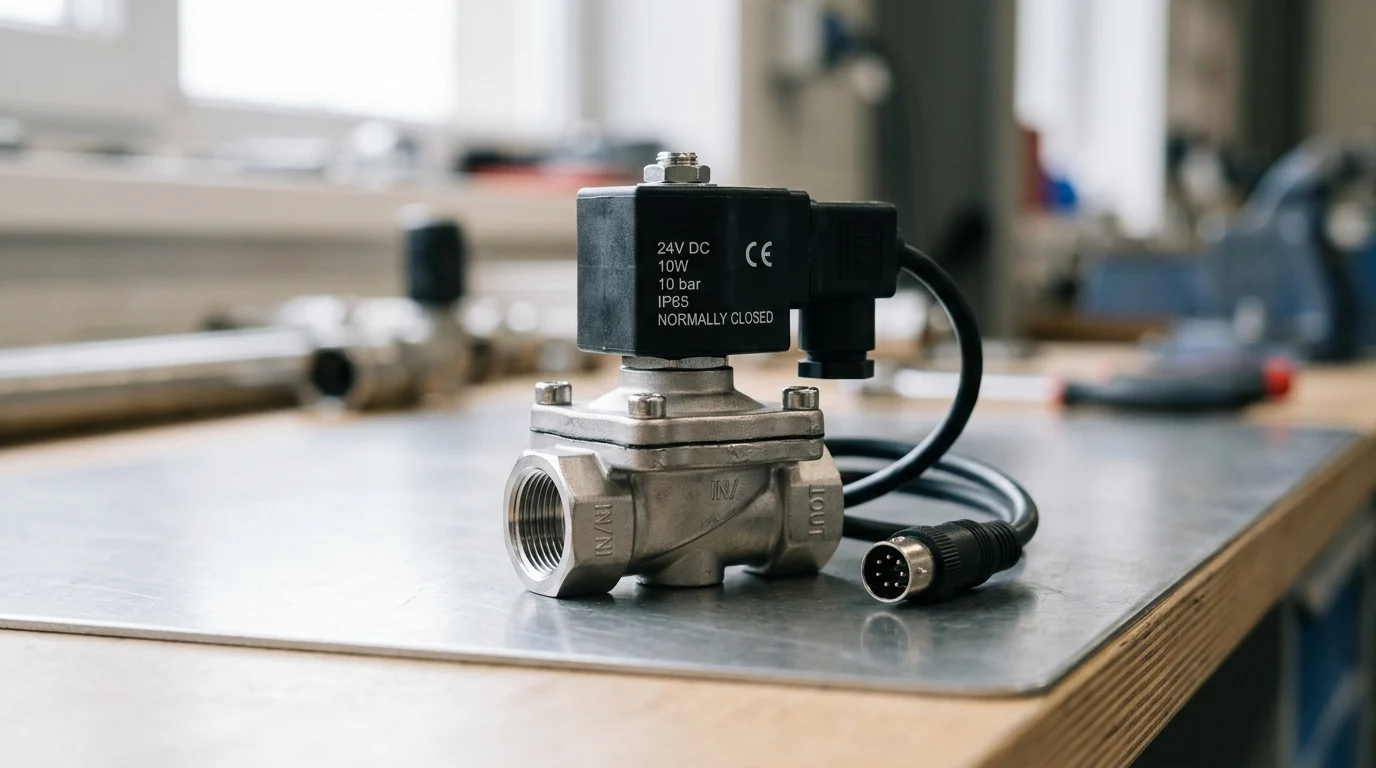
In fluid systems that handle acids, solvents, saltwater, or washdown chemicals, valve material choice directly affects reliability, safety, and maintenance cost. Stainless steel solenoid valves are often preferred because they resist corrosion, tolerate pressure and temperature stress, and maintain sealing performance in conditions that quickly damage brass or plastic alternatives. This article explains the material properties behind that durability, how stainless steel helps reduce leakage and unplanned shutdowns, and which industrial environments benefit most from using these valves. From chemical processing lines to hygienic and outdoor installations, the following sections show why stainless steel is a practical long-term choice for corrosive service.
Why Choose Stainless Steel Solenoid Valves
In industrial fluid control, the integrity of a process pipeline relies heavily on the durability of its automated components. Stainless steel solenoid valves serve as critical isolation and control mechanisms within aggressive media environments, where standard alloys rapidly degrade. Because unplanned downtime in sectors like chemical processing can easily exceed $10,000 per hour in lost production and remediation costs, engineers prioritize materials that guarantee uninterrupted lifecycle performance.
The selection of these robust valves is driven by their unique metallurgical properties, which provide an essential safeguard against the unpredictable nature of corrosive fluids, high-pressure surges, and extreme thermal cycling.
How they reduce failure risk
The primary mechanism by which these valves reduce failure risk is through the formation of a passive chromium oxide layer. When exposed to oxygen, stainless steel self-heals microscopic surface scratches, preventing the propagation of pitting and crevice corrosion. This metallurgical characteristic directly mitigates the risk of catastrophic media leakage, coil short-circuiting from internal fluid ingress, and premature mechanical binding of the armature.
Furthermore, the high tensile strength of austenitic steel ensures that the valve body can withstand significant pressure spikes—often protecting the system against water hammer effects that would easily fracture cast brass or plastic enclosures.
Where they are most commonly used
Deployment of these valves is concentrated in sectors handling highly caustic or acidic media. In petrochemical refineries, they regulate sour gas and amine solutions with high reliability. Pharmaceutical and food-beverage facilities utilize them extensively for Clean-In-Place (CIP) and Sterilization-In-Place (SIP) systems.
In these sanitary applications, valves must routinely withstand high-pressure steam up to 150 psi (10.3 bar) at 185°C, alongside aggressive alkaline washings, without shedding particulate matter or metallic ions into the highly regulated process stream.
What Defines a Stainless Steel Solenoid Valve for Corrosive Environments
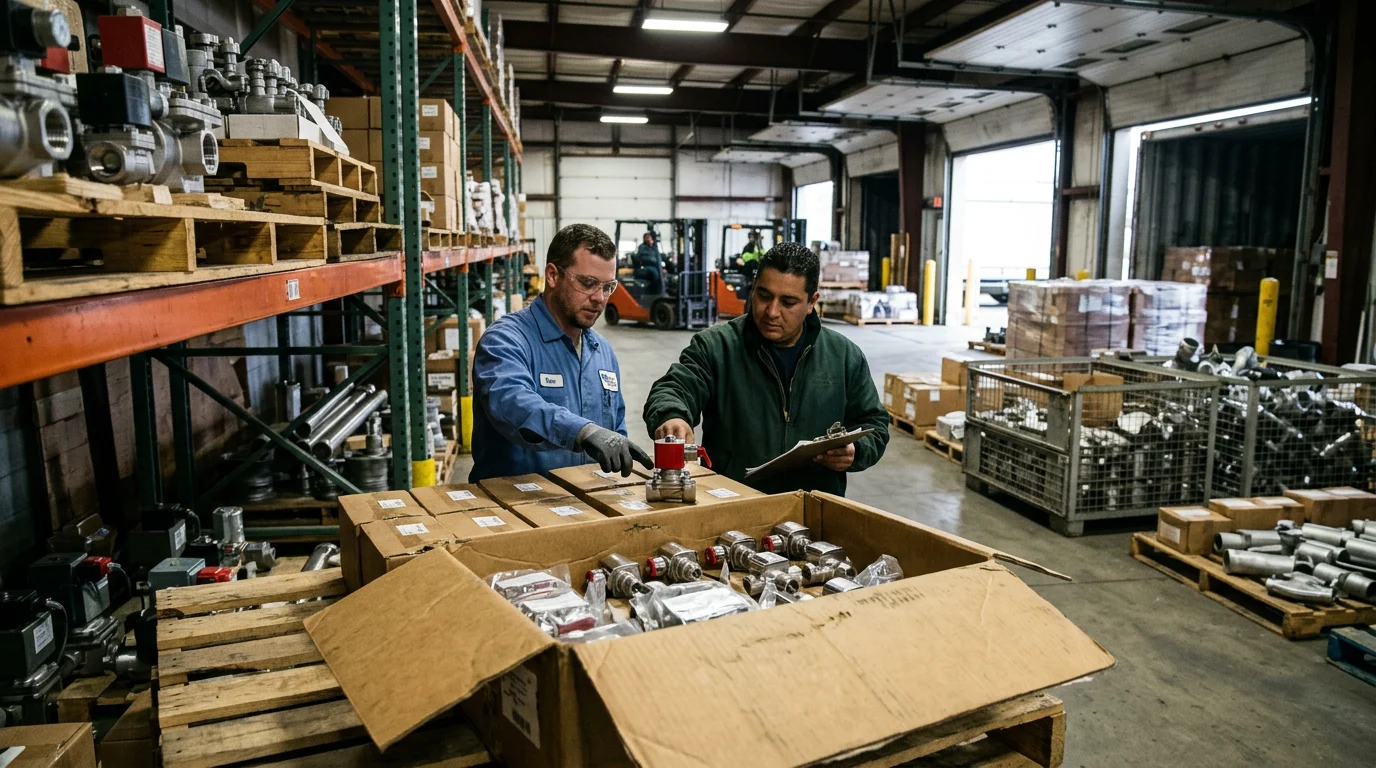
Specifying a valve for corrosive service requires analyzing the complete wetted path. A true corrosion-resistant solenoid valve ensures that not only the primary valve body, but also the internal shading rings, armature tubes, plungers, and springs are manufactured from compatible high-grade alloys.
These internal components must reliably actuate against system pressures that frequently range from vacuum conditions up to 1,000 psi (69 bar) or higher, depending on the orifice size and the magnetic force generated by the coil.
Which material, seal, and coil specifications matter
Beyond the metallic body, the internal elastomeric seals dictate the valve’s chemical compatibility. Standard Nitrile (NBR) degrades rapidly in acidic environments; therefore, experts specify FKM (Viton) for petroleum derivatives, EPDM for steam and alkaline solutions, or FFKM (Kalrez) and PTFE for near-universal chemical resistance.
Additionally, the electromagnetic coil must be housed in a robust enclosure, typically requiring NEMA 4X or IP67/IP68 encapsulation to prevent harsh atmospheric corrosion or washdown chemicals from degrading the sensitive copper windings.
How 304, 316, and 316L stainless steel compare
The austenitic 300-series stainless steels are the industry standard, but their specific alloying elements dictate their performance limits.
| Grade | Chromium (%) | Nickel (%) | Molybdenum (%) | Pitting Resistance Eq. (PREN) | Typical Application |
|---|---|---|---|---|---|
| 304 | 18.0 | 8.0 | 0.0 | ~18 | Mildly corrosive, water, air |
| 316 | 16.0 | 10.0 | 2.0 – 3.0 | ~24 | Chlorides, strong acids, marine |
| 316L | 16.0 | 10.0 | 2.0 – 3.0 | ~24 | Welded connections, sanitary |
Grade 316 introduces molybdenum, drastically improving resistance to chloride-induced pitting. Grade 316L limits carbon content to below 0.03%, preventing carbide precipitation at grain boundaries during welding, which is an essential characteristic for flanged or socket-weld valve installations.
What operating limits matter most
Operating limits in corrosive applications are constrained by the intersection of media temperature, pressure, and chemical concentration. High temperatures exponentially accelerate corrosion rates, requiring careful matching of the seal material to thermal loads.
Engineers must strictly verify the Maximum Operating Pressure Differential (M.O.P.D.) and the Minimum Operating Pressure Differential (MOPD). Pilot-operated stainless steel valves typically require a minimum differential of 5 to 15 psi to lift the internal diaphragm, whereas direct-acting variants can operate at zero pressure differential but are restricted to smaller orifice sizes and lower maximum flow rates.
How Stainless Steel Solenoid Valves Compare with Brass and Plastic
Material selection dictates both the initial capital expenditure and the long-term operational viability of a fluid control system. While brass and engineered plastics offer lower upfront procurement costs, they exhibit distinct mechanical and chemical vulnerabilities in harsh environments.
For instance, brass valves frequently suffer from dezincification and can fail within 6 to 12 months when exposed to mild acids or high-chloride environments, whereas stainless steel counterparts routinely exceed a 10-year operational lifespan under identical chemical conditions.
When stainless steel is the better choice
Stainless steel becomes the mandatory choice when applications exceed the structural limits of plastics or the chemical limits of brass. Plastics suffer from cold flow (creep) under high pressure and lose tensile strength rapidly at elevated temperatures—typically degrading above 60°C for standard PVC.
Conversely, stainless steel maintains structural integrity at cryogenic temperatures (-196°C) and extreme heat (up to 200°C depending on the internal seal combination), making it indispensable for liquid nitrogen handling, high-temperature steam regulation, and aggressive solvent distribution where plastic bodies would warp or fracture.
What trade-offs matter most
The decision between these materials involves weighing mechanical robustness against acquisition costs and weight.
| Material | Max Operating Temp (Body) | Tensile Strength (MPa) | Chemical Resistance Profile | Relative Cost Factor |
|---|---|---|---|---|
| Stainless Steel (316) | > 500°C (Limited by seals) | ~515 | Excellent (Acids, Bases, Chlorides) | 2.5x – 3.0x |
| Brass | ~ 200°C | ~340 | Poor to Moderate (Water, Air, Oil) | 1.0x (Baseline) |
| PVC Plastic | 60°C | ~50 | Excellent (Acids, Bases), Poor (Solvents) | 0.8x – 1.2x |
The primary trade-off is the initial procurement cost; a high-grade stainless steel valve generally costs two to three times more than its brass equivalent due to raw material expenses and the increased complexity of machining austenitic alloys. However, the higher tensile strength and immunity to galvanic corrosion offset this premium by virtually eliminating the risk of catastrophic body rupture and process fluid contamination.
How to Specify and Source Stainless Steel Solenoid Valves
Procurement of fluid control components for aggressive environments requires strict adherence to engineering specifications and international standards. A minor oversight in specifying the wetted materials or electrical characteristics can result in hazardous leaks or premature coil burnout.
Buyers must quantify their acceptable leakage rates, typically adhering to ANSI/FCI 70-2 standards, where critical isolation applications demand Class VI (bubble-tight) shutoff, while general control loops may only require Class IV (0.01% of rated capacity).
What selection criteria buyers should use
Engineers must calculate the required flow coefficient (Cv value) to ensure the valve delivers the necessary volumetric flow without inducing excessive pressure drops. Additionally, buyers must specify the actuation paradigm: normally closed (NC) or normally open (NO).
In safety-critical corrosive applications, NC is preferred to ensure the system fails to a safe, isolated state upon loss of electrical power. Port threading must also be scrutinized, with NPT and BSPT being the standard choices for secure, leak-free pipe integration.
Which compliance and quality standards matter
Compliance certifications serve as objective proof of a valve’s suitability for hazardous duty. In the oil and gas sector, wetted materials must comply with NACE MR0175 / ISO 15156 to prevent sulfide stress cracking in sour gas (H2S) environments.
For installations in explosive atmospheres, the solenoid coil must carry ATEX, IECEx, or UL Class I, Div 1/2 certifications. Furthermore, food and pharmaceutical applications require FDA-compliant elastomers and USP Class VI material traceability to guarantee zero media contamination.
How to evaluate suppliers
Evaluating a valve manufacturer extends beyond reviewing a standard datasheet. Expert buyers demand material traceability through EN 10204 Type 3.1 certificates, which verify the exact chemical composition of the steel heat used during casting or forging.
Top-tier suppliers conduct 100% factory testing, utilizing helium mass spectrometry to guarantee external leak rates fall below 1×10^-4 mbar L/s. Buyers should also audit the supplier’s lead times; while standard 316 valves may be stocked, specialized configurations with FFKM seals or exotic alloy internal components frequently require 4 to 8 weeks for final delivery.
How to Select the Best Stainless Steel Solenoid Valve
Finalizing the specification for a corrosion-resistant fluid control system requires synthesizing mechanical constraints with a rigorous Total Cost of Ownership (TCO) analysis.
While procurement departments may instinctively target lower initial capital expenditures, engineering data consistently demonstrates that maintenance labor, replacement parts, and lost production can account for up to 85% of a valve’s TCO over a five-year period. Consequently, upfront material investments in high-grade alloys prove highly economical in aggressive environments.
How to weigh upfront cost against maintenance
The financial justification for stainless steel is deeply rooted in OPEX (Operational Expenditure) reduction. Consider a scenario comparing a $500 stainless steel solenoid valve to a $150 brass alternative in a mild acid dosing system.
If the brass valve requires replacement every eight months due to internal degradation, the cumulative cost of replacement parts, combined with the hourly labor rate of a pipefitter and the opportunity cost of halting production, rapidly eclipses the initial $350 premium. By extending the mean time between failures (MTBF) to several years, the stainless steel variant provides a rapid, measurable return on investment.
What final selection framework to use
To ensure no parameter is overlooked during the final selection, engineers frequently employ the STAMPED framework: Size (pipe diameter and Cv), Temperature (media and ambient limits), Application (environmental hazards and duty cycle), Media (chemical concentration and specific gravity), Pressure (MOPD and system surges), Ends (flanged, threaded, or welded connections), and Delivery (lead times and certification requirements).
By systematically filtering options through this technical matrix, specifiers can confidently deploy a stainless steel solenoid valve that guarantees system safety, strict regulatory compliance, and maximum operational longevity in the most demanding industrial environments.
Key Takeaways
- The most important conclusions and rationale for Stainless Steel Solenoid Valves
- Specs, compliance, and risk checks worth validating before you commit
- Practical next steps and caveats readers can apply immediately
Frequently Asked Questions
Why are stainless steel solenoid valves better for corrosive environments?
They resist pitting, chemical attack, and pressure shocks better than brass or plastic, helping reduce leaks, sticking, and unplanned downtime in aggressive service.
Which stainless steel grade should I choose: 304, 316, or 316L?
Use 304 for mild media, 316 for chlorides or stronger chemicals, and 316L for welded or sanitary systems such as CIP/SIP lines.
What seal material works best with corrosive media?
Choose FKM for oils and petroleum derivatives, EPDM for steam and alkaline washdowns, and PTFE or FFKM for broad chemical compatibility.
What coil protection is recommended in washdown or harsh plant conditions?
Specify encapsulated coils with IP67, IP68, or NEMA 4X protection to help prevent moisture and chemical ingress that can damage windings.
Can NBSENYA supply customized stainless steel solenoid valves for industrial applications?
Yes. NBSENYA supports OEM and industrial buyers with stainless steel valve options, material choices, and application-based customization for reliable supply.