
The optimal 2/2 way solenoid valve material depends entirely on the specific application, media, and operating conditions. Understanding what is a 2/2 way solenoid valve reveals its critical role in controlling fluid flow across countless industries. The choice of Solenoid Valve Body Material directly impacts its performance and longevity. For example, a Stainless Steel Solenoid Valve offers excellent resistance in corrosive settings. The global demand for these components is substantial, reflecting their widespread use:
| Metric | Value |
|---|---|
| 2022 Market Size | USD 840 million |
| Projected CAGR | ~6% |
| Estimated 2033 Market Value | ~$840 million |
This significant market highlights the need for reliable manufacturers and suppliers. An Industrial 2/2 way solenoid valve manufacturer and a Bulk 2/2 way pneumatic valves supplier must offer diverse material options to meet varied customer needs.
Key Takeaways
- Choose the right solenoid valve material based on what fluid it controls, where it operates, and your budget.
- Brass valves are good for general use with water and non-acidic liquids because they are affordable and durable.
- Stainless steel valves are strong and resist many chemicals, making them ideal for tough industrial jobs.
- Plastic valves are light and resist corrosion well, which makes them good for chemical use and cost-effective.
- Always check industry standards and certifications to ensure your chosen valve is safe and reliable for its job.
Brass Solenoid Valves: Versatility and Durability
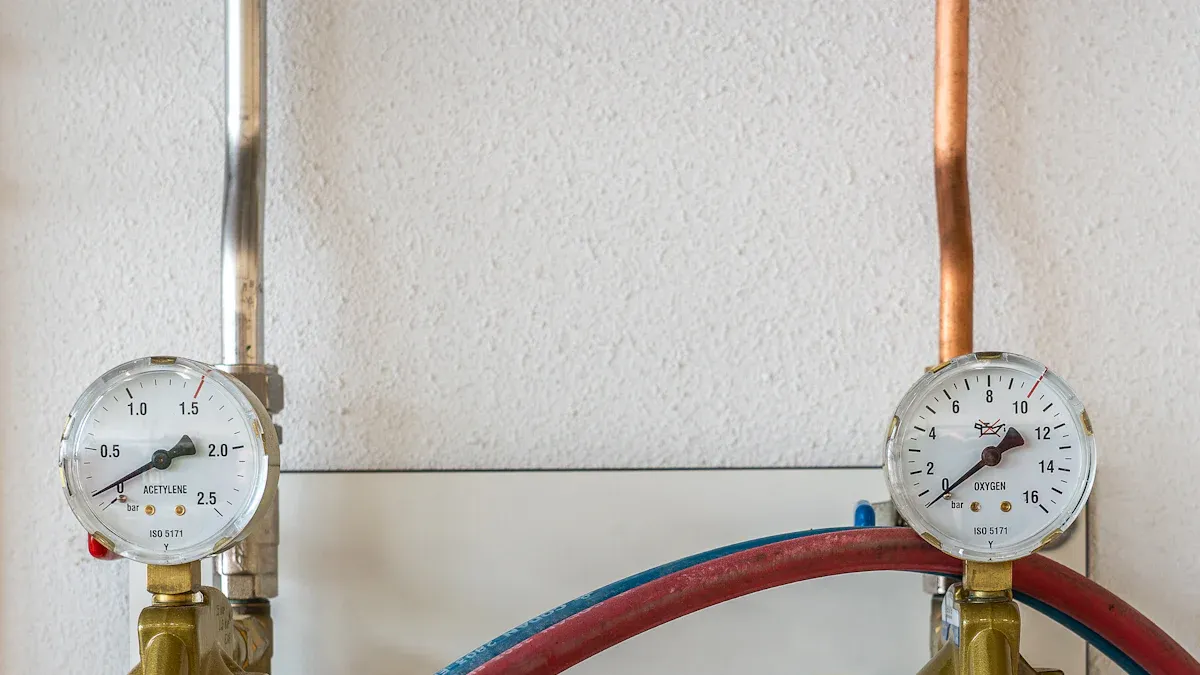
Brass solenoid valves are a popular choice for many fluid control applications. They offer a good balance of performance and cost.
Advantages of Brass Valves
Brass valves bring several benefits to the table. Their durability comes from brass’s ductile properties, which zinc improves. This increased ductility makes brass easy to machine. Manufacturers can create precise shapes and smooth internal surfaces. These smooth surfaces reduce fluid flow resistance and frictional corrosion, which helps valves perform reliably and last longer. Brass also shows robustness and resists wear and tear, supporting its long-term use. Furthermore, brass is cost-effective compared to specialized materials. Its ease of fabrication also lowers production costs. Brass also has good thermal and electrical conductivity. The valve body can help manage and dissipate heat, which is vital for systems needing precise temperature control, like HVAC and solar water heating. Its excellent electrical conductivity is also beneficial since solenoid valves rely on electrical current.
Disadvantages of Brass Valves
Despite their many advantages, brass valves have some limitations. They work well with various industrial fluids and resist corrosion in pipelines carrying water and non-acidic fluids. However, this means they are not ideal for acidic chemical environments. Their resistance is specifically for non-acidic conditions. A common problem for solenoid valves, including brass ones, is when the seal material is not compatible with the fluid. If the fluid damages the seal, it can swell, shrink, or become brittle. This leads to damage and malfunction. For example, strong solvents can dissolve rubber seals over time. So, ensuring the seal material matches the fluid is crucial to prevent failure.
Ideal Applications for Brass Valves
Brass solenoid valves are best for non-aggressive fluid service. They excel in pipelines handling regular water and non-acidic fluids. These valves are perfect for low to medium-pressure and temperature uses. You often find them in HVAC systems, where they regulate water and air flow, control heating temperatures, and manage refrigerant flow. They also manage water flow in irrigation systems, allowing for efficient and precise watering. In automotive and marine applications, they regulate fuel and oil flow and can shut off fuel during emergencies. Food and beverage processing also uses them to control liquid flow in production, such as in bottling and canning. They are also common in water softening, filtration systems, gravity-fed systems, and general mains water on/off control.
Stainless Steel Solenoid Valve: Chemical Resistance and Strength
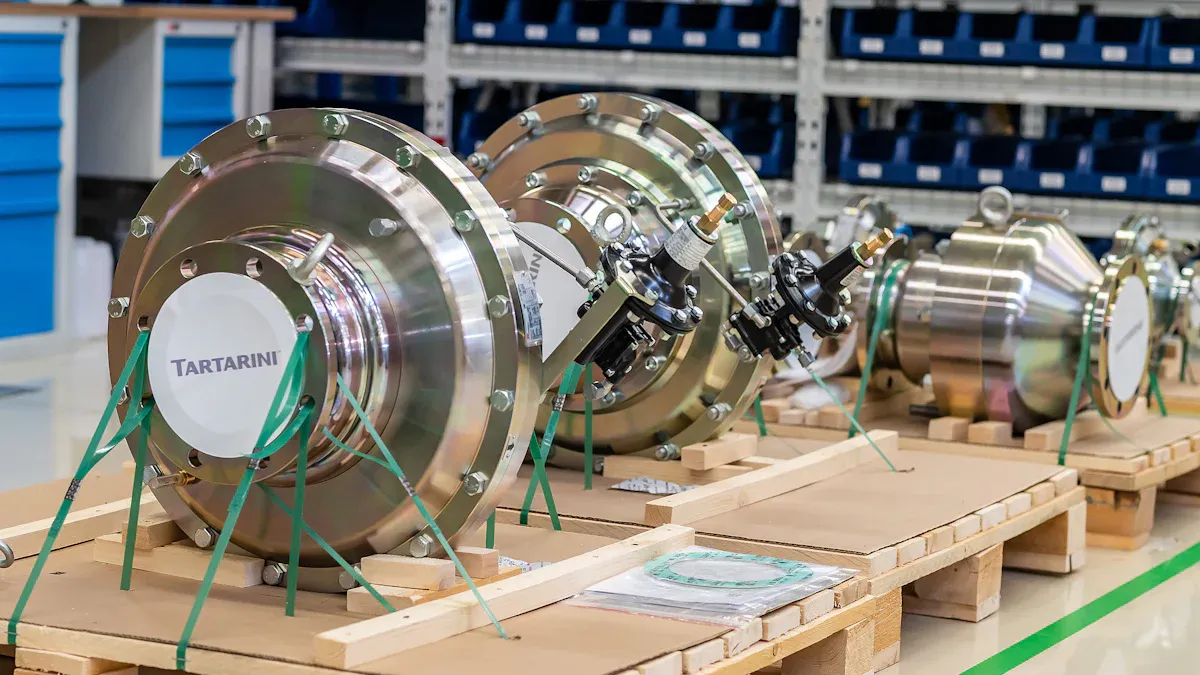
Stainless steel solenoid valves offer superior performance in demanding environments. They provide excellent chemical resistance and robust strength.
Advantages of Stainless Steel Solenoid Valves
Stainless steel valves are highly valued for their durability and resistance to corrosion. Solenoid valves commonly utilize 304 and 316 stainless steel, especially in applications needing strong corrosion resistance. These grades include elements like chromium, nickel, and molybdenum. These elements improve their structural strength, chemical resistance, and overall corrosion resistance. They offer exceptional resistance to various media and environmental corrosion.
| Property | Stainless Steel 304 | Stainless Steel 316 |
|---|---|---|
| Corrosion Resistance | Good, but less than 316 | Superior due to molybdenum addition |
| Typical Applications | Food processing, water treatment, general plumbing, moderate corrosion needs | Marine environments, chemical processing, pharmaceutical industries, high corrosion demands |
| Cost | Less expensive | More expensive |
Disadvantages of Stainless Steel Solenoid Valves
Stainless steel solenoid valves come with a higher price tag than brass or plastic options. This is due to their premium nature and superior corrosion resistance. While the initial cost is higher, industries that prioritize reliability and long-term value, like food and beverage, often find the investment worthwhile. Even high-grade steels like 304 and 316 can face crevice corrosion and pitting. This happens in environments with high chloride concentrations, such as seawater pipelines.
Note: High production costs and raw material price fluctuations also contribute to the overall expense of stainless steel valves.
Ideal Applications for Stainless Steel Solenoid Valves
Stainless steel solenoid valves are indispensable in many industrial sectors. They provide precise fluid and gas control in manufacturing and processing plants. Water treatment systems use them for controlling water flow and chemical dosing. The food and beverage industry relies on them for sanitary and safe fluid handling. Medical and pharmaceutical equipment also uses them for accurate control of gases and fluids, meeting strict hygiene rules.
- Industrial Automation: For precise fluid and gas control.
- Water Treatment Systems: Essential for controlling water flow.
- Food and Beverage Industry: Ensures sanitary fluid handling.
- Medical and Pharmaceutical Equipment: Provides accurate control of medical gases and fluids.
These valves also find use in the automotive industry for fuel and braking systems. The oil and gas sector requires them for drilling and refining. Aerospace and defense applications use them for extremely accurate control. Water and wastewater management also benefits from their use in flow control.
| Parameter | Range |
|---|---|
| Operating Temperature | 15°F to 250°F (-10°C to 120°C) |
| Pressure (Water) | 0 to 90 PSI |
| Pressure (Air) | 7 to 90 PSI |
Plastic Solenoid Valves: Lightweight and Corrosion-Resistant
Plastic solenoid valves offer a compelling alternative, especially when you need lightweight solutions and strong resistance to corrosion. They are often a cost-effective choice for many applications.
Advantages of Plastic Valves
Plastic valves bring several benefits to the table. They are naturally resistant to many corrosive chemicals, which makes them ideal for harsh environments. Their lightweight nature also simplifies installation and reduces shipping costs. Different types of plastics offer specific advantages:
| Plastic Type | Advantages |
|---|---|
| PVC | Corrosion, chemical, and abrasion resistance; smooth inside walls; lightweight; ease of installation; long-life expectancy; lower life-cycle cost; lead-free; dezincification-resistant; will not rust; maximum service temperature of 140°F. |
| CPVC | Similar advantages to PVC; maximum service temperature of 220°F. |
| PP (Polypropylene) | Most versatile chemical resistance (no known solvents); performs well in concentrated acetic acids and hydroxides; suitable for milder solutions of most acids, alkalis, salts, and many organic chemicals; available in UV-stabilized pigmented forms; maximum service temperature of 180°F. |
| PVDF | Strength; high working temperature; chemical resistance to salts, strong acids, dilute bases, and many organic solvents; not degraded by sunlight; suitable for high-purity applications (natural formulation); can be pigmented for outdoor use without affecting fluid; maintains pressure up to 280°F. |
Disadvantages of Plastic Valves
While plastic valves excel in corrosion resistance, they do have limitations, especially concerning pressure and temperature. Plastic valve bodies typically have lower mechanical pressure limits, usually rated for a maximum of 0.6 MPa (6 bar) at room temperature. Their higher thermal expansion coefficient means a PTFE body valve rated for 20°C may lose seal integrity or structural rigidity if the media temperature exceeds 80°C.
- Lower Pressure and Mechanical Stress Thresholds: Plastic valves work best in low to moderate pressure systems. They offer a smaller safety margin against unexpected system dynamics compared to metal valves.
- Sensitivity to Pressure Spikes: Plastics are more prone to damage from sudden pressure spikes or water hammer events. These can cause cracking or failure.
- Cyclic Fatigue: Frequent or rapid pressure cycling can lead to faster mechanical fatigue in plastic valves. This significantly reduces their service life.
- Softening and Deformation: As fluid or ambient temperature increases, common valve plastics soften. This compromises structural integrity and can lead to operational issues or catastrophic blowout.
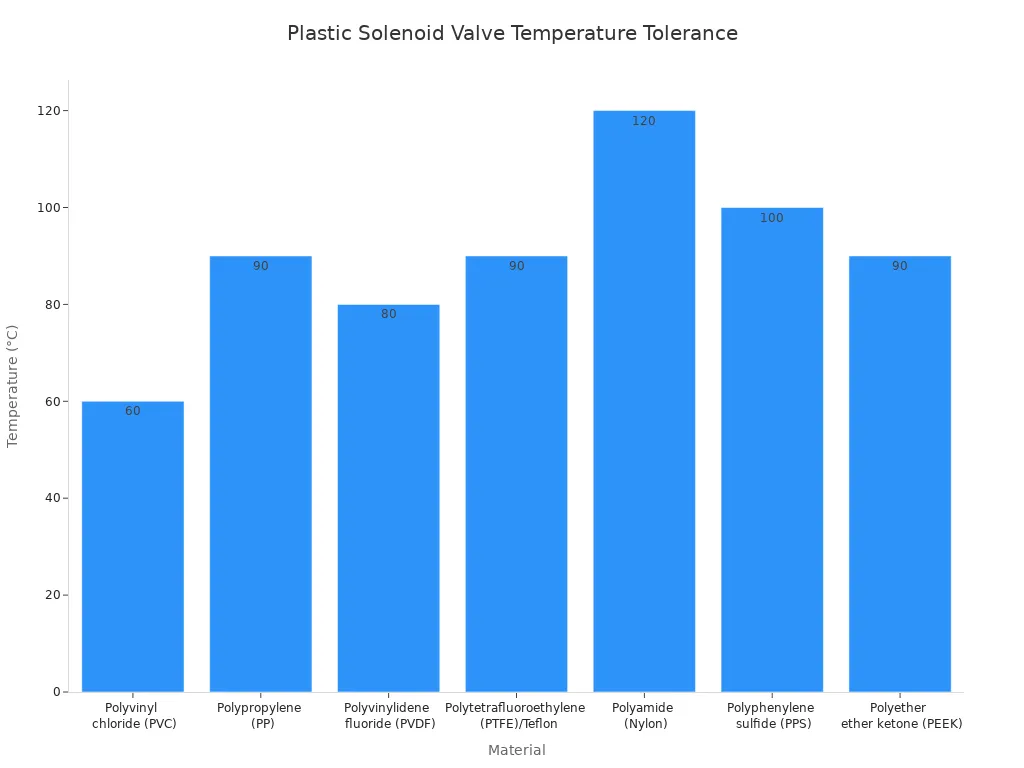
Here is a look at the temperature tolerance for various plastic materials:
Ideal Applications for Plastic Valves
Plastic solenoid valves are perfect for situations needing strong corrosion resistance and cost-effectiveness. They maintain integrity in aggressive chemical or water environments, which leads to a longer lifespan and consistent performance. Their lightweight nature also reduces shipping, handling, and installation costs.
You often find them in:
- Chemical Processing: They handle diverse and often volatile intermediate and final products.
- Water and Wastewater Treatment: They resist chemicals like chlorine, ozone, and various coagulants.
- Laboratory and Analytical Systems: They ensure fluid purity and resistance to common lab reagents.
- Irrigation systems
- Aquariums and fish tanks
- Swimming pools and spas
Plastic valves are also generally less expensive than metal alternatives. This makes them appealing for large-scale projects. Their insulation properties are beneficial in electrical applications, which enhances safety.
Comparative Analysis: Brass, Stainless Steel, and Plastic Solenoid Valves
Choosing the right solenoid valve material involves looking at several key factors. These include cost, how well it resists chemicals, and its ability to handle different temperatures and pressures. Each material offers unique benefits and drawbacks.
Cost Considerations for Each Material
Brass valves often present a cost-effective solution. They offer a good balance between price and performance. Many applications find them suitable without breaking the bank. Stainless steel valves usually come with a higher initial price. This is due to the material cost and the complex manufacturing processes involved. However, they often provide excellent long-term value in demanding applications where durability is key. Plastic valves are frequently the most economical option. This makes them appealing for large projects or when corrosion resistance is a top priority. Their lower material and production costs can lead to significant savings.
Chemical Resistance Across Materials
Each material reacts differently to various chemicals. Brass valves work well with non-aggressive fluids, water, and non-acidic media. They are not suitable for strong acids or highly corrosive chemicals. Using them in such environments can lead to rapid degradation. Stainless steel offers excellent chemical resistance. The 316 grade, for example, handles a wide range of corrosive media. This includes some acids and alkalis. However, high chloride concentrations, like those found in seawater, can still cause issues such as crevice corrosion or pitting. Plastic valves are highly resistant to many corrosive chemicals, acids, and bases. The specific type of plastic, such as PVC, CPVC, PP, or PVDF, determines its exact resistance profile. This makes them ideal for environments where chemical compatibility is critical.
Temperature and Pressure Tolerance Comparison
When we look at temperature and pressure, each material has its limits. Standard brass and stainless steel valves show similar operating ranges. They can handle temperatures from -45°F (-45°C) up to +185°F (+85°C). Both materials also manage a maximum operating pressure differential of up to 250 psi. This means a Stainless Steel Solenoid Valve can perform reliably in many demanding conditions.
Plastic valves, however, generally have lower pressure and temperature limits. The available information does not specify exact operating temperatures and pressures for plastic solenoid valves. We know from earlier discussions that plastic has a higher thermal expansion coefficient. This means it can soften or deform at higher temperatures. This can affect seal integrity or structural strength. Plastic valves are also more sensitive to pressure spikes and frequent pressure cycling. This can lead to faster wear and tear compared to their metal counterparts.
| Material | Minimum Operating Temperature | Maximum Operating Temperature | Maximum Operating Pressure Differential |
|---|---|---|---|
| Brass | -45°F (-45°C) | +185°F (+85°C) | up to 250psi |
| Stainless Steel | -45°F (-45°C) | +185°F (+85°C) | up to 250psi |
| Plastic | Not specified | Not specified | Not specified |
The table above highlights the specified limits for brass and stainless steel. It also shows the lack of specific data for plastic within this context. This emphasizes the need to carefully consider the operating environment when selecting a valve material.
Durability and Lifespan of Solenoid Valve Materials
The lifespan of a solenoid valve is a critical factor for any system. It directly impacts maintenance costs and operational downtime. Many factors influence how long a valve lasts. These include the quality of its construction, the operating conditions like pressure and temperature, how often it cycles, and the cleanliness of the media it handles. Well-made valves from trusted manufacturers can often complete 10 million cycles or more under typical industrial conditions. High-end valves, which feature strong coil designs and quality seals, can even exceed this cycle count.
ASCO solenoid valves, for example, are well-known for their high reliability and long service life when people operate them correctly. Their superior mean time between failures (MTBF) often leads to a lower total cost of ownership over time, even if cheaper options exist. When you evaluate solenoid valve performance, it is important to consider MTBF ratings. You should also compare reliability against industry leaders, especially under similar duty cycles.
There is a growing trend towards using corrosion-resistant materials for valve bodies and seals. This includes stainless steel and advanced plastics. This adoption is especially common in demanding environments. It helps to improve the durability and extend the service life of solenoid valves.
Let’s look at how each material performs in terms of durability:
- Brass Valves: Brass offers good durability for many general-purpose applications. It resists wear and tear well in non-corrosive environments. However, its abrasion and fatigue resistance are less than that of stainless steel.
- Stainless Steel Valves: A Stainless Steel Solenoid Valve excels in durability. Its inherent hardness and smooth surface give it excellent abrasion resistance. Stainless steel also boasts high tensile strength and ductility, which provides excellent fatigue resistance. This means it can withstand repeated stress cycles without breaking down easily.
- Plastic Valves: Plastic valves are durable in corrosive chemical environments. However, they generally have lower mechanical strength compared to metals. They are more susceptible to damage from high pressure, temperature extremes, and frequent pressure cycling. This can lead to faster mechanical fatigue and a shorter service life if not chosen carefully for the application.
| Material | Abrasion Resistance | Fatigue Resistance |
|---|---|---|
| Brass | Good, but less than stainless steel. | Good, but less than stainless steel. |
| Stainless Steel | Excellent, due to its hardness and smooth surface. | Excellent, due to its high tensile strength and ductility. |
Ease of Cleaning and Sterilization
In many industries, especially those dealing with food, pharmaceuticals, or high-purity fluids, the ability to clean and sterilize valves easily is crucial. Proper cleaning prevents contamination and ensures product integrity.
Stainless steel valves are often the preferred choice for sanitary applications. Their smooth, non-porous surfaces make them easy to clean. They also resist the harsh chemicals used in cleaning and sterilization processes. Manufacturers can further enhance the cleanability of steel-based high-purity valves through specific treatments. Electropolishing, for instance, is an electrochemical process that removes surface materials. This creates smooth, polished valve surfaces. It prevents contaminant accumulation and improves corrosion resistance. Passivation is another material treatment method. It removes iron traces and other contaminants, which further improves corrosion resistance.
Plastic valves also offer good resistance to many cleaning agents, depending on the specific plastic type. Their non-corrosive nature means they do not rust or degrade when exposed to water or common cleaning solutions. However, some plastics might not withstand very high temperatures used in certain sterilization methods, like steam sterilization.
Brass valves are generally not ideal for applications requiring frequent or rigorous sterilization. Brass can react with certain cleaning agents, and its surface is not as smooth or non-porous as electropolished stainless steel. This makes it harder to achieve true sterility.
For high-purity piping systems, it is essential to implement a cleaning-in-place (CIP) and sterilization program. This program helps remove contaminants effectively. High-purity solenoid and ball valves are constructed from materials that resist chemical corrosion, frictional abrasion, and cleaning agents. This ensures they can withstand sterilization processes without damage.
How to Choose the Right 2/2 Way Solenoid Valve Material
Choosing the right material for a 2/2 way solenoid valve is a critical decision. It directly affects how well the valve works, how safe it is, and how long it lasts. You need to consider several factors carefully to make the best choice for your specific needs.
Assess Media Compatibility Requirements
First, you must understand the fluid or gas the valve will control. This is called the "media." The valve’s materials must be compatible with this media. If they are not, problems will arise.
The diaphragm material, for example, needs to be chemically compatible with the system media. The disc material also needs careful selection. You must consider the process fluid’s characteristics. These include its temperature, how corrosive it is, and if it contains any particles. Seal materials also need selection based on media compatibility, temperature range, and pressure requirements. Finally, you choose the valve body material based on its chemical resistance, the system pressure, and industry standards.
Consider these properties of the medium:
- Medium density
- Viscosity
- Temperature
- Cleanliness of the medium (does it have particulate matter?)
- Physicochemical Properties of the Medium: Corrosiveness, Toxicity, and pH
Material incompatibility can cause serious issues. Over time, it leads to minor erosion and corrosion. This weakens the solenoid valve’s physical strength. It also creates irregularities on sealing surfaces. This causes more leakage and allows hazardous vapors and fluids to escape around the valves. These problems create significant safety risks. Using an incompatible valve material for chemically aggressive media results in premature deterioration, material breakdown, and leakage. This directly affects the system’s efficiency, durability, and safety. It can also lead to higher maintenance costs, operational downtime, and a compromised overall system performance.
Evaluate Operating Environment and Conditions
The environment where the valve operates also plays a big role in material selection. External factors can greatly affect the valve’s performance and lifespan.
Consider these critical environmental factors:
- Temperature extremes: Both very hot and very cold conditions.
- High humidity: Moisture can cause problems.
- Corrosive atmospheres: Air with harsh chemicals.
- Rapid temperature fluctuations: Quick changes in heat.
- UV radiation: Sunlight can degrade valve materials.
- High-heat environments: These can make rubber seals degrade quickly.
- Cold climates: Moisture inside the valve body might freeze. This can cause internal damage.
Temperature extremes influence seal flexibility, coil resistance, and mechanical clearances. High temperatures can soften or deform seals and overheat coils. Freezing conditions can expand residual moisture, causing cracking or blockage. Corrosive fluids or chemicals can degrade valve materials and compromise their integrity. This often requires materials like stainless steel for resistance.
High humidity can lead to corrosion or electrical shorts due to moisture ingress. UV radiation can cause damage in sunny environments. These factors affect the longevity and performance of non-metallic components.
Pressure fluctuations and continuous vibration also greatly impact the durability of solenoid valve materials. Rapid pressure changes or spikes can compromise the valve’s holding force. This leads to unintended operation. Low pressure can hinder proper actuation. Continuous vibration can cause components to loosen, material fatigue, and misalignment of critical parts. These environmental factors often interact, making their effects worse. To counter these challenges, careful consideration of valve design, material selection, and protective measures is crucial. Advancements in material science, such as high-performance polymers for seals and advanced metal alloys for corrosion and fatigue resistance, enhance durability.
Consider Budget vs. Long-Term Value
When choosing a solenoid valve, you might feel tempted to pick the cheapest option. However, you must look beyond the initial price. Consider the long-term value. This includes the initial investment, operational costs (especially energy consumption), maintenance, and eventual disposal.
High-efficiency valves often have higher upfront costs. But they lead to substantial long-term savings. They use less energy. Durable, high-quality valves reduce the frequency and cost of repairs or replacements. A longer operational life for efficient valves delays replacement needs and their associated costs.
The Long-Term Cost of Ownership (LTCO) is a valuable tool. It helps buyers make informed purchase decisions. It considers a product’s costs over its entire life cycle. This includes maintenance, service, and spare parts, not just the initial purchase price. This approach helps purchasers understand the long-term financial impact of different valve options. It can reveal dramatic cost differences.
Here is a comparison of costs over five years:
| Category | Low-Quality Valve | High-Performance Valve |
|---|---|---|
| Initial Cost | $50 | $150 |
| Replacements (5 years) | $200 | $0 |
| Maintenance & Downtime | $500 | $100 |
| Total Cost | $750 | $250 |
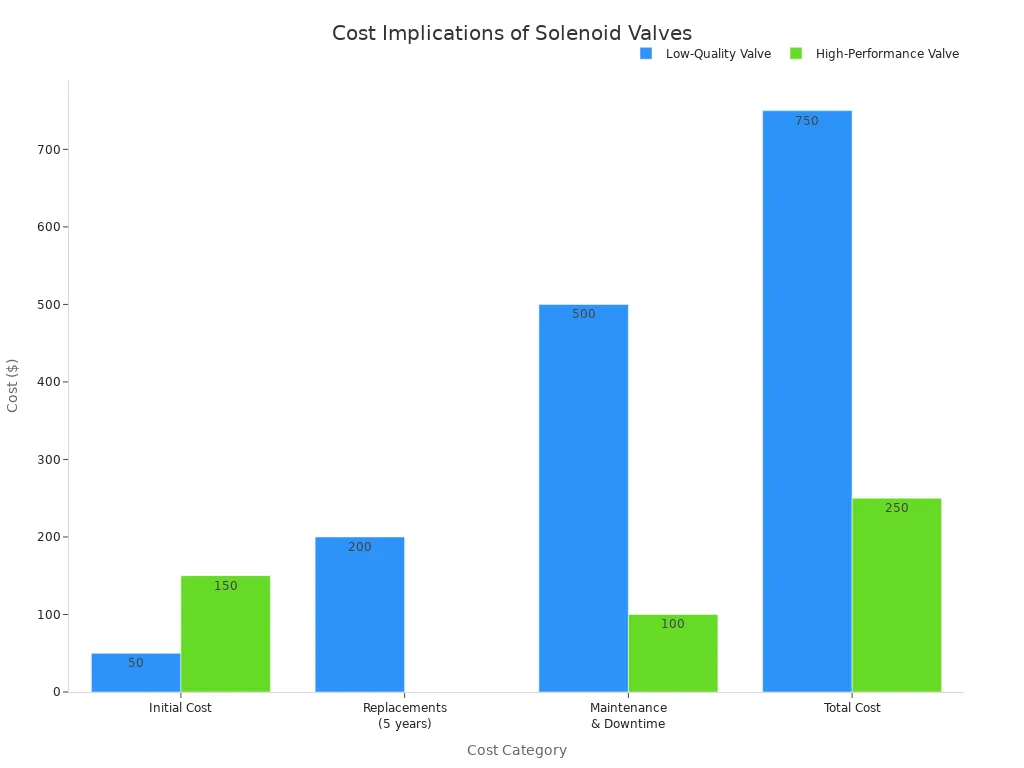
This chart clearly shows that a higher initial cost can yield better returns over time. This happens because you have fewer replacements, less maintenance, and reduced downtime. Durable materials reduce replacements. Energy-efficient coils lower operational costs. High-quality valves also improve flow precision and reduce downtime.
Review Industry Standards and Certifications
Finally, always check for industry standards and certifications. These ensure the valve meets specific quality, safety, and performance requirements. Certifications can confirm a valve’s suitability for certain applications, like those in food processing or hazardous environments. They provide an extra layer of assurance about the material’s quality and the valve’s overall reliability.
Review Industry Standards and Certifications
Always check for industry standards and certifications. These ensure the valve meets specific quality, safety, and performance requirements. Certifications confirm a valve’s suitability for certain applications. This includes those in food processing or hazardous environments. They provide an extra layer of assurance about the material’s quality and the valve’s overall reliability.
Different regions and industries have specific certifications and standards. These help ensure safety and performance. For example, in North America, UL Certification shows compliance with safety standards. In the European Union, CE marking is necessary for market entry. ATEX Certification is vital for safe operation in potentially explosive environments. This includes places with flammable gases or vapors. CSA Certification tests solenoid valves against Canadian Standards Association specifications. The International Electrotechnical Commission System offers IECEx Certification. This certification is for equipment in explosive atmospheres and is accepted globally.
| Certification/Standard | Region/Scope | Purpose/Description |
|---|---|---|
| UL Certification | North America (US & Canada) | Indicates compliance with safety and compliance standards set by Underwriters Laboratories. |
| CE Marking/ATEX Certification | European Union | CE marking for EU market; ATEX for safe operation in potentially explosive environments (flammable gases/vapors). |
| CSA Certification | Canada | Solenoid valves tested against Canadian Standards Association specifications. |
| IECEx Certification | International | Certification by the International Electrotechnical Commission System for equipment in explosive atmospheres, accepted globally. |
| NEMA Rating | Electrical enclosures (US) | Determines environments where electrical enclosures can be used, specifying protection against elements like moisture and dust. |
| IP Ratings | International | Defines protection levels against intrusion of solids and liquids into a solenoid valve. |
| ISO | International | Defines material composition, dimensions, and performance criteria. |
| ASTM B280 | International | Defines material composition, dimensions, and performance criteria. |
| RoHS 3 | International | Adherence to regulatory requirements. |
| NSF | International | Adherence to regulatory requirements. |
Regulatory requirements also heavily influence solenoid valve material selection. This is especially true in specific industries. For example, the food and beverage, pharmaceutical, and chemical processing sectors have strict rules. These rules ensure product safety and prevent contamination.
- FDA Guidelines (21 CFR Part 177): These guidelines require materials in food contact applications to be pure. Solenoid valves must not transfer harmful substances to food products.
- 3-A Sanitary Standards (53-06): These standards give detailed specifications. They cover the design, materials, and making of valves for sanitary uses. This includes the food, beverage, and pharmaceutical industries. They ensure hygienic operation.
- EHEDG Requirements: These requirements focus on cleanability. They also emphasize appropriate construction materials and surface finish for solenoid valves. This prevents microbial growth and makes cleaning and sanitizing easy.
- ISO 14159:2002: This standard specifies hygiene requirements for machinery design. It includes solenoid valves used in food processing.
- NSF/ANSI 51: Food Equipment Materials: This standard addresses materials used in food equipment. It ensures they do not release harmful substances. It also confirms they can withstand processing environments.
- Mandated Materials: Industries often mandate specific materials. These include stainless steel, PTFE, and FDA-approved polymers. People choose them for their resistance to chemicals, corrosion, and microbial growth. They also withstand frequent cleaning and sterilization without breaking down or releasing substances.
These standards and certifications are not just bureaucratic hurdles. They are crucial tools. They help ensure the safety, reliability, and long-term performance of solenoid valves. Always verify that your chosen valve and its materials meet all relevant industry standards for your application.
Selecting the correct material for a 2/2 way solenoid valve is crucial. It directly impacts the valve’s performance, safety, and longevity. Remember, no single material is "best" for every situation. The optimal choice is always specific to the application. Therefore, prioritize the media the valve handles, its operating environment, and your budget. These considerations guide you to the ideal solenoid valve material.
FAQ
What is the best material for a 2/2 way solenoid valve?
There is no single "best" material. The optimal choice depends on the specific application. Consider the media, operating conditions, and budget. Each material offers unique benefits for different uses.
Can brass solenoid valves handle corrosive chemicals?
No, brass valves are not ideal for corrosive chemicals. They work best with non-aggressive fluids like water. Corrosive media can quickly degrade brass, leading to leaks and system failure.
Why do stainless steel solenoid valves cost more?
Stainless steel valves cost more due to premium materials and complex manufacturing processes. However, their superior corrosion resistance and durability often provide better long-term value, especially in demanding environments.
Which material works best for high-temperature applications?
Stainless steel valves handle high temperatures well. Some specialized plastics like PVDF can also tolerate higher temperatures. Always check the specific temperature ratings for the chosen material and application.
Are plastic solenoid valves durable?
Plastic valves are durable in corrosive chemical environments. However, they generally have lower mechanical strength than metals. They are more susceptible to damage from high pressure, temperature extremes, and frequent pressure cycling.